2013 has seen a run of short memoirs by former In/Words editors, most of them to do with the few years that I was lucky enough to be involved (2006-2009, approximately). A profile by rob mclennan at Open Book: Ontario in February seems to have been what sparked the nostalgic wave, followed up with pieces by Peter Gibbon, David Emery, Jeff Blackman and Ben Ladouceur. Well, I’m feeling nostalgic now too.
Recognizing the inherent navel-gazing of this entire enterprise, I’m going to see it through regardless. The previous pieces have already contributed much to the narrative and I’m not interested in going back over the same territory, plus I have already discussed the mag in more general terms in the rob mclennan piece. Instead, I’d like to focus on one episode in the history of the mag and press (inspired by Ben Ladouceur’s gesture).
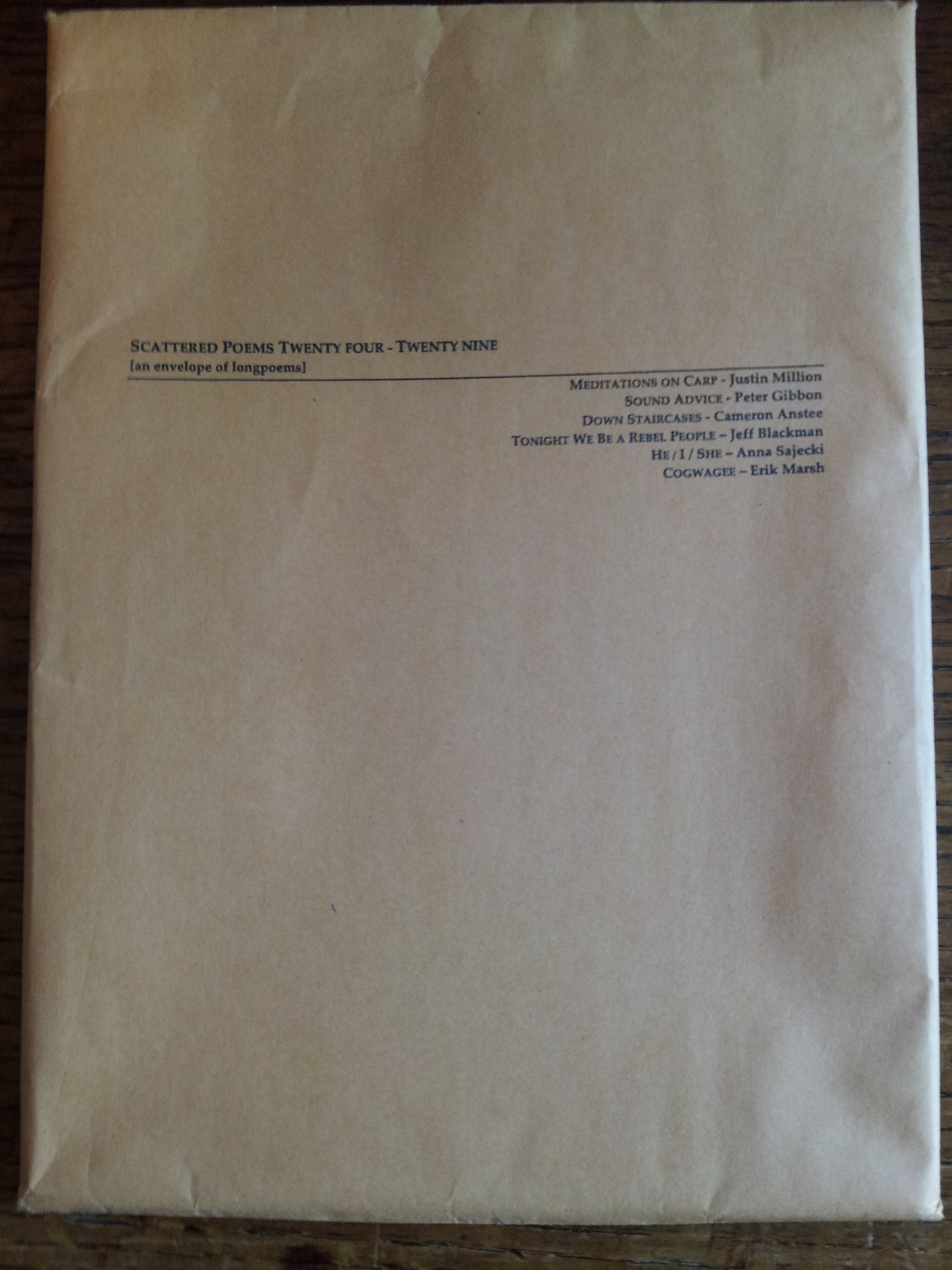
Over beers last night, Jenn, Justin Million and I discussed the “longpoem envelope”, published in June 2008 for an installment of the Ottawa small press book fair. Officially published as SCATTERED POEMS TWENTY FOUR-TWENTY NINE [an envelope of longpoems], the set was comprised of six chapbooks bundled together in a plain envelope.

The chapbooks:
Justin Million, Meditations on Carp
Peter Gibbon, Sound Advice
Cameron Anstee, Down Staircases
Jeff Blackman, Tonight We Be a Rebel People
Anna Sajecki, He / I / She
Erik Marsh, Cogwagee

The scattered poem initiative had begun in May 2007. Poems were printed on single sheets, folded as letters, and distributed as freely and widely as possible. Jeff Blackman’s “Would it be too much?” was the first poem in the series, a poem with a middle section where Jeff would belt out the titular Beatles chorus. On a side note, singing has gone on to become quite an important dimension of Jeff Blackman’s writing and performance in recent years, and this poem is the earliest instance I can think of where singing shows up in his work. My file holds thirty three of these items produced between May 2007 and October 2008. Different editorial teams at In/Words have produced similar items under different names in the five years since.
The long poem envelope was the most ambitious of these productions. In hindsight, I’m not entirely clear on why we decided to list these chapbooks as scattered poems, given their size and ambition. Perhaps it was because the envelope was produced during the summer between installments of the chapbook project. In any event, if you’re keeping score at home, these are officially “scattered poems.”
The reason that In/Words had six individual longpoems available to publish in 2008 was because we had all taken the same course the previous winter semester at Carleton University, ENGL 4806D: “a gift of poems”: Postmodern Canadian Longpoems of and around the 1970s”, taught by poet and (at the time) doctoral candidate Rob Winger (researching and writing on Phyllis Webb, John Thompson, and the Ghazal in Canada).
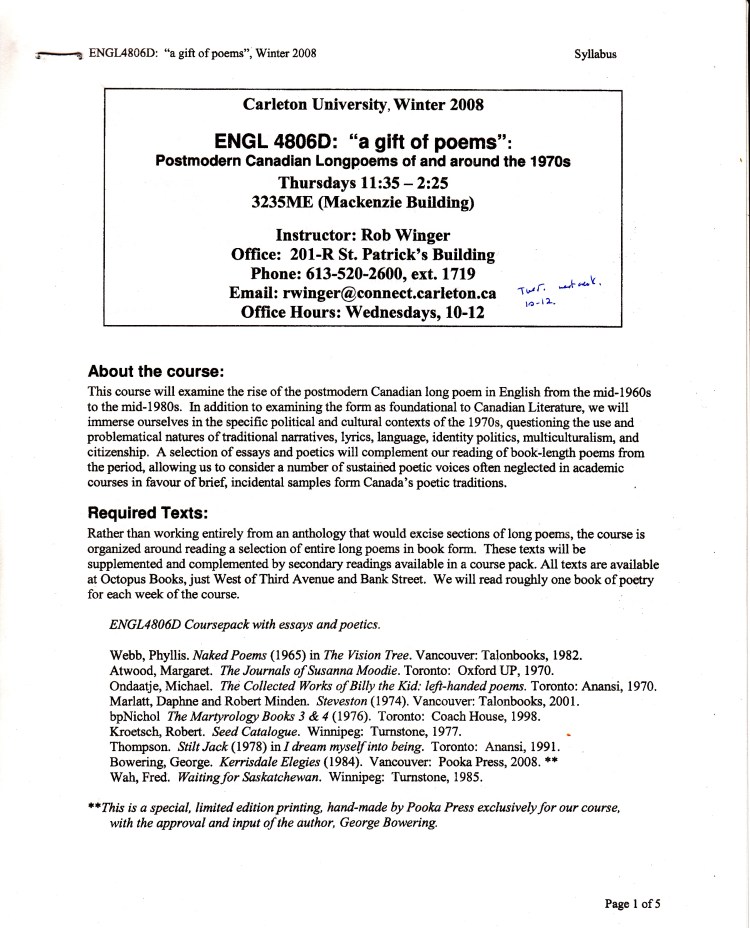
The reading list was (and continues to be) spectacular: Phyllis Webb, Michael Ondaatje, Daphne Marlatt, John Thompson, bpNichol, Fred Wah, Margaret Atwood, Robert Kroetsch, George Bowering. Some of the books were familiar to many of us already (Atwood, Bowering, Kroetsch), but many were new.

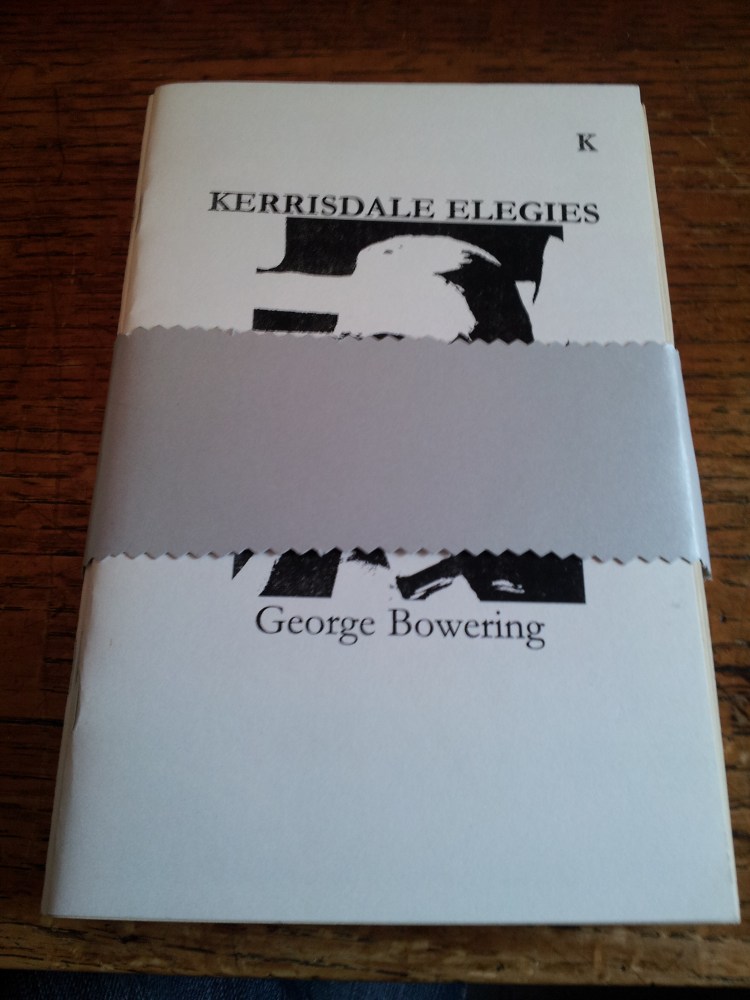
The Bowering book, Kerrisdale Elegies, was out of print at this point. So, Warren Dean Fulton of Pooka Press produced the book in a series of ten chapbooks, one per elegy, bundled together. The book has since been reissued formally by Talon. I also recall that the books were ordered at Octopus, a nice turn as I was then helping them twice a year set up for textbook season, and would go on to spend two years working fulltime in the store.
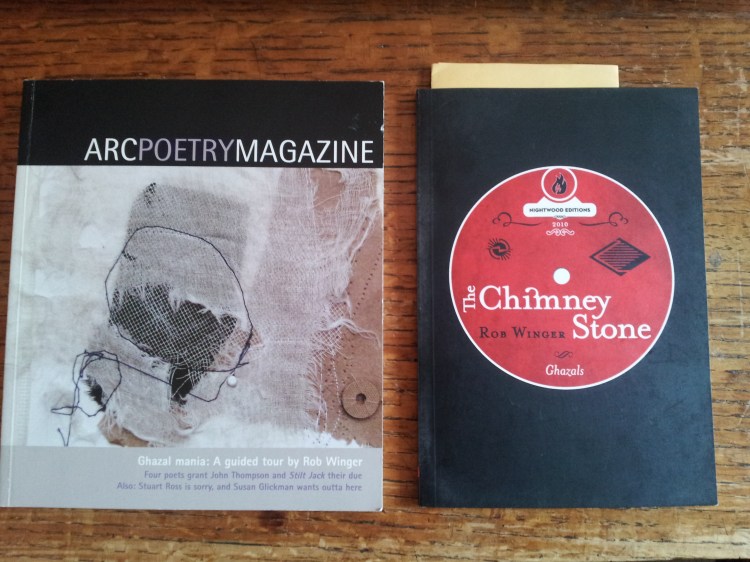
The course was thirteen weeks of intensive reading and deeply engaging class discussion. It was all followed by what I recall as the most demanding undergraduate exam I’d ever written. I remember writing furiously for three hours and feeling like I’d barely gotten out half of what I wanted to say. It was a popular course, a lecture not a seminar. My memory is that registration was 30+, with most attending each week. We spent two weeks (or six hours) on Michael Ondaatje’s The Collected Works of Billy the Kid, a book that Rob Winger has cited as deeply important to him personally and poetically. I distinctly remember Rob, at the beginning of the second Ondaatje class, looking clearly distressed that we had only three hours remaining to discuss the book and explaining that we would be unable to cover everything that he wanted. His enthusiasm was infectious, the books were consistently excellent, and a room full of young poets couldn’t help but be caught up. I would love to see a class list again to see what other poets were in the room. I know Aaron Clark was present. One other notable student in the room was Janna Graham, who went on to organize White Salt Mountain: A Gathering of Poets for John Thompson in Sackville, New Brunswick in November 2008, an event documented in Arc 62 (Summer 2009), as well as this fascinating radio documentary on Thompson. Rob Winger went on to complete his dissertation on the Canadian ghazal and also to publish his own remarkable and underappreciated collection exploring the form, The Chimney Stone (Nightwood, 2010).
It would be difficult to imagine a better environment to encounter these books collectively for the first time: a room full of young, aspiring poets, taught by a young, published poet as passionate as any professor any of us had previously met, in what was the final semester of undergrad for many of us. Moreover, Rob Winger was kind, thoughtful and encouraging enough to offer two options for the final project of the course. One was a typical academic essay, but the second was a “critically creative poetry project”: “All creative projects must include the creation of 8 to 12ish pages of original poetry and a 500-750 word introduction that explains the goals of the writing project undertaken related to the methodologies and poetics of the writers we’ve examined in class” (emphasis original, quoted from the course syllabus). Topics were distributed that considered historical knowledge, language, negative capability, locus, and form. We were tasked with tackling one of these questions and engaging directly with a poet from the course.
So, come April, Rob received a pile of longpoems in lieu of essays.
That summer, I returned to work in Traffic and Parking at the City of Ottawa for the sixth straight year. I had spent four summers as a traffic counter before graduating to an office job in School Zone Traffic Safety. Production of the envelope must have been typically compressed in the In/Words fashion. I remember one late night with Justin Million on the risograph in the English Department, fighting with a very uncooperative machine (seemingly less cooperative than normal). In the grand tradition of small presses pilfering office supplies, some of these chapbooks were photocopied in a city office in the west end.
Looking back, these chapbooks, that course, were defining moments for so many of us. Rob taught the course again, I believe as a seminar, the following year (I know that Mark Sokolowski and Ben Ladouceur sat in that year; Mark’s Dust in the Water is, to my mind, an extension of this envelope and probably rightly belongs in it regardless of chronology). Many of us still haven’t escaped from the overwhelming influence of these books. Thompson and Webb in particularly figure largely for us collectively. I transferred into the course at the last minute out of a course on modern British poetry that I had inexplicably selected previously.
The books themselves have that risograph charm—the printing isn’t always clean, there are ghost images of previous pages, smudges are all over the place. The writing stands up as exciting and youthful and enthusiastic. That course pushed many of us beyond our comfort zones in incredibly productive ways. Just as Collett Tracey had prompted and nurtured an initial engagement with Canadian small press in the previous three years for most of us, Rob Winger’s course rejuvenated those enthusiasms as we were preparing to depart Carleton, or In/Words, or Ottawa, or some combination of all three.
Regrettably, I have no idea how many were produced and we weren’t clever enough to mark it on the back of the envelope.

One pleasant surprise of the production was that it garnered a short review by Marcus McCann on his blog. Marcus wrote, “I’m pretty sure this is the best thing In/Words has done to date,” and notes that we were selling it for a mere $5.00. I don’t recall many, if any, reviews of In/Words items previously. Things would start to be noted in the following years as more of us branched out into larger communities. Given our access to University resources, we had often been reticent to sell our productions at all, opting instead to give them away wherever possible. At book fairs, we had found that this often provoked suspicion, with people seemingly losing interest once informed that our table was full of free materials. I believe we began to put nominal prices on books at fairs as an experiment and were amazed to find that this was a much more effective strategy of distribution.
With the Ottawa small press book fair coming up in two days, I wonder who will show up with what material. I’m always hopeful of new student-run presses, looking for that familiar anxiety and excitement that In/Words gave me for years, the thrill of first tentative steps in the Canadian small press world. I think, in the next decade, a whole pile of people that we were lucky enough to publish at In/Words will see first trade collections into print as well as more bizarre smaller productions that will establish them across the country. Reputations aren’t made on things like the longpoem envelope, but these items locate important early networks of community and support. I think in the future I’ll continue to look back on this small envelope as a set of peers and mentors and influences that have defined my writing and publishing life.




 Cameron Anstee