It was a shock this past Saturday to learn that my friend, one-time mentor, and former professor Collett Tracey had died on June 5, 2026 (her obituary is here).
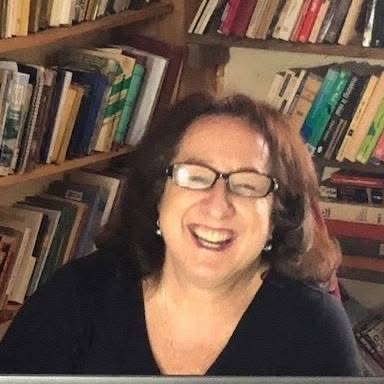
It would be difficult to overstate the impact that Collett had on my life. When I met her, I was already on a path studying literature, but the exact direction it would go was still very much an open question. She turned my attention to the Canadian small press; she started the magazine that first published a poem of mine and at which I learned to make chapbooks; she put me in a room with other student poets and introduced us to each other as poets; she set in motion the best and most enduring friendships of my life; she supervised my M.A. research and encouraged me to continue my studies. More than twenty years after we met, during which I completed three degrees focused on Canadian Literature and have spent uncountable hours folding and stitching chapbooks and writing poems, her singular influence on my life is undeniable.
I met Collett in the second year of my undergraduate studies at Carleton University, circa 2005. I crossed paths with her twice that year. By chance, she was my professor for the mandatory second-year Can Lit survey—hers was the section that fit my schedule—but it was life changing for me, as I know her presence in the classroom was for so many. I still have the anthology from that class (Bennett and Brown, A New Anthology of Canadian Literature in English, 2002). Later, during a break from a classical Greek literature class, when wandering the tunnels in the Loeb building, I picked up a copy of In/Words (Issue 5.1, October 2005), the student magazine that she had started five years earlier and that would be formative for me.
I remember getting my courage together to submit to the magazine, and to tell Collett I’d done so, and to ask how to become involved. I remember Jenn and I going to one of the monthly open mics for the first time, and leaving before it even started because things took so long to get going (a problem we would help exacerbate during my own tenure). I remember a lecture about Contact Press—where I was in the room, the energy I felt as Collett told the story of Layton, and Dudek, and Souster, the sense of something opening up. I remember going to my first In/Words editorial meeting at Mike’s Place—anyone interested was welcome, and if you kept showing up you could be on the team (my initial team was returning editors David Emery, Peter Gibbon, and Nicholas Culhane, and new editors Amanda Besserer, Justin Million, and Mark Sokolowski).
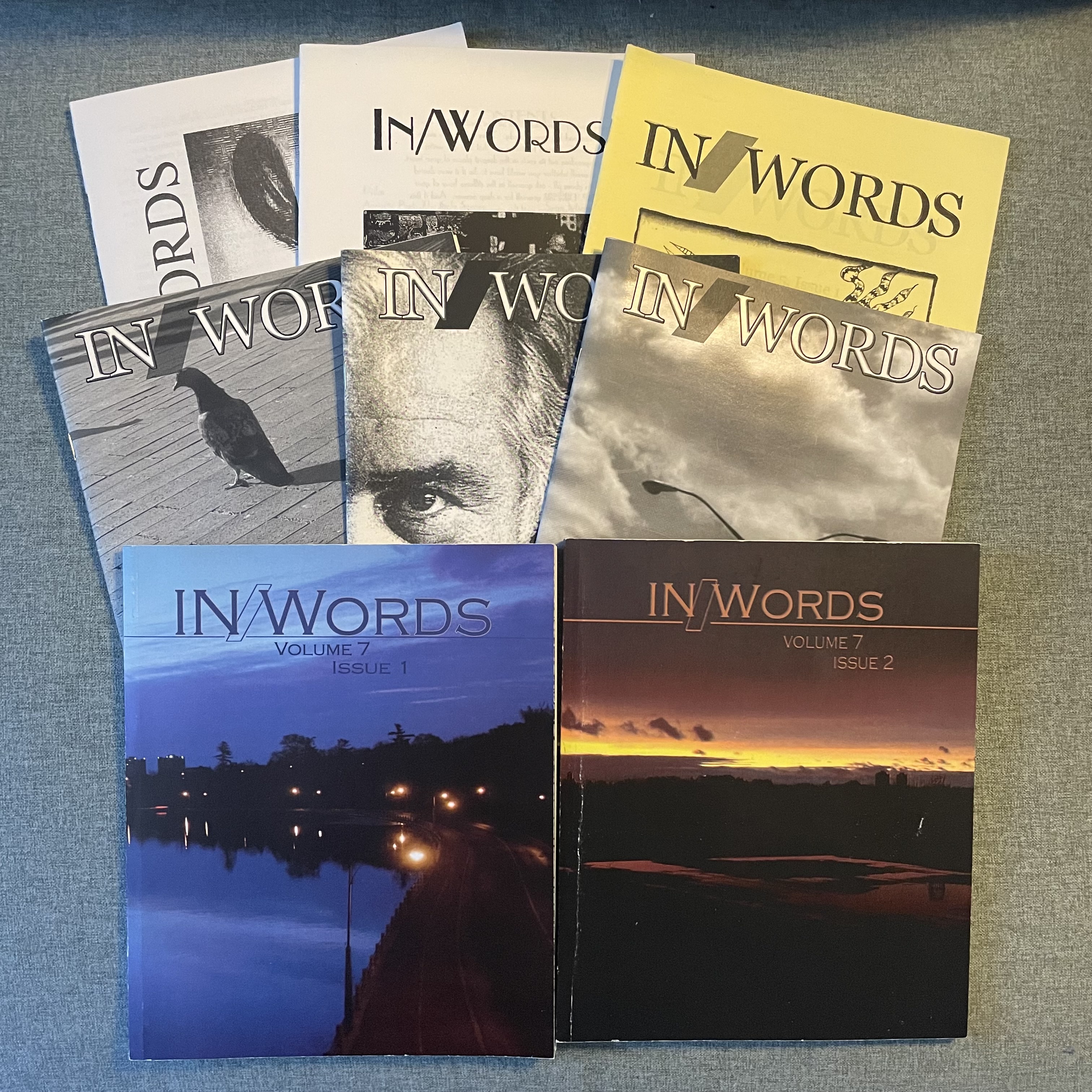
We learned how to edit a magazine, work with printers, make decisions together, run a reading series and writers circle, and publish chapbooks. Spin-off magazines were started (Mot Dit, Blank Page, The Moose & Pussy). Collett convinced the Faculty of Arts to give us $12,000 one year and we promptly spent a large percentage of that money on the wrong printer (a wide format printer for schematics), which the company was kind enough to replace with something more suited to chapbooks. The scrappier side of it made me happiest—Collett made us copies of her office key, something she surely shouldn’t have done but I can’t imagine it matters anymore. The key also opened the English Department lounge and photocopy room. We would use up all the stencils in the risograph late at night making books. So many of my closest, longest, best friendships are with people from those moments. They wouldn’t have happened—not quite in the same way—without Collett.
In/Words ran for about 18 years as far as I can tell, from 2001 to 2019 (I was on the team from 2006 through 2009, more or less) with various levels of institutional support. When they gave us $12,000, they also gave us an office on the 19th floor of Dunton Tower. That was likely the peak of support. I know it was a sore spot for Collett in later years when she felt, rightly or wrongly, that the Department hadn’t necessarily shown the magazine and what it had accomplished sufficient respect.
I don’t think she was ever quite at ease in the university and she was not comfortable playing the long bureaucratic game that is an important part of establishing oneself in the professoriate. Her focus was never meaningfully on research or publishing, as far as I could tell, though she was always passionate discussing research plans and supervising her students. That was what she wanted, to be with her students—in the classroom, at the bar (Mike’s Place), at gatherings at her house, and at the many events and meetings that were part of In/Words. Some of those efforts were at odds with the structures and hierarchy of a university, and no doubt led to disagreements with the Department over the years.
The emphasis on being with students was a lesson she took from one of her heroes, Louis Dudek. In an essay published after his death, she recalled meeting him the first time:
I met Louis in the summer of 1997 when he agreed to let me interview him for research I was doing on the role of the little presses in Montreal during the 1940’s, 50’s and 60’s. He suggested we have our first meeting in the cafeteria at Concordia University and when, after introductions had been made and we had settled down to talk, I asked him why he had chosen that particular location, he told me how much he missed being around students. He said he missed their energy and enthusiasm; he missed the intellectual stimulation and challenge they offered him; and he missed the simple hustle and bustle of being in their midst. (“Quiet Hero”)
After I graduated, when I heard from her, there was usually a plan of some sort—a reprint series, or a reading, or a special issue of a magazine, or a conference. They were often excellent ideas undone by execution. The initial enthusiasm would burn out as the mundane and difficult stuff of life used up resources or administrative red tape proved too high a barrier. The initial spark was intoxicating though. In/Words was a perfect venue for the way she inspired people—she got them together, she told them they could do something important, and then largely left them to themselves to find ways to execute it. A student magazine is a simple idea, but it still feels revolutionary each time a new group of students gets together to start the next one. And that can be enough momentum to keep someone going long after student days are over.
I don’t know too many of her past students who had a simple friendship with her. The intensity of feeling that she brought to poetry, her need for a demanding, consuming commitment to it, were difficult, especially after one had graduated and there was simply less time to read and argue about poems, or campus was no longer at the centre of daily life. As proud as she was of her former students, I think it also hurt her, at times deeply, as they moved on in different directions in their lives, inevitably away from the university. I don’t know all the details of her life, but I do know that she went through more than one person’s share of difficulties and that things were rarely easy. In her students—their enthusiasm, their openness to what poetry could mean in their lives—I think she was at times able to find solace that helped carry her.
I don’t think she was especially visible in the contemporary Can Lit community beyond the bounds of Carleton’s campus, but some remarkable folks came through In/Words as both editors and as writers receiving an early or first publication credit via the magazine, and I think she deserves credit for creating the conditions in which those essential early steps could be taken. The list is too long to capture comprehensively here, but among them are Chris Johnson (Managing editor of Arc and editorial assistant at Nightwood Editions), Manahil Bandukwala (Managing editor at Brick Books, winner of the Archibald Lampman Award), Bardia Sinaee (Winner of the Trillium Book Award), Ben Ladouceur (Winner of the Gerald Lampert Award, the Writers’ Trust Dayne Ogilvie Prize, and a National Magazine Award), David Currie (Director of Community Outreach at the Ottawa International Writers Festival), Avonlea Fotheringham (former longtime festival administrator for VerseFest Ottawa), Jeff Blackman (editor of These Days), and Justin Million (curator of the late great Show and Tell Poetry Series and vision behind KEYBOARDS!). I am proud to count myself among them.
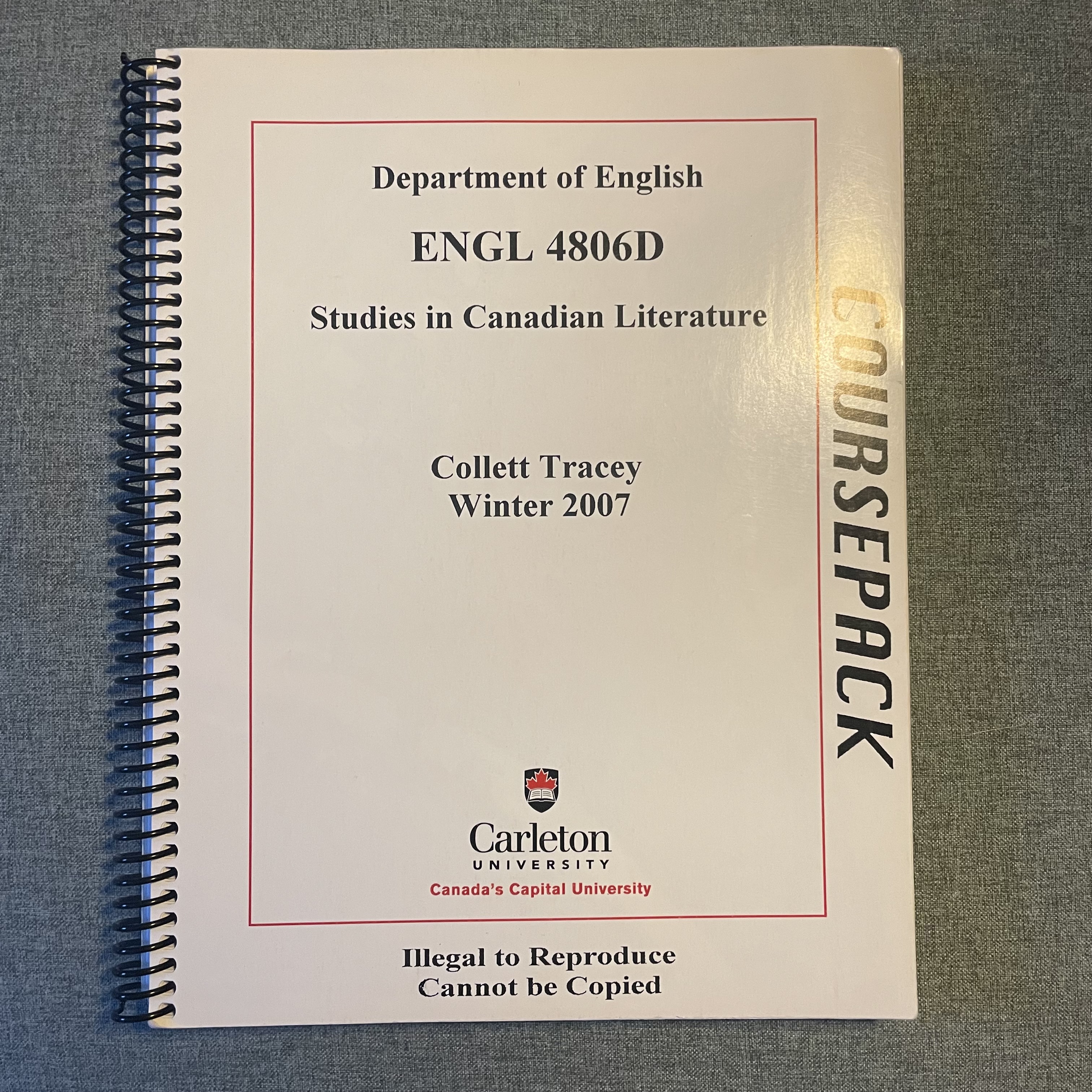
Her dissertation, completed at the Université de Montréal under Michael Gnarowski, was “The Little Presses That Did: A History of First Statement Press, Contact Press, and Delta Canada, and an Assessment of Their Rise and Contribution to the Development of Modernist Poetry in Canada During the Middle Part of the Twentieth Century.” She used an edited version of it as a course pack from time to time (I still have my copy from ENGL 4806D (Studies in Canadian Literature, Winter 2007)). There was a long-promised book based on the dissertation—a few times she thought it was nearing publication in the last decade, mentioning different presses to me, and I hope that it was advanced enough to someday see publication in the future.
She was a beloved professor, received several teaching awards at Carleton, and was twice nominated for the TVO Best Lecturer Award. I wish I had a list of the students that she supervised. Michele Rackham Hall in particular stands out for me (she did her M.A. work on Betty Sutherland under Collett, and went on to complete a Ph.D. and publish a book about the art of P.K. Page).
I can’t pretend that I have only positive memories. There were issues, real ones, and some of the same students she inspired and helped, she also hurt. She pushed people to be open, to scratch at their pain and to process difficult things in ways that weren’t necessarily healthy. I think that it came from some of her own pain, and also, maybe from some of what she drew on in the poems she loved—a belief in the need to look unflinchingly at both the beauty and the suffering of life. I think (hope) she would have welcomed the inclusion of some of that darkness here as a true part of her life.
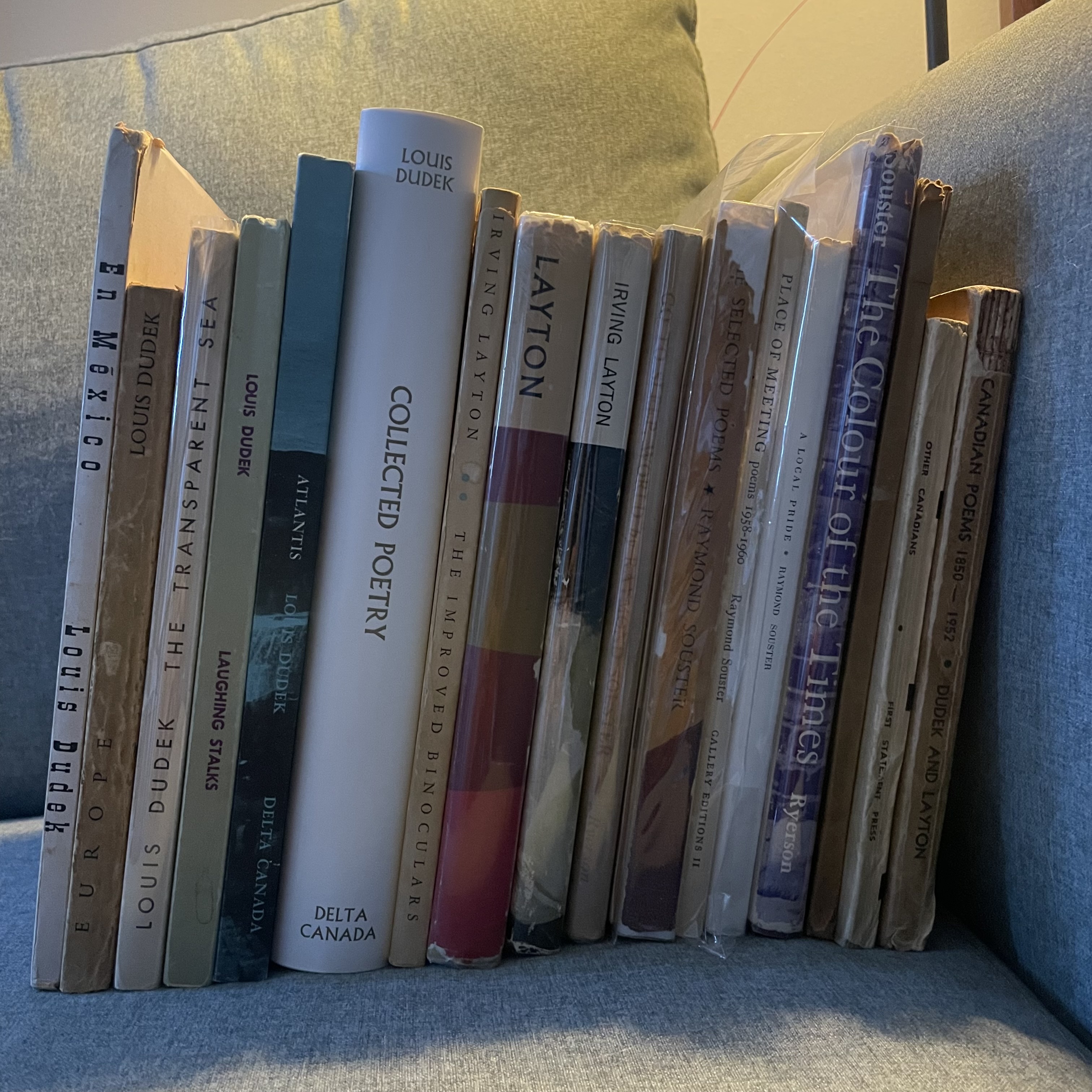
I was at the Ottawa Small Press Book Fair when I saw the news, surrounded by poets and chapbooks and lots of In/Words alumni. The news was awful, but it was also striking to be able to look around the room and pick out people who had been impacted by Collett, who were likely in that room to various degrees because Collett opened a door for them. I don’t know if I have a single photo of the two of us together—the years that we spent the most time together pre-dated smart phones, and so the evidence of her impact and our friendship is in my bookshelves, in my research and publishing, and in the decisions I have made in the small press. The evidence is in my having been sitting behind a table at the small press book fair again, for the fortieth or fiftieth time.
I saw and spoke with her only a few times in the last few years. She called me when she found out that she had received tenure—the high point of her professional life and the emotion in her voice sharing the news made clear how much it meant to her. I was happy for her, and proud of her, and hoped it would bring her some measure of peace in the university. She spoke at a memorial event for fellow Carleton professor and poet Robert Hogg in 2023 (after he died in 2022). And then I saw her at the funeral of her mentor, Michael Gnarowski, also in 2023, at which she asked some former students to speak (Michele Rackham Hall, Chris Johnson, and myself). In part, this is what I said:
I met Michael through Collett. In the way of writers—of poets, of scholars—his influence is felt in sequence. Michael had a profound influence on someone (Collett), who in turn influenced me. Collett was very good about putting Michael in a room with students. My first time meeting him was in the small food court underneath residence commons at Carleton. It was Michael, and Collett, and other student editors of a little mag. And we just listened as he told stories. There were other meetings over the years, often with some pretense of future plans—some scheme to publish or republish a book, or to track someone or something down—but the real point, the objective, was to have Michael talk to students, to kids coming up.
I think the lesson of those meetings for me, and of Michael’s work in a broad way, was the cycle of care needed to keep a literature alive, especially the small press. You need to pay attention to, and track down the details of, and reprint the books of, a literature, of the small press, and you do it for those who came before but also for those who will follow. It has to look both ways at once, and Michael was always very good at that. So in the world today there is a cascade of influence, of impact, from Louis Dudek, to Michael, to Collett (and others), to my and other groups that learned from Collett, and to whoever will come next.
I stand by those words. I think that will remain her legacy to me—picking up the torch from her mentors, and making sure that it found good hands in her students—and it is how I will primarily remember her. I am almost certain that our last interaction was when she sent a student of hers my way for advice on applying to grad school. I wish it had been to share news about her book, or my book, or just to talk poetry, but I can think of nothing more appropriate than that it was about her trying to encourage a student to keep studying literature.
Thank you, Collett, for all the times you encouraged me to do the same and for really deeply believing in your students. I was lucky to be one of them, and there are so many of us out there who believe in poetry and in the small press in no small part thanks to you. I hope you are at peace.
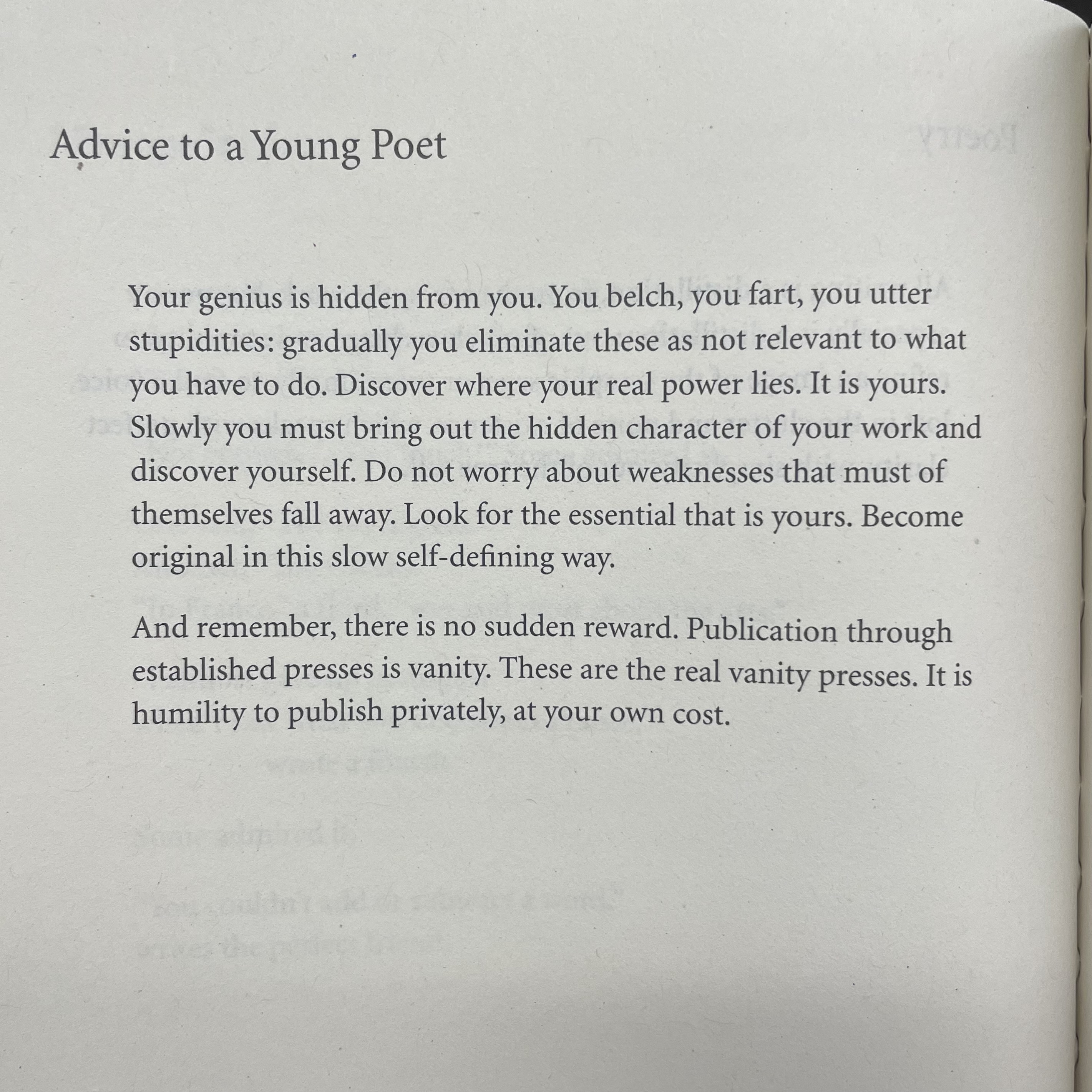
I’ll end with a Louis Dudek poem that I heard Collett read more than once. I think she counted it among her favourites and it is, I suspect, advice she would have kept giving to her students.