The Factory Reading Series: A VERSeFest Fundraiser

I will be giving a talk on Raymond Souster as part of a fundraiser for VERSeFest organized by rob mclennan through his Factory Reading Series this coming Thursday. Pearl Pirie and Stephen Brockwell will also be speaking. Pearl has all the details in a comprehensive post over at Pesbo.

VERSeFest has been a good thing for our city in the last two years, and its a nice to be able to contribute in some small way to keeping it running. Show up, lend your support, buy some books. $10.00 gets you in, gets you a copy of Peter F. Yacht  Club, and gets you three talks on poetry, poetics, and literary history. Pearl and Stephen are both wonderful poets and thoughtful, articulate people. I have no doubt that their talks will be worth the price of admission.

My talk on Raymond Souster, planned before his death, will focus on his contributions to Canadian poetry in the 20th century as an editor, publisher, and small press activist. Sort of like this but with more poems and more primary documents (letters!). I’ve even made a little handout that you’ll get free if you show up.

Hope to see you there!


Reading

This coming Thursday (November 1), I will have the privilege of reading with University of Ottawa Writer-in-residence Andre Alexis and one of Ottawa’s (and Canada’s) finest poets, David O’Meara. The reading is taking place at the Ottawa Art Gallery at Arts Court, 7:30pm. There will a Dennis Tourbin exhibit on the walls, no cover, cheap beer, and a book table. What more could you ask for on a Thursday night?

Hope to see you out!

Raymond Souster (1921-2012)

Raymond Souster died on Friday October 19, 2012 at the age of 91. I, like so many others, am deeply saddened by this news. Souster is a personal hero of mine, a model for a lifetime working in the service of poetry and the small press. His contributions are difficult to gauge accurately. I will happily argue any day that he is the single most important editor and publisher that Canadian poetry had in the 20th century. His work not only moved poetry forward in this country in pivotal moments in the 1950s and 1960s, he laid the groundwork for the way that much small press continues to operate today.

The day after he died, before I had learned of his death, I spent an hour re-reading some research I performed during my M.A. on his seminal Contact Poetry Reading Series prompted by a query from a fellow grad student. I spent the day with a renewed belief in the enormity of his contributions.

Souster is often, and far too readily, written off as a “poet of content,” a man who spent his life documenting the streets of Toronto in brief, modernist poems. As a poet, at his best, he wrote more than any one poet’s share of poems that will endure, some that have endured since the 1940s already: “The Hunter,” “Study: The Bath,” “The Six-Quart Basket,” “Flight of the Roller Coaster” to name only a small handful. My personal favourite has long been “The Lilac Poem,” unselfconscious in its gentle lifting from Kenneth Patchen, modest and self-effacing in the fashion of his public persona:

The Lilac Poem

Before the lilacs are over and they are only

shrunken stalks at the ends of drooping branches,

I want to write a poem about them and their beauty

brief and star-shining as a young girl’s promise.

space

Because there is so much made of strength and wealth and power,

because the little things are lost in this world,

I write this poem about lilacs knowing that both

are this day’s only: tomorrow they will lie forgotten. (Cerberus, 1952)

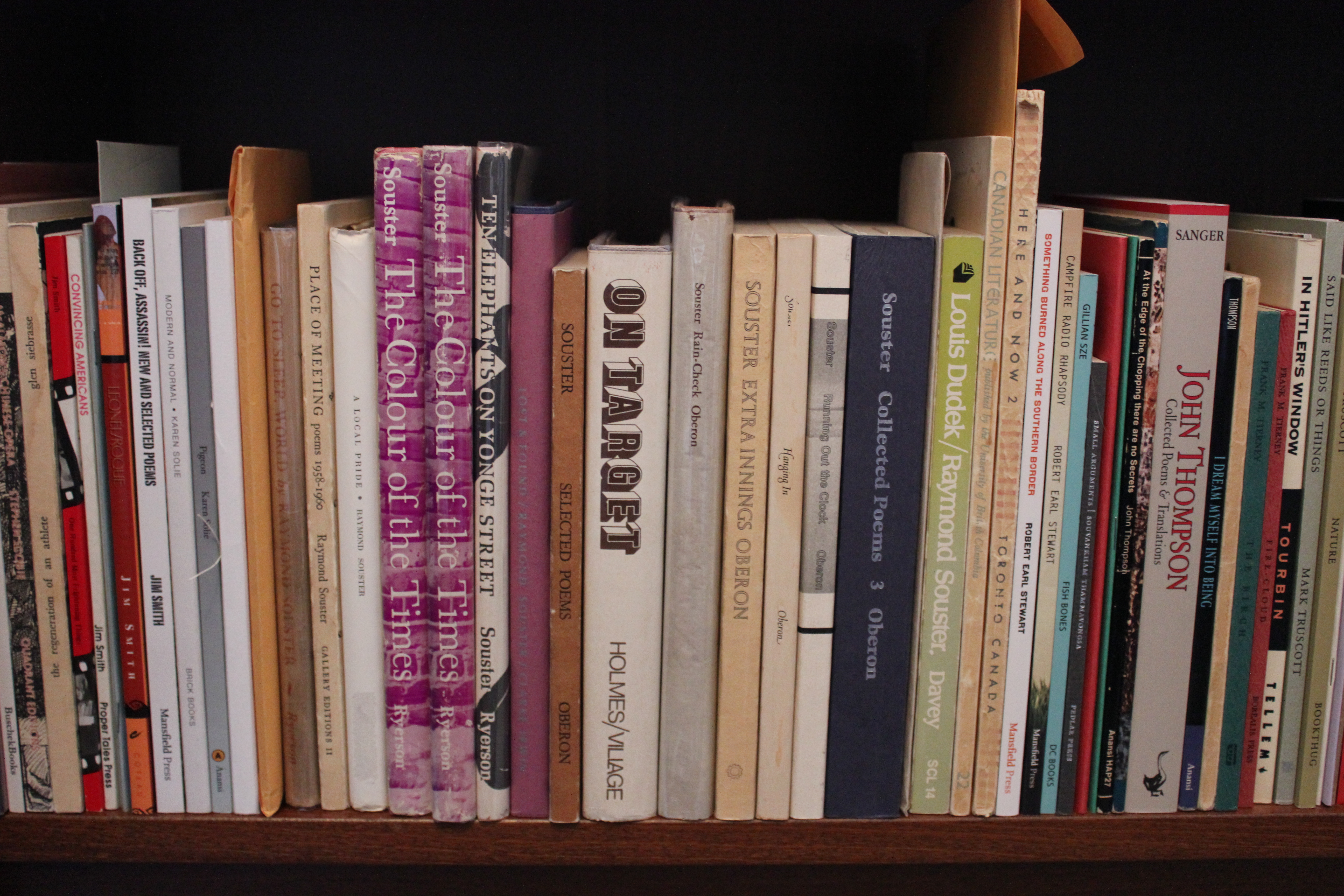
The renewed attention that his death will prompt will most likely focus on his contributions as a poet. The Colour of the Times, a book of collected poems published by Ryerson in 1964, won the Governor General’s Award and continues to be his definitive title despite the fact that he published actively throughout the second half of his life. It is a remarkable volume. Place of Meeting (Toronto: Gallery Editions, 1962) is a personal favourite. His long relationship with Oberon saw the immense nine volume edition of his collected poems published over several years, alongside a steady stream of new titles. But, rather than discuss his poetry here I would instead like to focus on his other contributions to Canadian poetry.

As an editor, publisher, and organizer, the importance of his body of work would be difficult to overstate. He founded Contact Press with Louis Dudek and Irving Layton in 1952. The press published an astonishing range of important books during its fifteen years of activity. Contact published first books, and first important books, by many of the poets who went on to shape Canadian poetry in the 60s and 70s: George Bowering, John Newlove, Alden Nowlan, Al Purdy, Gwendolyn MacEwen, Margaret Atwood. Souster was directly responsible for the first collection of poems by W.W.E. Ross that bore a publisher’s imprint. His final editorial project was the hugely influential anthology New Wave Canada: The New Explosion in Canadian Poetry (1966) (Victor Coleman was an important, though unacknowledged contributor to the selection process for this book). New Wave Canada published Michael Ondaatje, David McFadden, bpNichol, Victor Coleman, Fred Wah, Daphne Marlatt (still Daphne Buckle at the time), William Hawkins, Robert Hogg, and others (see the full table of contents below). For many of these poets, it was their first substantial appearance in print. Contact sustained and nurtured Canadian poetry between WWII and the explosion of small presses in the late 1960s. It published books by young poets, books by established poets that consolidated reputations, translations, anthologies, all with the ethic that it was better to lose money producing important literature than to make money producing garbage. Souster often printed his contributions on a mimeograph machine in his basement. With Souster’s death, all three of the founding editors are now gone.

Cerberus, the first title produced by the press, is itself massively important. A shared volume between Souster, Dudek and Layton, each poet wrote a brief preface to their poems articulating their personal beliefs about poetry in Canada at the start of the 1950s. It is long overdue for a reprint, or a proper critical edition (to any publishers reading this: I’m free if you’re looking for someone to edit such a volume!). Souster rarely wrote about his own writing publicly, but his Cerberus preface still reads as a manifesto for his work, both as a poet and editor:

S. has always believed (and still believes) that the primary function of poetry is to communicate something to somebody else. Not too important what that something is, the thing is to get it across, “make contact.” If you fail here all that follows, everything else you throw in, is wasted, and you might as well start all over again. Ninety percent of modern poetry fails here. And will go on failing until it learn this and puts the remedy into practice.

This belief in the need to “make contact” informs all of his editorial and publishing work. His magazines (Direction [1943-1946], Contact [1952-1954], and Combustion [1957-1960]) strove to bridge gaps between generations of poets within Canada, as well as connect Canadian poets to the international community. Contact, a magazine that was started months before Contact Press and that provided the name, was subtitled “An International Magazine of Poetry.” Kenneth Patchen, Henry Miller, Denise Levertov, Charles Olson, Robert Creeley, Cid Corman and other international writers were published alongside Irving Layton, Phyllis Webb, Louis Dudek and other Canadians. He believed that Canadian poetry needed to expand its horizons, but also that Canadian poetry had something to contribute to modernism internationally.

The Contact Poetry Reading Series (see this “Contact” thread?) was a physical manifestation of all of these projects. Run from 1957-1962 in Toronto, primarily at the Isaacs Gallery, Souster and others (Kenneth McRobbie, John Robert Colombo, Peter Miller, Avrom Isaacs) brought a stunning range of American poets to read in Toronto alongside new and established Canadian poets. Leroi Jones, Frank O’Hara, Charles Olson, Louis Zukofsky, and others, read next to James Reaney, A.J.M. Smith, George Johnston, Margaret Avison, Leonard Cohen, Ralph Gustafson, Jay Macpherson, and on and on and on. The series paid their poets, a massive gesture in a country that rarely hosted readings to begin with. They hosted French Canadian poets (with handouts featuring poems in translation). They insisted that poetry had an oral/aural dimension that had to be returned. They presented the poet to the audience, and the audience to the poet, an act of great importance in developing a poetry reading public in Canada and convincing poets that there indeed was an audience.

I spoke to Souster twice over the telephone during my research in 2009. He was generous with his time and his memories, and his memories were sharp! Everything he told me lined up with what my research was showing. I regret not having had an opportunity to visit with him. His archives at UofT are a great untapped resource in the development of our understanding of Canadian poetry at mid-century.

Following the news of Souster’s death, my dad remarked that Souster had lived “a life of right work.” I think that is apt and accurate. While I am sad at his passing, I am also immensely grateful for all that he offered us, for all that we were lucky to have access to because of his tireless and often unacknowledged work. He has been marginalized by Canadian literary history. Without Contact, Contact Press, the Contact Poetry Reading Series, Combustion, and other projects of his, the literary landscape in this country would have developed in radically different ways.

Think about his legacy next time you attend a reading series, or pick up a small press book, or read a little mag. Souster insisted that we connect generations, that we connect geographies, that we connect writing and publishing, that we connect artistic languages and mediums, that we connect writer and reader. His injunction to “make contact” is as valuable today as it was in 1952.

And go read some of his poems too, they’re good for your soul.

Recent Acquisitions

A complete run of the first eleven volumes of Bywords: Volume 1, Number 1 (November 1990) to Volume 11, Number 4 (February 2001). Acquired generously from Seymour Mayne. I can’t wait to have time to pour over these closely. The listings of community events in each issue from these eleven years are fascinating on their own, to say nothing of the poetry. It’s a shame that these were never culled for an anthology, but perhaps someday.

A set of M&S books from the late 1950s and early 1960s designed by Frank Newfeld. Newfeld’s contributions to the visual branding of CanLit in the 1950s and 60s would be difficult to overstate. He designed the original New Canadian Library series, as well as these (and other) important titles. Layton’s Red Carpet for the Sun (1959), Sheila Watson’s The Double Hook (1958), The Mad Shadows (1960) by Marie-Claire Blais, a set of important poetry titles (Ralph Gustafson’s Rivers Among Rocks (1960) pictured here, but others by Leonard Cohen, Phyllis Gotlieb, and Roy Daniells as well). There are a bunch of great posts on Newfeld’s work at The Dusty Bookcase worth reading, with loads of photos and intelligent commentary: one, two, three, four. Absolutely gorgeous books.

His designs for Layton’s Red Carpet and Balls for a One-Armed Juggler were the inspiration for the promotional postcard we designed for the upcoming Irving Layton Symposium at the University of Ottawa. These are iconic Layton images, the images that branded him at the height of his national and international celebrity. Newfeld’s work was hugely visible.

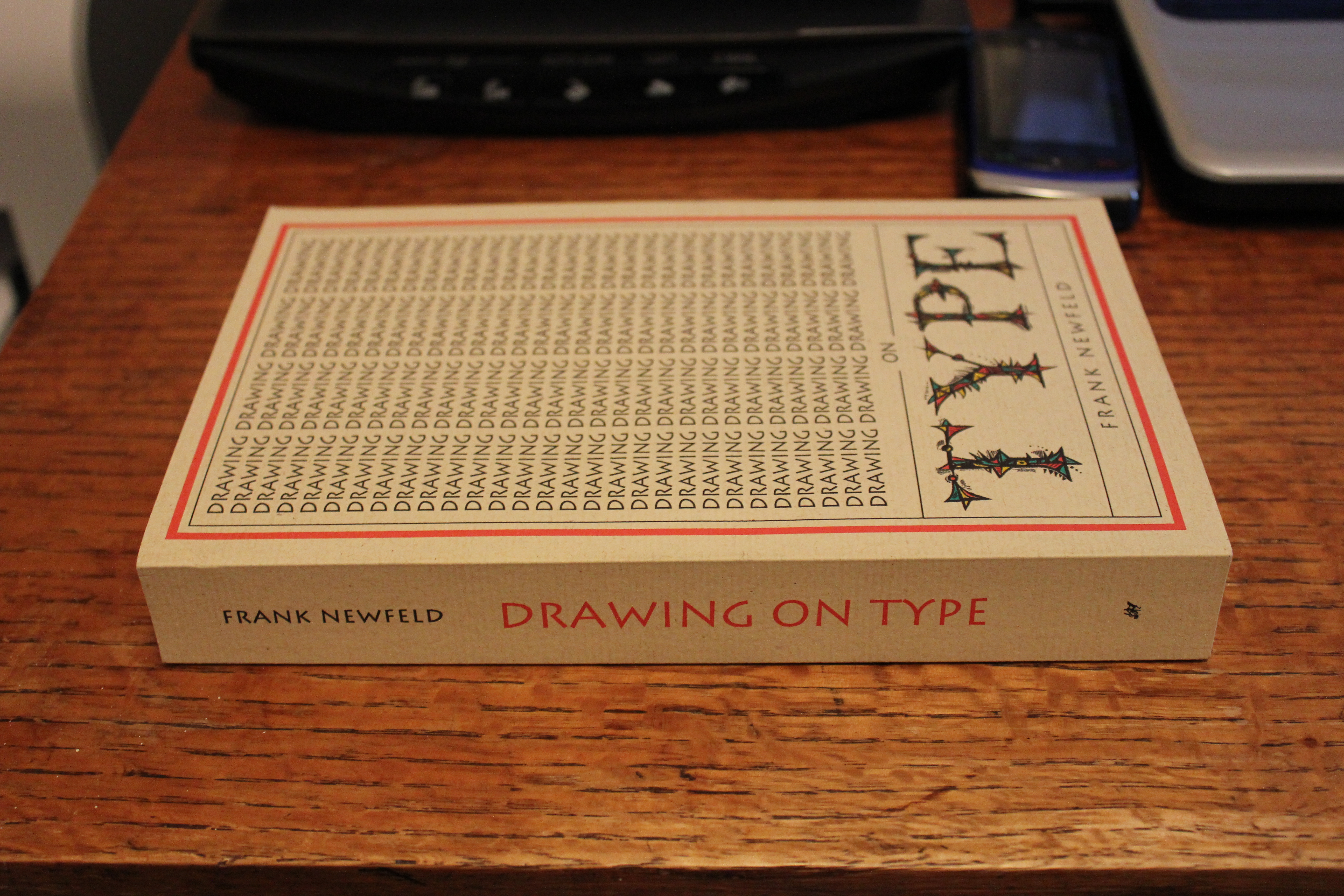
I also got my hands on his memoir Drawing On Type (Erin ON: The Porcupine’s Quill, 2008) which I can’t wait to dive into, if only this damn comps reading list wasn’t so long…

And speaking of the Layton Symposium, have you seen the call for creative submissions?

Whatever Else: An Irving Layton Symposium

In May 2013 the English Department at the University of Ottawa will be hosting an Irving Layton Symposium. Fulls details of the CFP are available here.

There is a related literary project in the works called “Layton Reloaded,” and we want submissions. Go spend an afternoon, or even an hour, reading Layton poems and see what happens. For the years of critical neglect, and the unsavoury dimensions of his character, the best of his work stands up and is deserving of response. Call for submissions below:

LAYTON RELOADED
In conjunction with “Whatever Else: An Irving Layton Symposium, to be held at the University of Ottawa May 3-5, 2013, and in recognition of the centenary of Layton’s birth, we invite writers to respond—whether by way of homage, parody, retort, homolinguistic translation, or any other dialectical form (glossa, travesty, echo poem, etc.)—to a Layton poem of their choice. Our favorites will be published on the symposium website (www.canlit-symposium.ca), and we are exploring the possibility of other forms of publication as well. Please send your response, along with the title of the original poem, to Robert Stacey at rstacey@uottawa.ca or Cameron Anstee at cameron.anstee@gmail.com under the subject heading “Layton Reloaded.”
Submissions are due April 1, 2013.

July/August Reading Miscellany

In between course work reading and comp reading, I’ve managed to find a bit of time for pleasure reading in the last couple months. Here are some incomplete notes on what I’ve been enjoying.

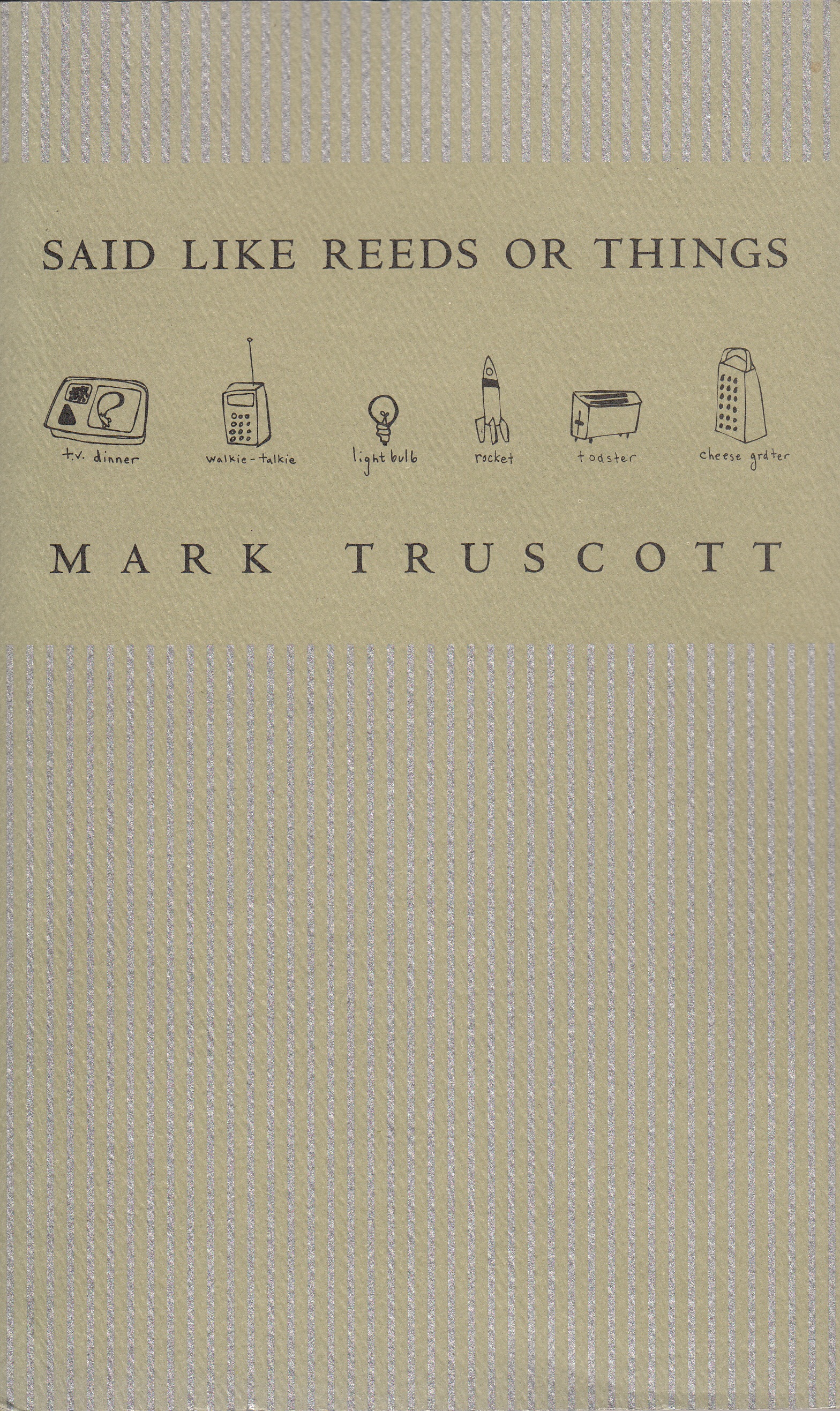
Mark Truscott. Said Like Reeds or Things. Toronto ON: Coach House Books, 2004.

I found Mark Truscott’s Said Like Reeds or Things at Benjamin Books in Ottawa. I was drawn to the slim book by its odd title and the familiar Coach House logo. A quick scan through the book showed that it was built from minimal and concrete concerns. I was sold when I saw who had blurbed the book: Lisa Jarnot, Stuart Ross, and Nelson Ball. I don’t typically lend too much weight to blurbs, but when Nelson Ball feels a book is deserving, only a fool would ignore it. Nelson writes, “Mark Truscott’s poems bore to the centre of poetic process. These concise, cerebral poems surprise and challenge at every turn, questioning how we think and perceive. They’ll make you think about how you think. They are difficult but rewarding.”

The book is 77 pages, but with barely five words, and often fewer, on many of the pages, it is a quick read. Ball is correct though, these are not simple poems, they are ‘difficult’ and ‘rewarding.’ The book demands rereading. And rereading. And rereading. It is a great joy to find a book from a practicing poet whose work you are not familiar with, but you immediately feel an affinity with. Page after page of this book is full of poems that I wish, desperately, that I’d written. The four part poem, “Eights,” one of the longest in the book at a whole thirty two lines, felt immediately familiar. It was a poem I had been trying to write, and failing to write, for years. And here it was, complete and published.

I’m late to this book; it was published eight years ago to massive acclaim (as massive as acclaim comes in Canadian poetry, at least). Ron Silliman sang its praises; Sina Queyras loved it; Jonathan Jones gave it a long and thoughtful review. I could spend the day typing out its poems and posting them here, madly jealous that Truscott wrote them, but there are many typed up in those three reviews to give you a taste of the book. Truscott brings to mind Aram Saroyan’s minimal experiments from the 1960s and 1970s (available in 2007’s Complete Minimal Poems), the minimal aesthetic of Nelson Ball, or the experiments of bpNichol and Steve McCaffery.

Truscott published a second book in 2010 with BookThug, Nature, followed by the chapbook Form in 2011. It is frustrating to find someone writing precisely the poems you wish to be writing, but also comforting to know that someone is doing it right. Look for this book, and follow Mark Truscott if you’re not already.

Mark, thanks for writing Said Like Reeds of Things.

Open Letter, Sixth Series, No. 4: Spring 1986. The Barbara Caruso Issue.

Barbara Caruso passed away in December 2009. Barbara was a phenomenal painter, an important small press publisher, and wife of poet, publisher and bookseller Nelson Ball. I never corresponded with her directly, but she generously sent me copies of her memoirs in the summer of 2009 via Nelson while I was performing research during my M.A. Her two volumes of memoirs, A Painter’s Journey, are hugely important documents in the history of Canadian art. She documents not only the difficult and often painful process of being a professional artist in Canada in the 1960s and 1970s, but also the horrifying sexism she faced as a professional woman artist. She also documents the founding of her own Seripress, an important outlet for experimental and concrete-visual poetry in Canada in the 1970s. Moreover, she was active illustrating and designing books from Nelson Ball’s seminal Weed/Flower Press. Their interactions with poets like Michael Ondaatje, William Hawkins, and John Newlove recapped unselfconsciously by Barbara are worth the cover price alone.
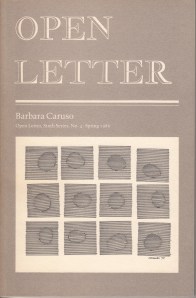
This issue of Open Letter, edited by bpNichol in 1986, is a loving document of Barbara’s place in Canadian art and publishing. I purchased it recently from jwcurry at room 3o2 books (who, incidentally, has a new installment of Messagio Galore forthcoming on Friday August 10). It includes interviews, bibliographies, lists of exhibitions, as well as statements from Barbara herself on her artistic practices. She writes with care and clarity about her visual art. I admire artists of any medium who are able to express clearly their thoughts on the artistic process. For example, Barbara writes, “Even when I made no attempt to create darker or lighter lines, in fact attempted to maintain a sameness of pressure, variations occurred. The body tires, the hand tires, the mind tires and the line will tell of this” (8). It is easy to identify with Barbara’s writing here. As a poet, as a publisher, as a student writing essays, her attention to available materials and the myriad ways to organize and construct them is wonderful and accurate. She cares deeply. I wish I had had the opportunity to meet her in person.

Christine McNair. Conflict. Toronto ON: BookThug, 2012.

Eagerly anticipated and well-deserved, Christine McNair’s first trade collection is a joy. At 130 pages, Conflict is a substantial first statement from the poet, and a book to read over several sittings. My favourite dimension of Christine’s work is the way that she is attentive to the letter as the basic unit of composition. Her work as a book conservator, her experience at Gaspereau Press, and her own forays into design and publishing inform her poetic. Christine knows how to set type, she understands the material weight of letters, the care that goes into each imprint of each word. One gets the sense reading Conflict, despite its size, that Christine is an economical poet and rarely frivolous. To celebrate her recent acquisition of a letterpress, now housed in her basement, Christine set and printed three of the best lines from Conflict’s “A Fool’s Grace”:

Conflict is a book of startling variety: lyrics, concrete-visual poems, conceptual pieces, prose-poems. It is a confident and assured debut, published in a typically beautiful edition by BookThug. I can’t wait to see what Christine does next, and am looking forward to spending more time with this book.

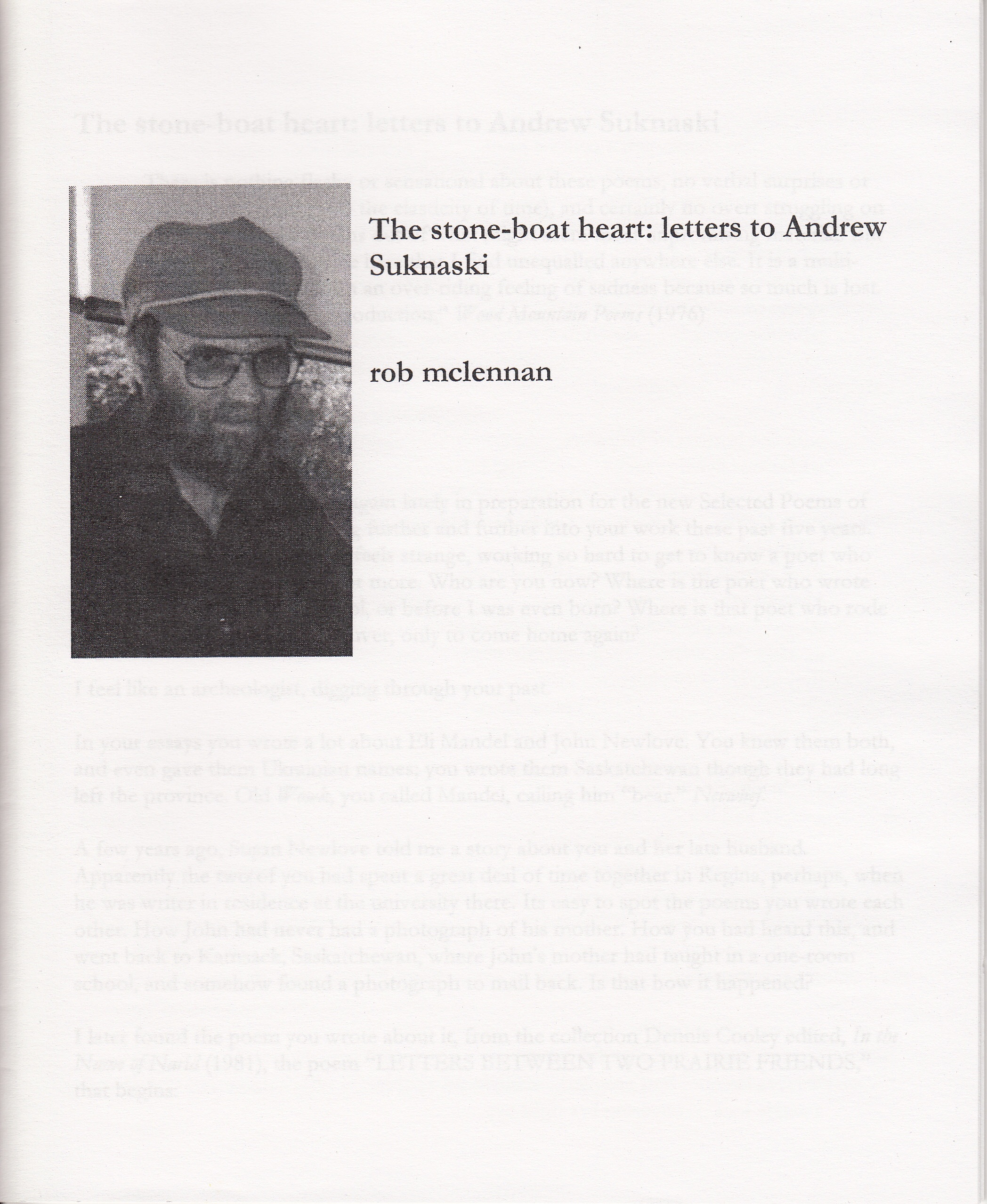
rob mclennnan. The stone-boat heart: letters to Andrew Suknaski. Ottawa ON: Apostrophe Press, 2012.

From rob mclennan’s occasional Apostrophe Press comes a chapbook of one-sided correspondence between mclennan and the late Andrew Suknaski. I have to confess my general ignorance of Suknaski’s work. I know him from occasional anthologies, and by reputation, but I have never seen his books available in used book stores and as a result have never been able to dedicate his work the time it evidently deserves. I’ve been aware of the perpetually forthcoming selected poems from mclennnan’s Chaudiere Books, but given Suknaski’s recent death I suspect that publication will find itself further delayed by a new landscape of legal complications.

What I like about mclennan’s project is the way that it foregrounds the act of reading. These letters chart the experience of reading and rereading an admired poet, a gradual process of developing a relationship with their words. mclennan writes, “I feel like an archeologist, digging through your past.” He reads poems, essays, and gathers stories from friends and colleagues. One of the most interesting dimensions of the book is how it gestures towards the experience of reading as a relationship, but a predominantly one-sided one. mclennan was in contact with Suknaski, as his editing of the selected poems makes clear, but by presenting one side of the conversation he acknowledges that reading and research can often foster a sense of intimacy with a person that is most likely not shared.

In Andrew Sukanski mclennan finds a person of whom he can ask questions of literary friendships, the creative process and creative silence, place, vernacular, family history. Is this is a book of correspondence? An essay? A brief biography built from fragments? mclennan has a history of writing about his own past in his poetic and non-fiction (most recently Glengarry included an afterword titles “The green-wood essay: a little autobiographical dictionary”). Much of what he says to Sukanski also reads like a reflection on his own practice: “Almost any writer, it could be said, is searching for their own way home; searching for a sense of self through the pain, and sometimes, being ruined by it. You left home and then longed for it; and by the time you returned it was gone.” I hope we see There Is No Mountain someday soon. I hope I find his books available in the meantime.

Monty Reid. Garden (dec unit). France: Corrupt Press, 2012.

Monty is one of my favourite poets writing in Canada. His serial poems are grossly underappreciated by the majority of the country. I’ve had the privilege of publishing two of them in the last few years. His books are often constructed of a series of sequences or stand as a single book-length poem. He has embarked on a massively ambitious project in the last couple years, writing twelve installments of his Garden Unit series. Installments have been published by above/ground press, Laurel Reed Books, The Red Ceilings Press, grey borders, Obvious Epiphanies, and now Corrupt Press from France. There is clarity to these poems, a clean line that Monty has been developing since his earliest work in the late 1970s, that shines.

5. April

Thaw

space

has a boundary

and an unmarked space excluded by the boundary.

space

It is not art, but everything

splits the real world into a real world and an imaginary world.

space

A shovel, for instance.

I was reading recently about Richard Brautigan’s Please Plant This Book, a book published in 1968. Brautigan wrote eight poems, one each about California Native Flowers, Calendula, Carrots, Lettuce, Sweet Alyssum Royal Carpet, Squash, Shasta Daisy and Parsley. The poems were printed on seed packages, and the reader was encouraged, as per the title, to plant the poems. Monty’s project seems to develop out of a similar impulse. The garden is material, one works it with one’s hands, it is an ongoing process, it produces growth and decay, it is never static. Monty’s catalogue of epigraphs (this installment uses Phyllis Webb) is a great document of writers thinking about gardens. I am enjoying collecting and reading these chapbooks, and I hope that there is a publisher in Canada smart enough to go after the entire manuscript and publish it in an edition deserving of the poems.

Interview: Susan Johnston

This morning, Susan Johnston very kindly interviewed rob mclennan, Marilyn Irwin and myself on Friday Morning Special Blend on the mighty CKCU about the upcoming reading/launch/anniversary. The full audio is posted below. Thanks, Susan!

3 August 2012 | Friday Morning Special Blend, Susan Johnston, rob mclennan, Marilyn Irwin, Cameron Anstee

Details: Reading, Chapbook, Interviews

The full details of the upcoming above/ground press 19th Anniversary and chapbook launch have emerged. I will have the pleasure of reading alongside Stephen Brockwell, Amanda Earl, and Marilyn Irwin.

Stephen Brockwell is one of the most careful and thoughtful poets writing in Ottawa. I’ve discussed his ongoing Impossible Books project on the blog previously. I’ve never read with Stephen before and it should be a joy. Amanda is one of the most adventurous poets in Canada. I know few other writers as willing to take risks and try new things as Amanda–concrete, lyric, critical, reflective, erotic. You can always count on Amanda to surprise you. Additionally, she is an incredibly active and supportive editor/publisher, with Bywords and AngelHousePress. Marilyn and I read together a few years ago at an above/ground event, and I can’t wait to see where her work has gone in the last couple years. She is incredibly attentive to words and syllables as her units of composition, working from sound and texture primarily (at least in my reading of her work). It will be a privilege to read with these three, and I hope you can make it out. Stephen, Amanda and Marilyn deserve an audience.

My chapbook is titled Regarding Renewal (abandoned titles include Mostly Intact and Somewhat Unstable). It includes twelve fairly brief poems that feel a bit different for me, but I’ll leave that up to readers to decide. I’m excited to read from it properly for the first time. The book has three epigraphs, the first of which I’ll share here.

How can we arrange everything so that everything is great? –Ron Padgett

rob mclennan has got his powerful above/ground media machine running, finding interviews for the four of us. rob appeared on CKCU’s Literary Landscapes with Dave Currie last thursday, discussing the history of the press and including readings by myself and Amanda Earl. rob, Marilyn, and myself will be on CKCU Friday Morning Special Blend with Susan Johnston tomorrow morning at 7am. And there is a series of interviews at Open Book: Ontario in the works. Amanda answered the Proust Questionnaire here. My own responses are forthcoming.

That’s it for now. Hope to see as many out at the Mercury Lounge as possible next Thursday!

July Events

I’ve been neglecting this blog for the last month. I’m in the process of reading toward my first comprehensive exam in Canadian Literature as well as completing the final credit of the course work portion of my PhD. Blog, I apologize. I have plans for you though! Your state will not always be so neglected!

Today there are some upcoming Ottawa events to discuss and attend.

This coming Sunday (July 15) I will be giving a very brief reading in support of the In/Words Fundraiser for VerseFest. The featured readers will be Peter Gibbon, returning briefly from his long-exile in the far East with his long-awaited and wonderful little mag Conduit, and Shai Ben-Shalom who will be reading from his first chapbook, Martians Among Us, published by In/Words last month. The other support readers comprise a phenomenal list of young, exciting, worth-following poets in Ottawa: Jeff Blackman, Rachael Simpson, Bardia Sinaee, Jesslyn Delia Smith, Jenna Jarvis, and, if rumours are to be trusted, we may see one more Ottawa-and-In/Words ex-pat return from Toronto for one night only. Though not entirely representative, this lineup feels to me as though it distills much of the most exciting activity of the previous six or seven years over at Carleton University and In/Words. It is worth attending, despite the horrifying claim that “historically significant In/Words Magazine items will be raffled off through out the night.” Moreover, VerseFest is an enterprise deserving of our support. Dave Currie has done a great job organizing the reading on virtually no notice. Please be there.

The House Band Reading Series, brain-child of Brendan McNally, returns on July 21 with Bardia Sinaee, Don Fex, and DJ Komsomol, 9:00pm at the unparalleled Raw Sugar. I was lucky enough to read in the House Band in December and it was a excellent experience. Bardia, as you will know if you read the above paragraph, is someone to watch. I was privileged to publish a broadside by Bardia recently with Apt. 9 Press and I plan to be onhand with copies.

I’ll be giving another reading in August, the details of which are still coming together. rob mclennan’s above/ground press is being generous enough to publish a new chapbook of mine and the reading will be a launch that also celebrates the 19th anniversary of above/ground (nineteen years! wow!). It appears as though the reading will take place August 9 at the Mercury Lounge. I’ll post details of the full lineup as they come together.

There are other things you should attend: The new Bywords Quarterly Journal launches this Sunday; rob mclennan and Christine McNair are reading at Dusty Owl the same Sunday; on July 24 at TREE  Jacob McArthur Mooney is in town, along with Stuart Ross leading a free workshop beforehand based on the “late and magnificent” Joe Brainard; all other events you need to know about are listed at the comprehensive Bywords page.

That’s it for today. I’ve got a proper post coming along, I swear! My reading hasn’t been only nineteenth century novels and endless theory, there is contemporary poetry, book design, and book history to be considered. Until then I’ll leave you with this enjoyable, if slightly sad, documentary about print, design, and bookshops in Toronto–Epilogue: The Future of Print.