A small round-up of some small essays from the last couple years:
“On Minimalism” (Periodicities, February 2025): Reflections on minimalism in response to the question “How does a poem begin?”
“Some Silences: Notes on Small Press” (Apt. 9 Press, August 2024): Reflections on what it means to be engaged in the small press, produced as a chapbook produced to mark the 15th anniversary of my chapbook press, Apt. 9 Press. Now available in full as a free pdf.
“Meeting Ph” (AnyWord: A Festschrift for Phil Hall. Beautiful Outlaw Press, 2024): Reflections on Phil Hall’s influence on my writing and small press life, written as a contribution to this Festschrift. Only available in print.
“On Culling” (Shelf Portrait, The Richler Library Project, November 2023): Reflections on the necessary act of culling when building a personal library.
The sad news that Michael Gnarowski died came through last week.
Michael Gnarowski, April 27, 2012, at the John Glassco Soiree, Montreal’s Writers’ Chapel. Credit: Brian Busby
I’d like to share some of my memories of Michael, of the encounters I was lucky enough to have. In reflecting on those over the past few days, I began to reflect increasingly on the specific and at-times indirect ways that he has influenced me. I am going to try to articulate some of those here.
I hope someone will write a proper biographical overview of Michael’s life (I haven’t seen an obituary yet, but please send it my way if you do and I’ll update here. Update: Obituary). I am simply not equipped to do it, but I can offer a few small press details. He was born in 1934 in Shanghai. He studied at McGill in the 1950s, where he met Louis Dudek during the earliest years of Contact Press (here is his discussing Contact Press on The Biblio File). He was a poet. I have two of his books, both from Delta Canada: Postscript for St. James Street (1965) and The Gentlemen Are Also Lexicographers (1969).
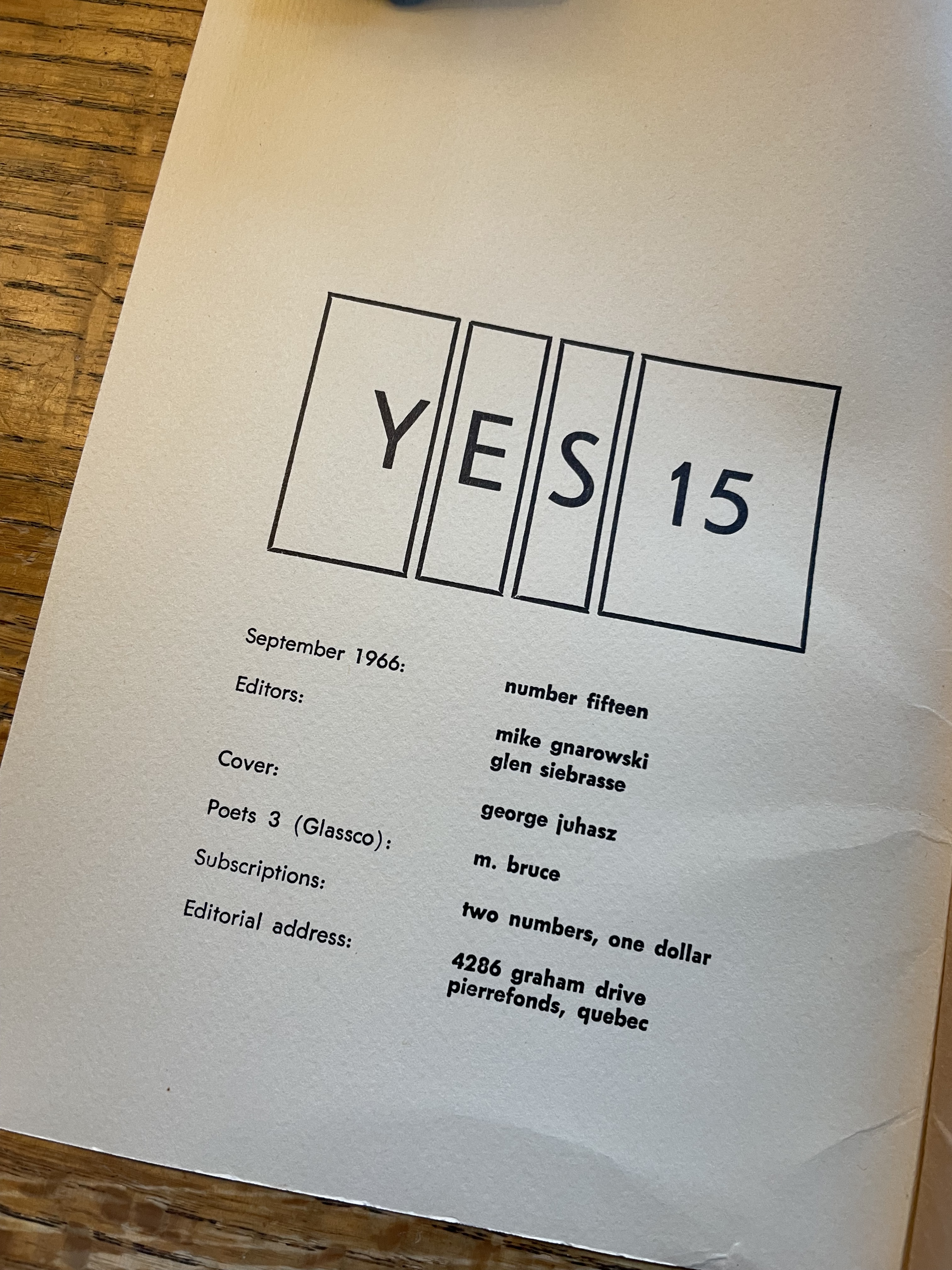
He co-founded and co-edited a number of magazines. Yes was the earliest, starting around 1956, with Glen Siebrasse and John Lachs). Arc has been the most enduring, founded in 1978 with Christopher Levenson and Tom Henighan, a magazine that lives on today and recently celebrated it’s 100th issue. There was Delta Canada and Golden Dog Press and Canadian Poetry: Studies, Documents, Review and The Carleton Library Series and Carleton University Press and others and still more. And there was his formal academic life, teaching at Carleton University for decades.
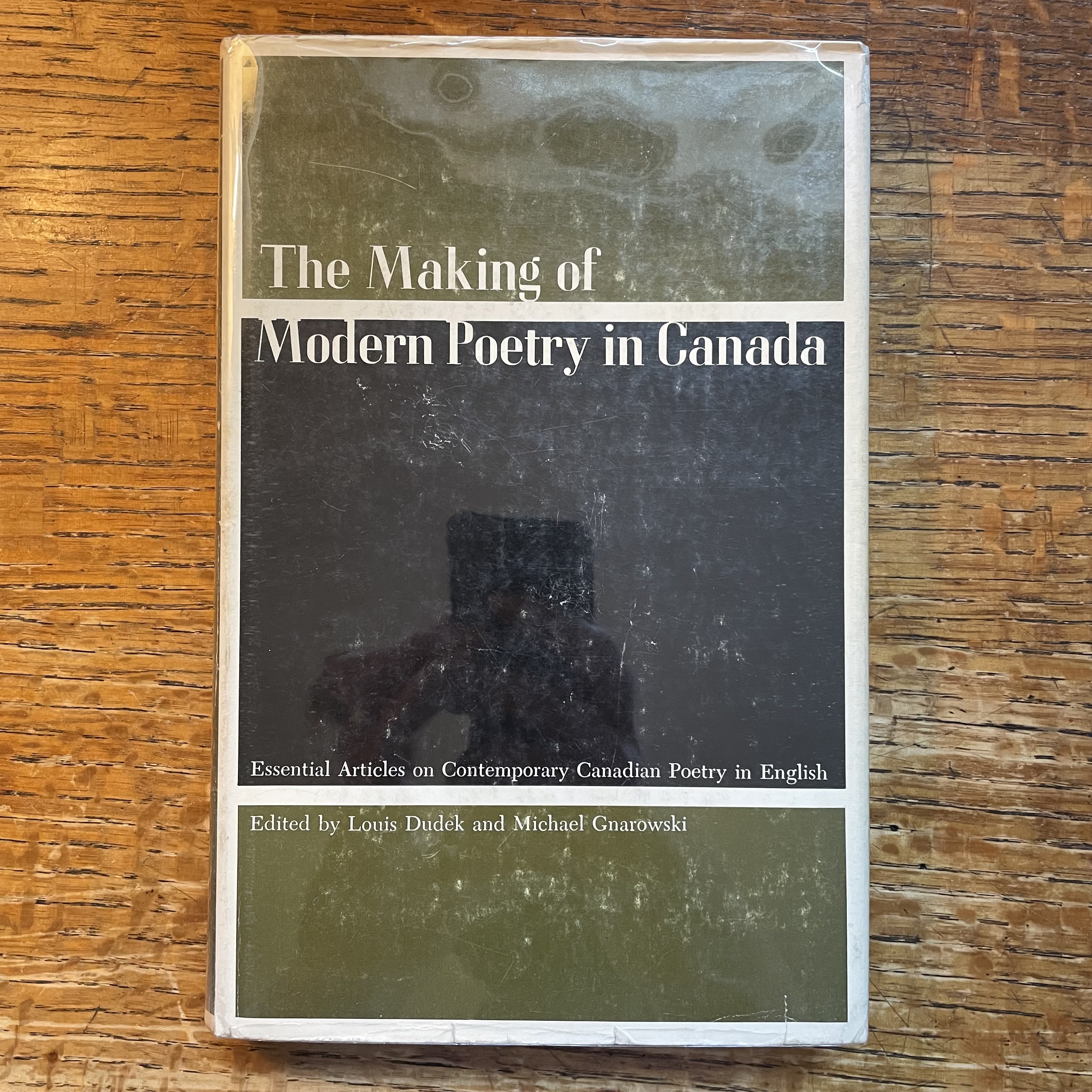
Michael is someone who, for a couple decades, had an enormous direct influence on the shape of Canadian Literature as a field of study. For many—well, for many of those who might read this blogpost—he will be known as co-editor, with Louis Dudek, of The Making of Modern Poetry in Canada: Essential Articles on Contemporary Canadian Poetry in English (1967, and recently reprinted), a book that in the 21st century is perhaps most often encountered on comps reading lists, or as a book that more contemporary scholarship reacts against.
The Making of Modern Poetry in Canada did just what it’s long but precise suggested, it gathered primary documents from formative moments in the history of modern Canadian poetry. Like all of us, he had his favourites—poets, editors, presses, magazines—and so those biases shaped where his and Dudek’s scholarship focused. It was a book that staked out a space that he and Dudek felt was important. In making those claims, the space became visible and this created a frame within which one could work, or against which one could react from the outside. It was a book that sparked more work.
Looking back on the book fifty years after its publication, despite whatever blind spots there may have been, the impulse was so clearly the correct one—to do the painstaking labour of writing indexes and bibliographies, of finding and remembering the primary documents and the precedents, of trying to chart influence across generations. That impulse drove so much of his work—the serious and unglamorous but utterly necessary work of documenting a field that was largely undocumented, work that was certainly more difficult and time consuming in the pre-internet era in ways it is hard to understand today, work that was and is vital to building a foundation for research and for culture.
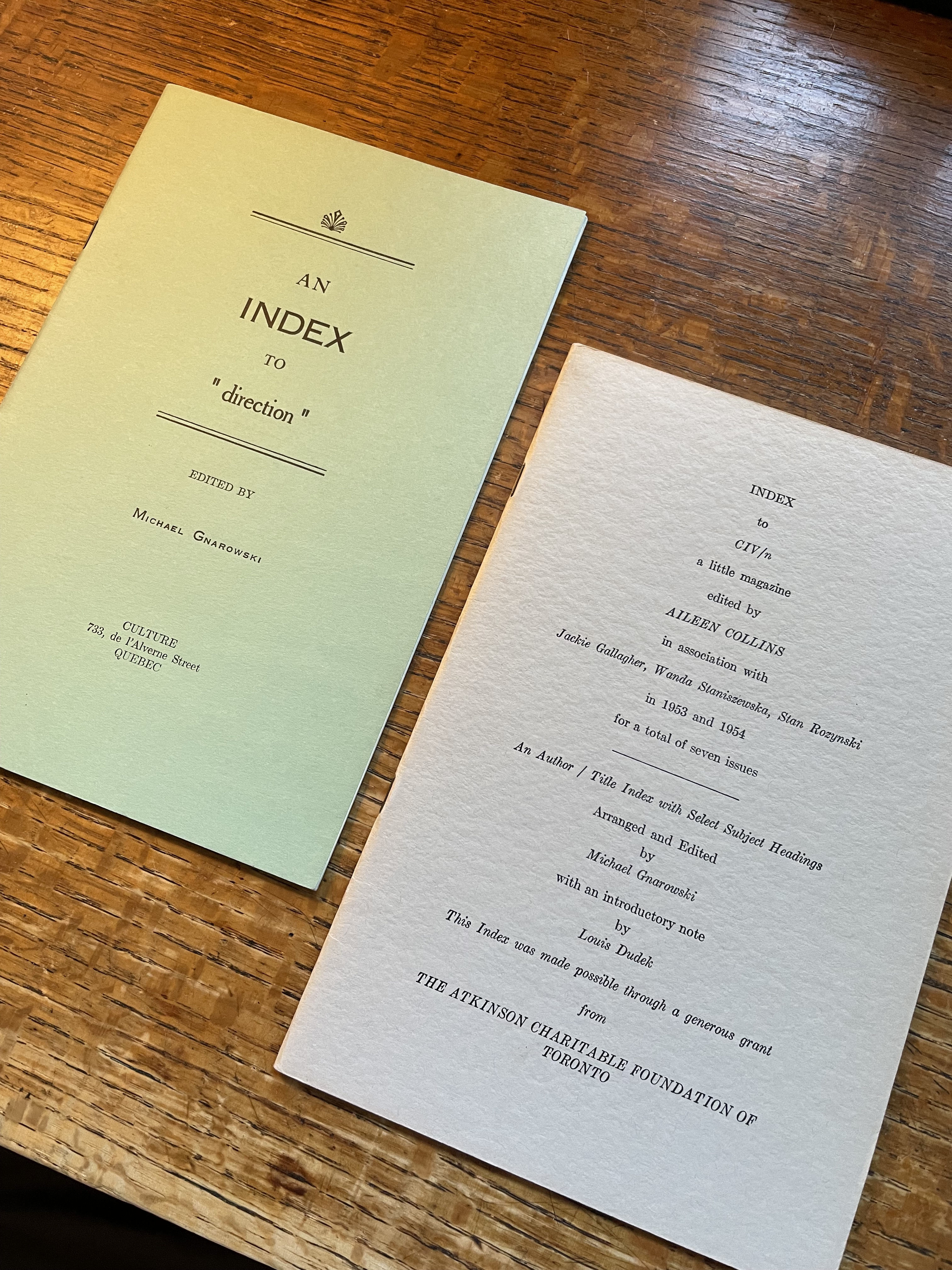
Yes Michael was a poet and editor, but when I turn to my shelves today I find that his indexes and bibliographies occupy the most space—indexes of magazines like CIV/n, and Direction, and Contact, and of Contact Press, and of English Canadian literature broadly. I have a little hardcover reference book he published with M&S in 1973, A Concise Bibliography of English-Canadian Literature, which was adapted from his doctoral dissertation.
I was going through his indexes and bibliographies looking for a quote to use that would express something of his character, that would offer some sense of his appraisal of the state of Canadian Literature and the small press at one point or another in time. What I found instead were modest offerings, always in service to readers and to history, such as this from the preface to The Making of Modern Poetry in Canada: “The main purpose, as history, is to present to the reader original texts which are not otherwise easy of access and to make it possible for him to arrive at his own interpretations and to form his own conclusions.” Or this note “by way of explanation” from his check list of Contact Press: “The intention of this small work was to provide an account of the earliest days of Contact Press, and to make available a list of the titles which were published under its imprint.”
I think that impulse to document and preserve has proven enduring in Canadian Literature scholarship, and in the small press. It certainly informs a great deal of what I try to do.
I met Michael through Dr. Collett Tracey. Collett was responsible for my own introduction to Canadian small press—that is, my introduction to what has become a central point of focus in my life going on two decades now. Collett referred to Michael as her “intellectual, academic father” after he died. As students, she spoke of him regularly to us, and after I became involved as a student editor at her little magazine (In/Words, Carleton University), I met Michael for the first time when Collett brought him to campus.
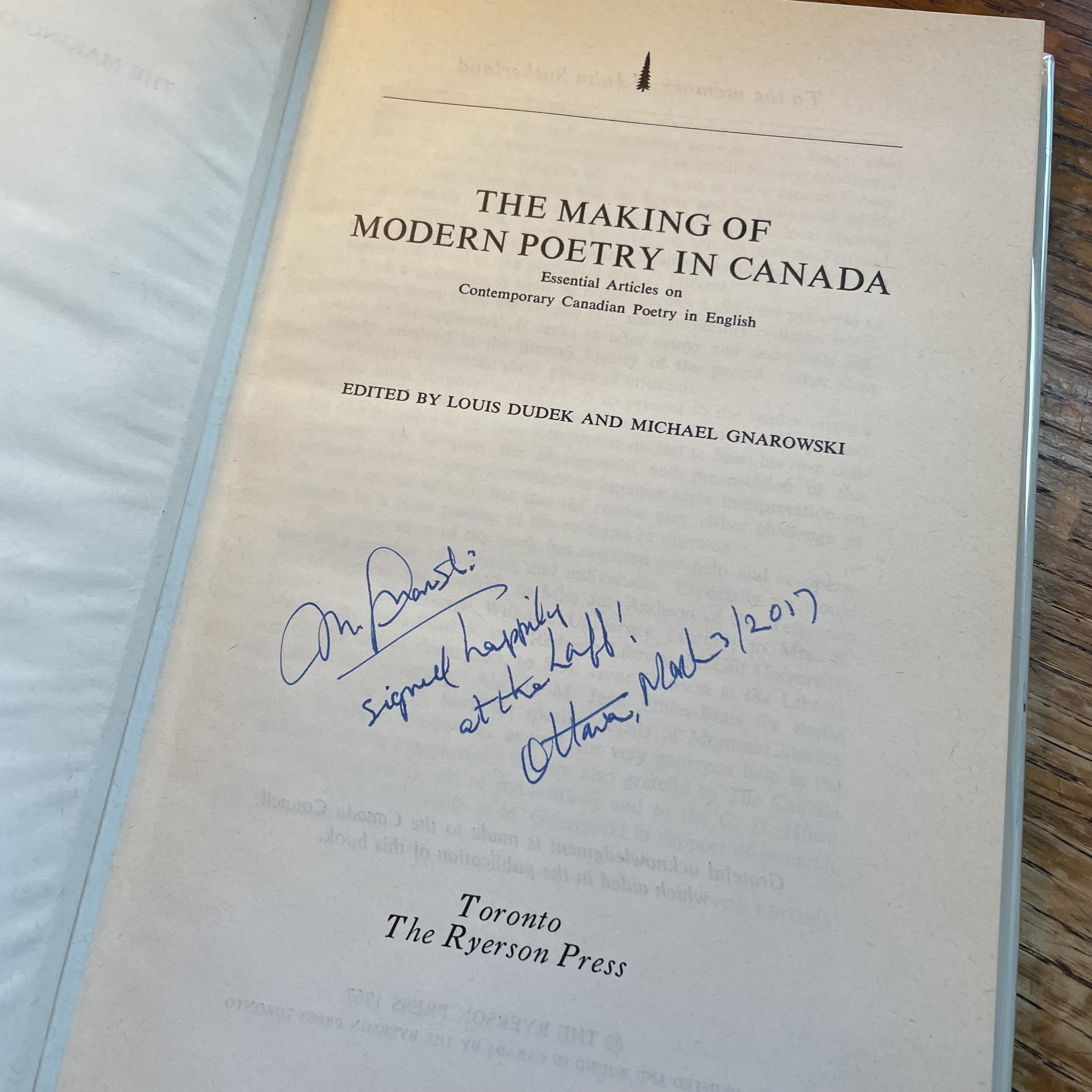
We met—Collett, Michael, the editors at In/Words—in a small food court beneath residence commons, and we just listened to him. He told us stories of his life in poetry, his friends, what he thought of it all. (We had no smartphones in 2007 so I have no photo.) A few years later, he was a reader on my M.A. Research Project and I remember my nerves before sitting in that small room in Dunton Tower across from him. I saw him occasionally after, always through Collett. The most recent meeting was March 2017—still no photo, but I can date this one thanks to a kind inscription on a book—at the Lafayette in Ottawa’s Byward Market. It was Collett and Michael, again, as always, with a table or two of current students and former students. Ostensibly we were there to discuss future plans—some scheme to publish or republish a book, or to track someone or something down—but the more important work was putting Michael in a room with some kids just coming up. I remember it, and hope they will too.
In the way of writers—of poets, of scholars—his influence is felt in a cascading way. Michael had a profound influence on someone—Collett—who in turn had a profound influence on me and on so many others, so many of those who are my earliest and most important friends in poetry and the small press. I think that sometimes after years or decades in a field, you may think that the fact of you’re having arrived there was inevitable, that one way or another you would have found a door in. That may be true, but it is also speculation. In my case, I can trace one of a few formative moments to a lecture Collett delivered on Contact Press that definitively opened a door for me, and I know that that moment traces itself back to Michael’s influence on Collett.
It is the lot of those with in the small press—of all of us of course—to slip into obscurity. We fight against it in the name of the writers and editors and presses we love—we find and remember books, we write essays, we share work—before we confront it ourselves. But I think when you go about it in the right way, if you’re lucky, your work keeps the lights on long enough for the next generation to show up. And after another generation or two there can be something durable where before there was not. I think Michael went about it that way, and I am grateful to be in a room he helped to establish.
I began to write this in a suspended moment, having received the news that Bob was in palliative care two Thursdays ago, but with no further details, not knowing how long he had left, or if perhaps he was already gone. The news came out yesterday, Friday, November 18, that he had died the previous Sunday at the Ottawa General Hospital surrounded by his family. I know that once word of his palliative care spread, a flurry of emails went to him from all over, as his many communities tried to express to him something of his importance as a person, a poet, an editor, a scholar, a teacher. I hope that every note arrived in time, and that Bob was able to read them.
I knew Bob primarily as a poet and so will speak of him here primarily as a poet, but long before I understood his contributions to poetry in this country, he was a presence in my life through my dad, Rod Anstee. They had Kerouac and the Beat Generation in common. They travelled together to NYC in 1994 for a Beat conference at NYU, and to Montreal where Bob introduced my dad to Allen Ginsberg. I have the faintest memory of visiting an office in Dunton Tower with my dad, probably in the early 90s or late 80s, a gloriously disordered office that must have been Bob’s. I remember that among dad’s books, which I understood to be important, were Bob’s books, and so they too were important. Dad and mom spoke of Bob with such respect in our house that even as a child it carried weight for me. When I got to know Bob myself, I of course understood immediately.
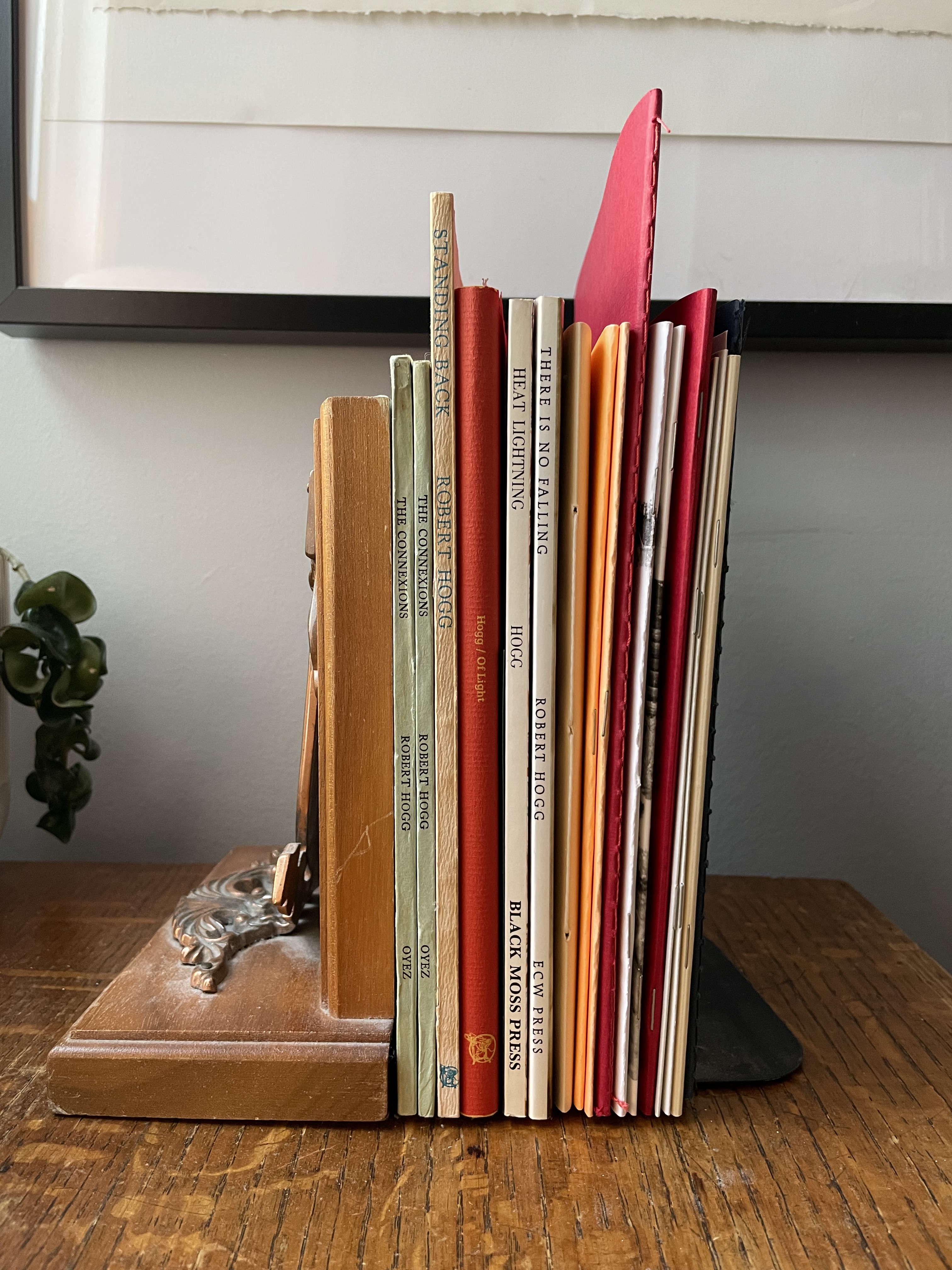
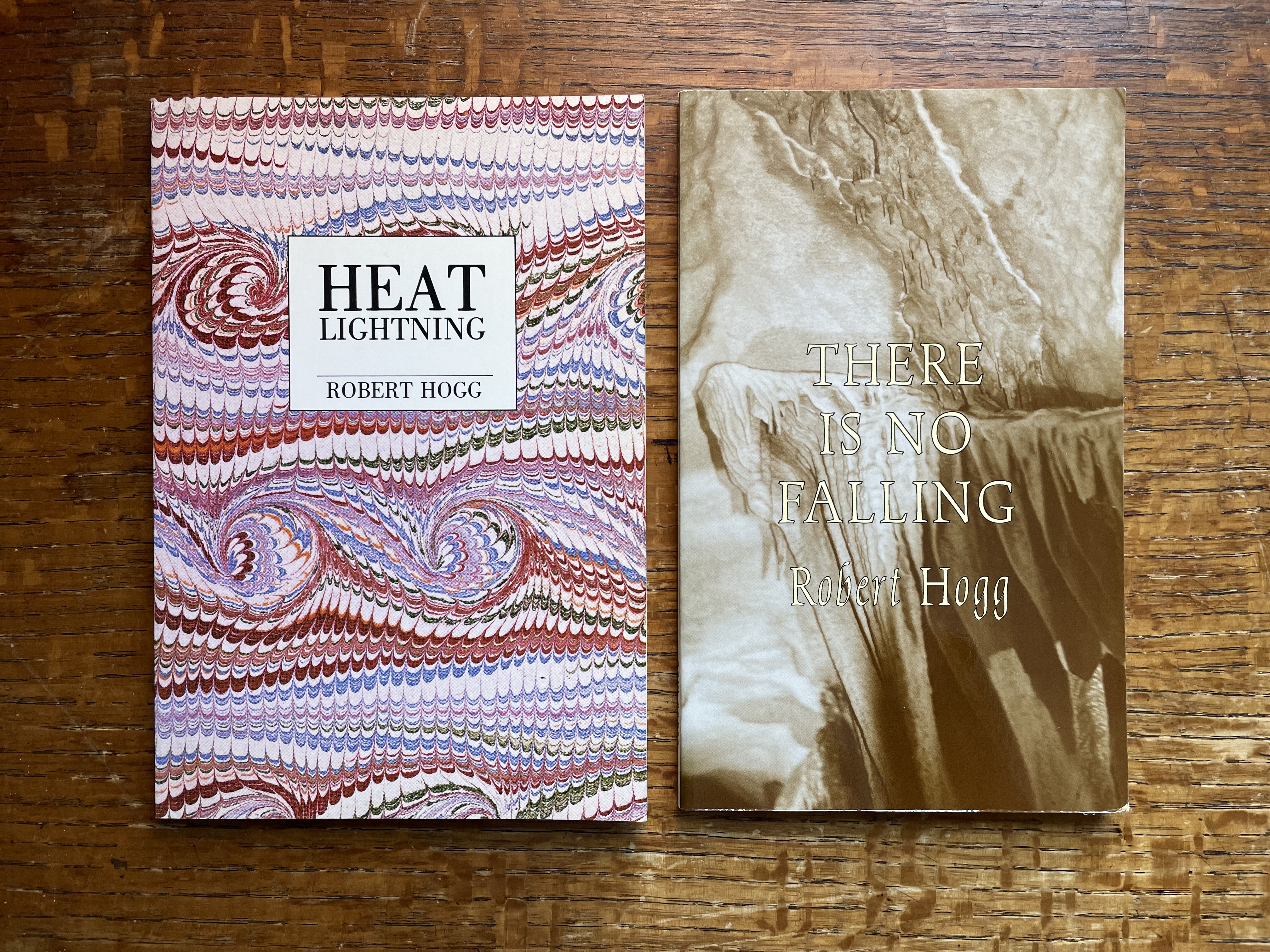
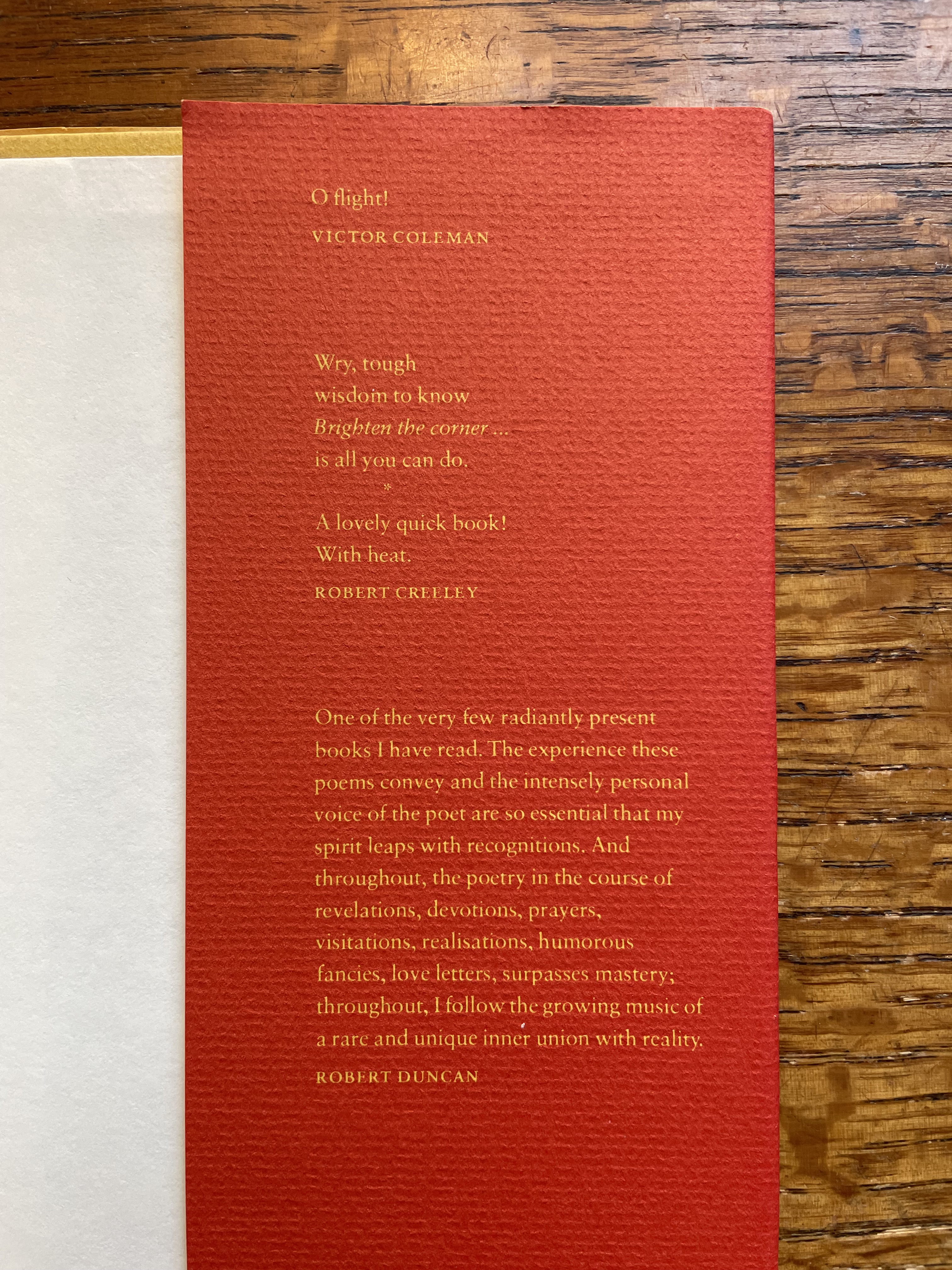
His five trade books were published from 1966 to 1993, a book every 6 or 7 years. A pace influenced, I am sure, by his research, and his teaching, and his farming, but also a graceful pace. Each book in his bibliography is unique, and none overstay their welcome. They were published by Oyez, and Coach House, and Black Moss, and ECW (with an edited collection of Confederation-era poetic theory from Talon for good measure), all excellent presses that did beautiful production work on the books. The blurbs on Of Light make clear the esteem in which he was held by his fellow poets—none other than Victor Coleman, Robert Creeley, and Robert Duncan sing his praises.
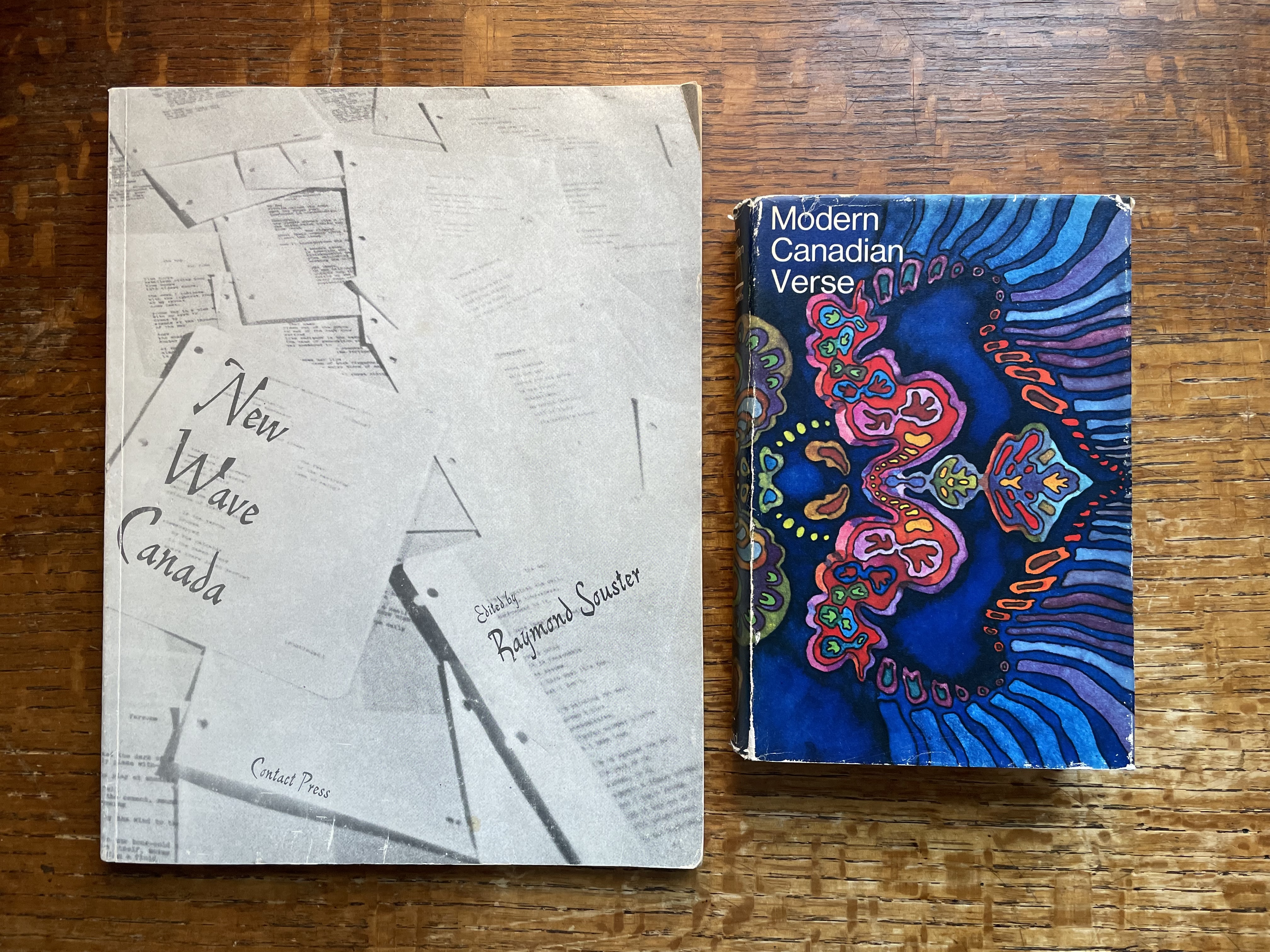
His work appeared in New Wave Canada in 1966, the seminal anthology edited by Raymond Souster for Contact Press that established many of the primary directions of Canadian poetry in the decades that followed, and in Modern Canadian Verse in 1967, edited by A.J.M. Smith for Oxford University Press, alongside the Atwoods and Ondaatjes and McFaddens of Canadian Literature.
He was an editor at magazines TISH and MOTION. He studied at SUNY Buffalo under Charles Olson, on whom he later wrote his dissertation under Robert Creeley. He taught Literature at Carleton University for close to 40 years, while also somehow finding time to become an organic farmer and operate an organic flour mill. He retired from Carleton around the time I started there as an undergrad, and I wish that I could have sat in on one of his classes. My dad audited a Beat course he taught in the 90s, the syllabus of which is still tucked into my copy of Of Light.
The final act of his writing life was notably productive. While it has been close to thirty years since his most recent trade book, others are reportedly forthcoming (with Chax and Ekstasis). There were chapbooks—from above/ground, and battleaxe, and Apt. 9, and Trainwreck, and Hawkweed, and his own Hogwallow. He published in magazines near and far, in print and online, and offered a steady stream of brand new poems on his Facebook account.
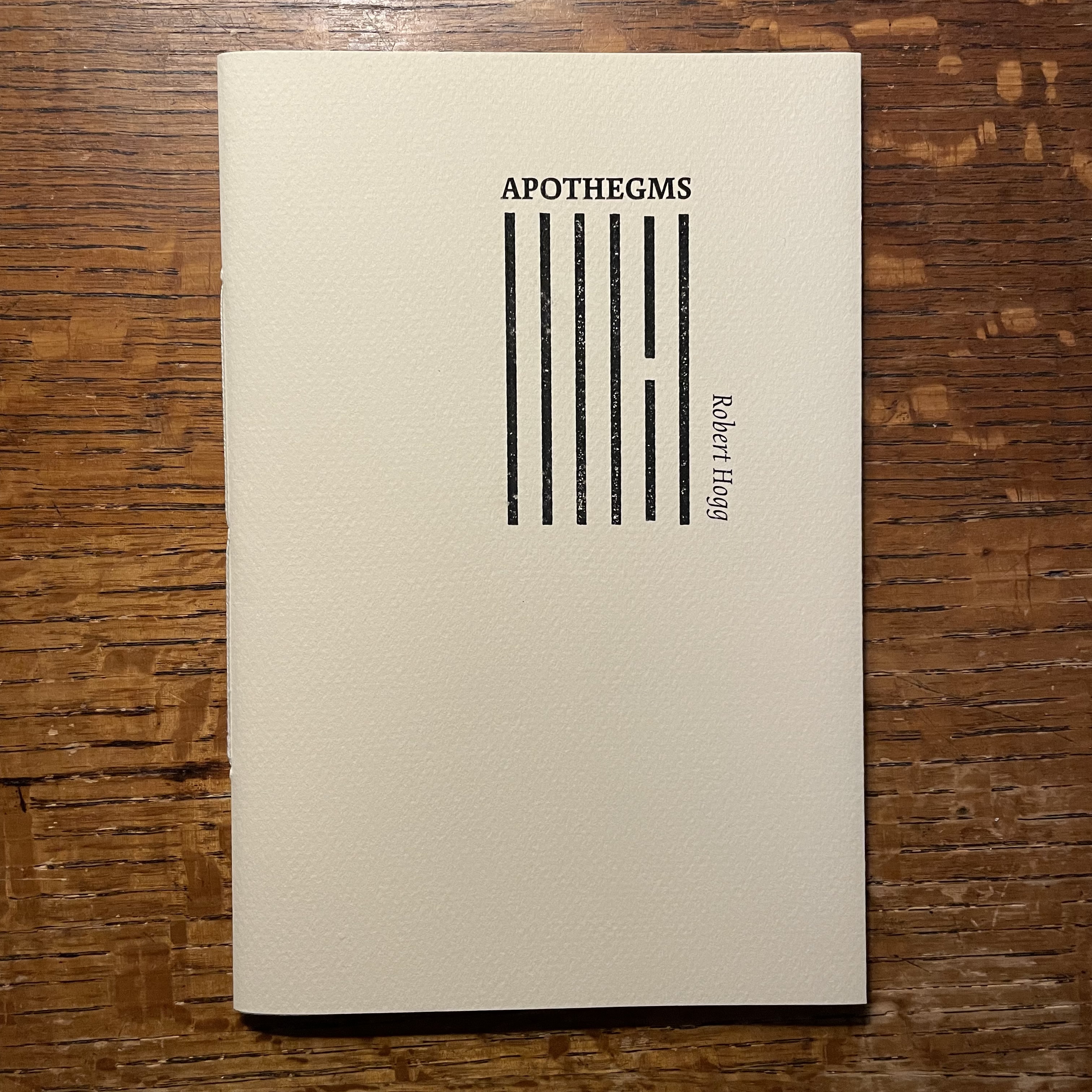
I worked with Bob on one book of his, the late chapbook Apothegms published in December 2021. Bob sent me a large file of his very smallest recent poems, from which he let me make a selection, and after only a bit of back and forth, we settled on the manuscript. He even allowed me to use graphic elements from his very first book, The Connexions (1966), on the cover and title spread. Bob told me the story of that first book, and of the hexagram, as follows:
Not sure if you know, but I threw that oracle with the I Ching in Buffalo before heading out to Berkeley in the summer of 1965 with the ms in my satchel because I was wondering if it held together sufficiently, or if I should wait before thinking it might be a “book”. The resulting hexagram, No.14, is called Ta Yu – Possession in Great Measure! That kind of resolved the issue for me, and lady luck did the rest. I met Robert Hawley, the publisher of Oyez Press, quite accidently while browsing a bookstore he owned in nearby Oakland. Realising we were there for the Berkeley Poetry Conference, he asked my friend, Marty Kriegel, if he was a poet; he said no, but my pal here is. Hawley asked if I had a ms of poems he could look at. I did. The next day we were back for an elegant lunch and I signed the contract! I even got paid $150, which would amount to about $1500 today. The only book I was ever paid for. 500 copies were printed.
Publishing Apothegms was one of the great privileges of my life, small press or otherwise. The poems are, of course, excellent, full of humour and insight and carried by his reliable poetic instincts. But it was also the experience working with Bob. He was so generous and open throughout the process, and patient with me, and I think that we made a truly great book together. I’ve put up a PDF of the whole thing for free here if you’re interested.
We also put a Wikipedia page together about him a couple years ago that was hilariously rejected the first time for plagiarism (we had “plagiarized” his own biographical note from the listing for a reading of his).
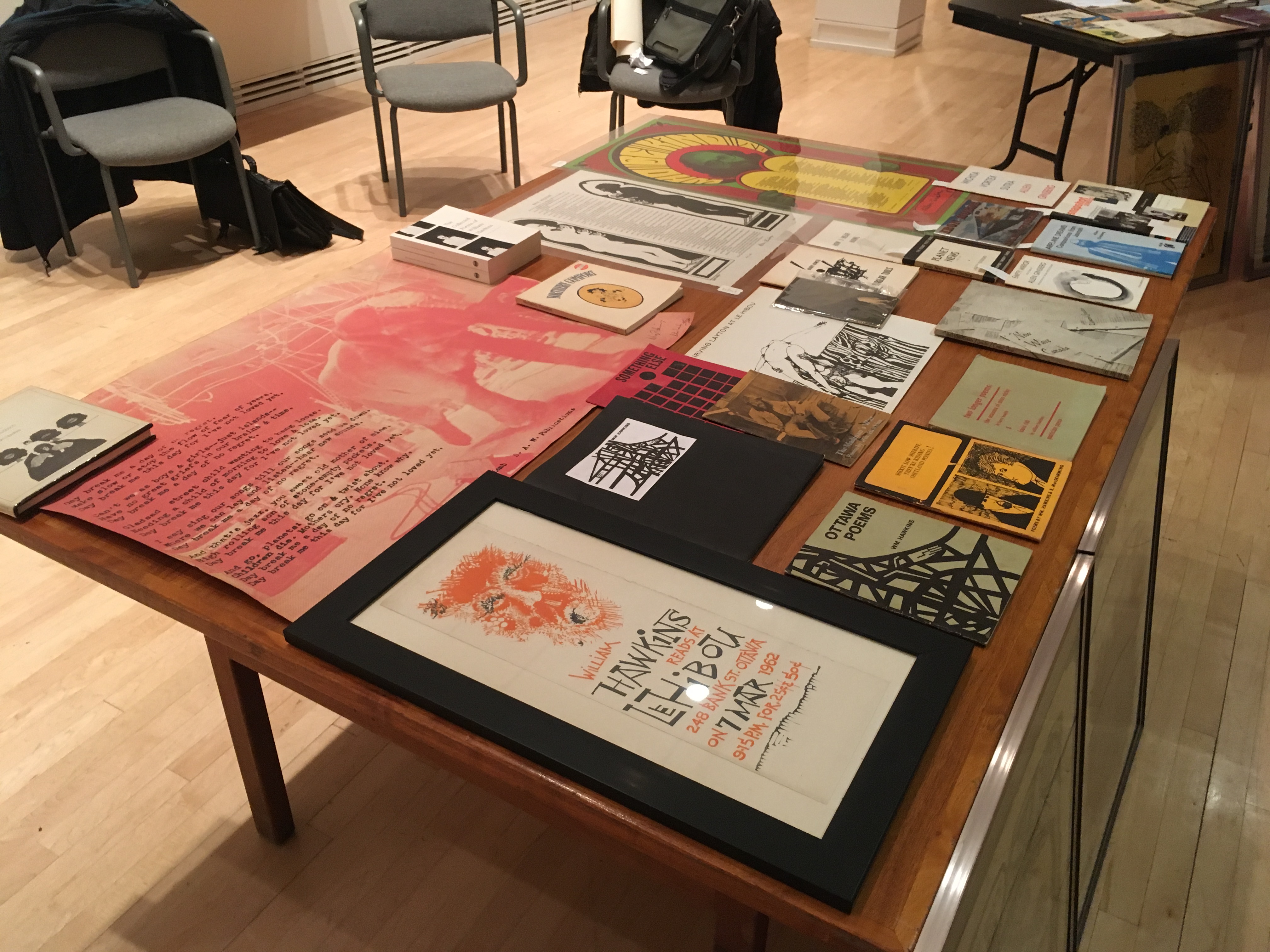
I hosted a panel about the Beats and Ottawa in 2016 at the Carleton University Art Gallery. It was Bob, Roy MacSkimming, and Rob Holton, discussing the experience of seeing Allen Ginsberg read at Carleton in the 1960s and the later influence of Beat writing on their lives and careers, all set against an exhibition of Ginsberg’s photographs. What a great night that was, with tables full of books and ephemera and posters, much of which came from Bob’s office. I also remember an earlier panel at VerseFest (maybe in 2014?), with Bob and William Hawkins, during which there was a screening of a documentary about the conference, followed by Bob and Bill reminiscing about it.
Bob was kind. That is a common thread in notes on social media in recent days, the kindness he unfailingly showed, something especially important for young poets to whom he was never anything but generous and enthusiastic. He was as excited about chapbooks as about trade books, about magazines low and high profile. He just wanted to share work, and have work shared with him. His emails were always full of news, and discussion of what he was reading, and comments on any recent poems (his, or mine, or someone else’s)
I remember being annoyed with Bob when I would ask him to sign books—he had a habit of putting the book on a table, opening the cover, and then pressing it flat with his palm, leaving a horrible crease! Now I realize that I will buy his new books and never have the pleasure of being annoyed with him for how he signs them.
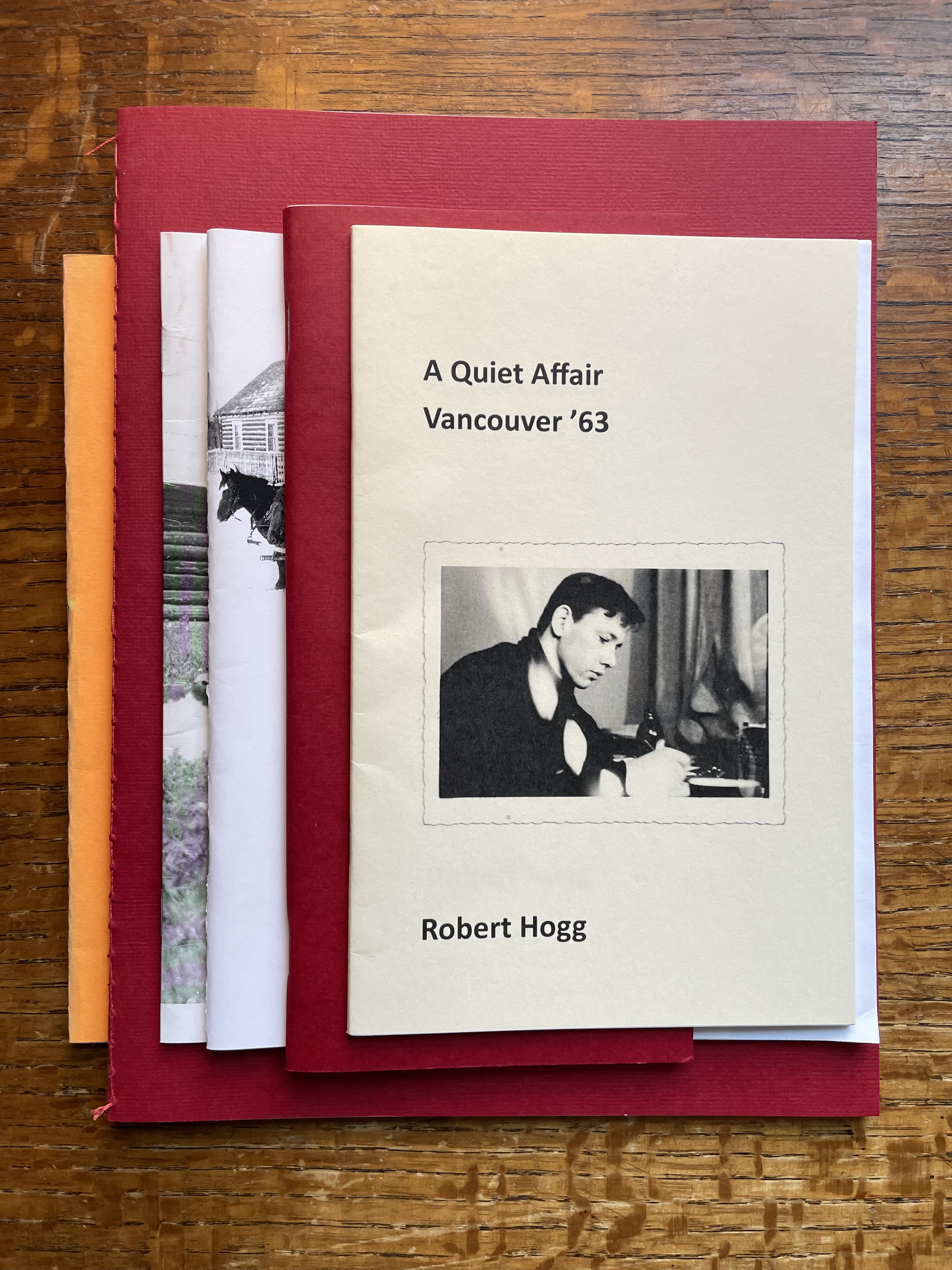
Just last week, thinking of the Ottawa Small Press Book Fair, I made a small leaflet of poems for Bob. I had been planning to hand it to him at the fair (in fact we had plans for a small exchange that day). It was intended as a small gesture of thanks for publishing Apothegms with Apt. 9, and which became wholly inadequate given the news. Those poems are also in this tribute rob mclennan put together, with which I look forward to spending time.
I had, and have, such admiration for Bob’s writing life, the honesty of it, the joy of it, the commitment to poetry, the openness to it (and patience with it), the role it played in his life. I hope to emulate a small part of it all. Bob contributed a great deal as a writer, an editor, a researcher, a teacher, a poet; work that mattered, and matters, and will matter I believe.
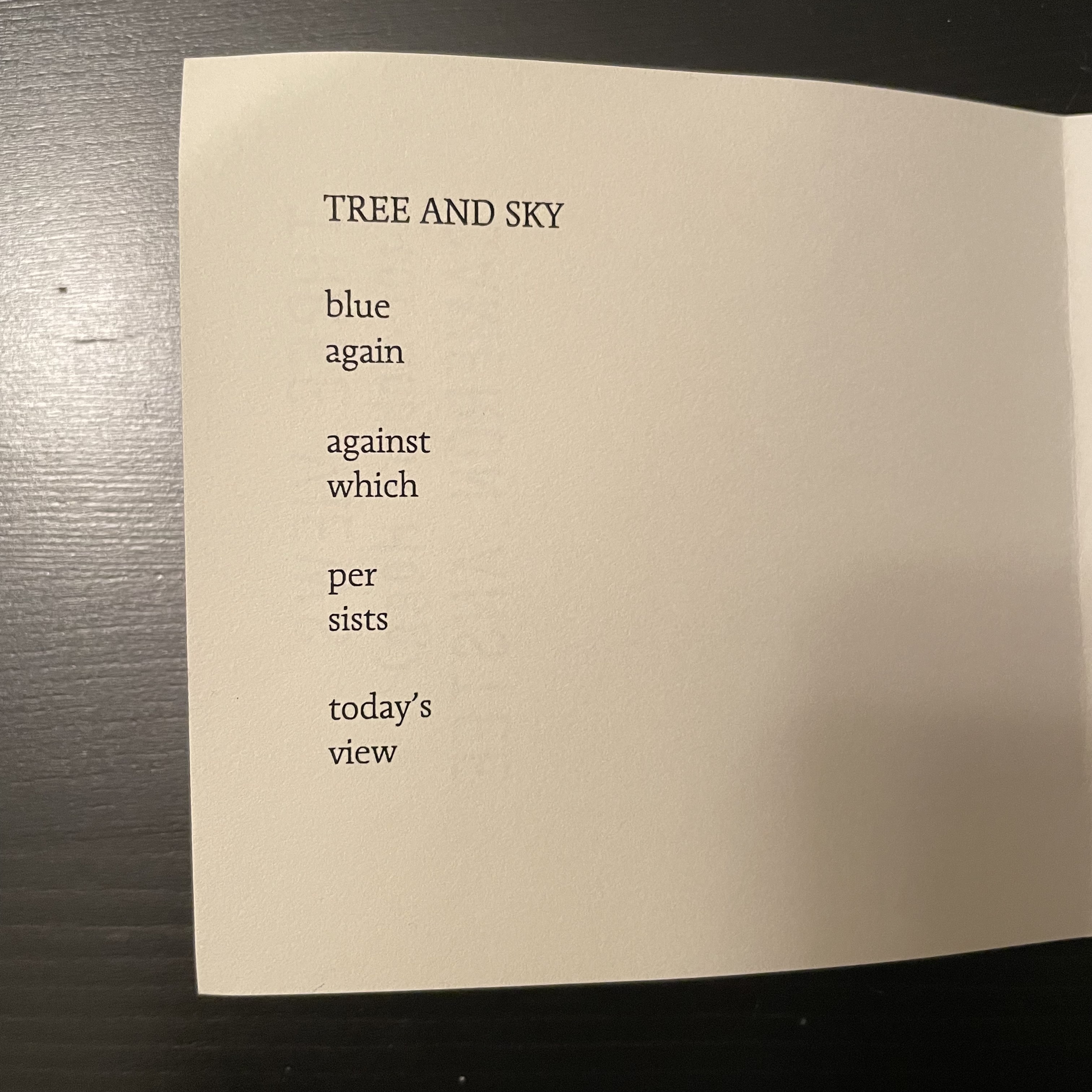
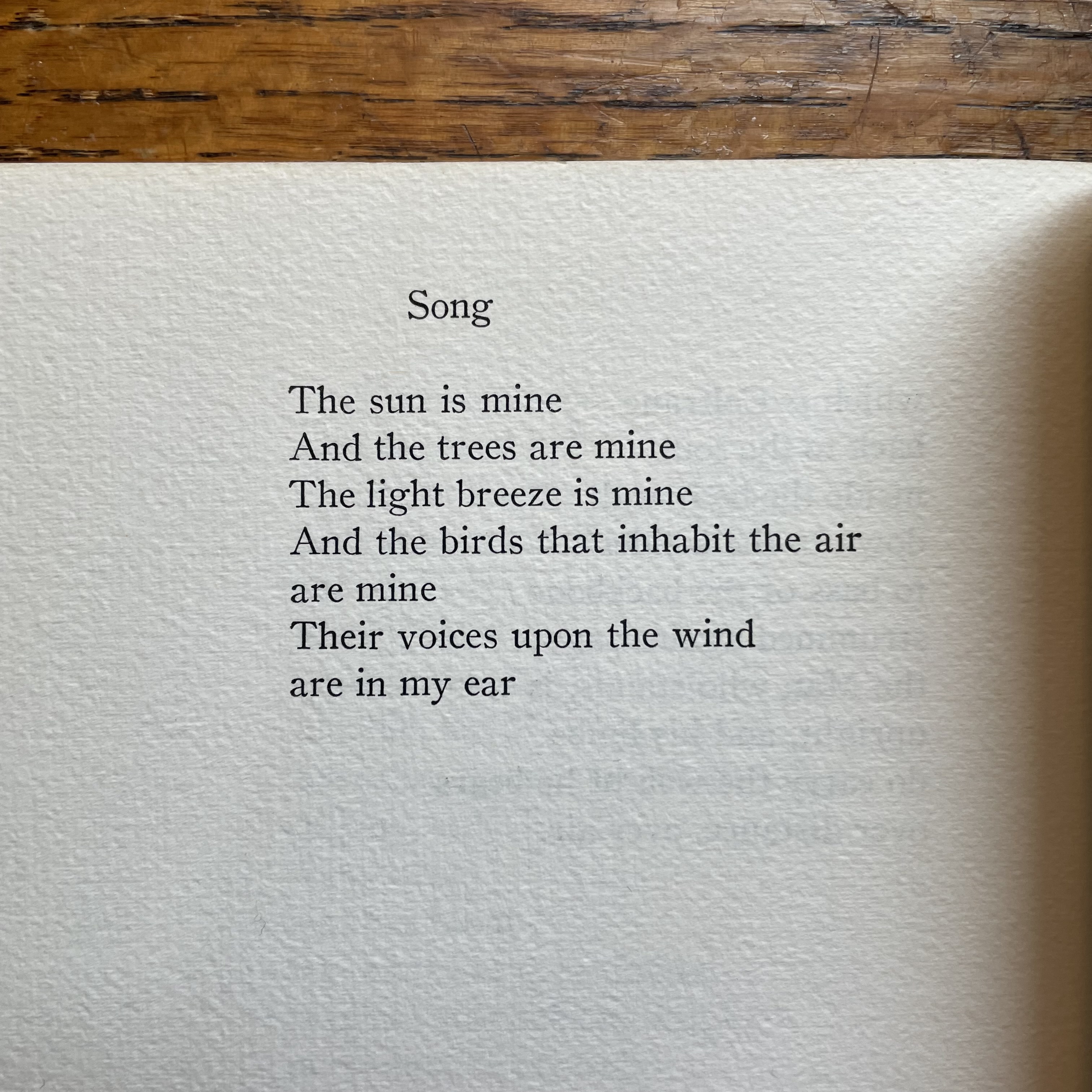
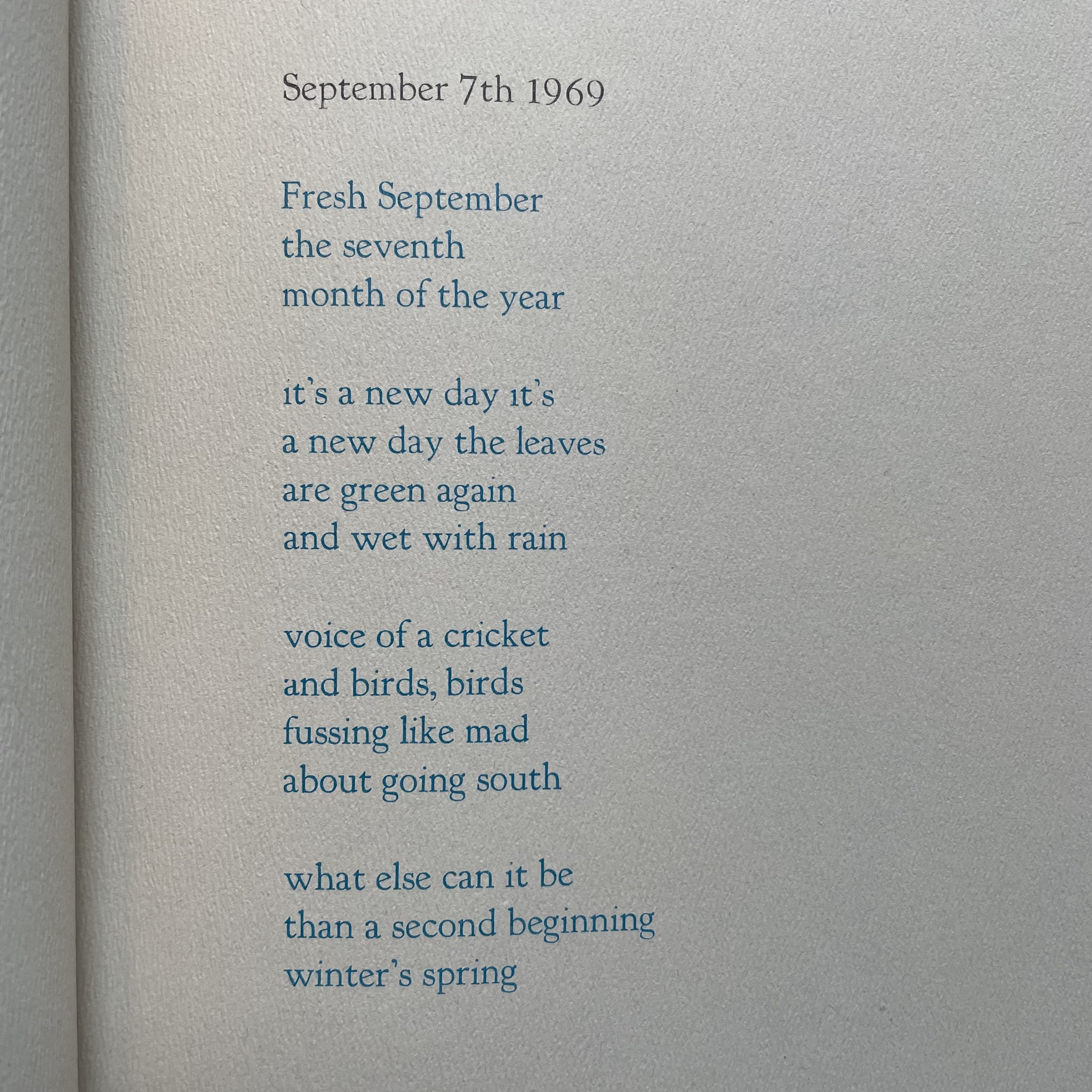
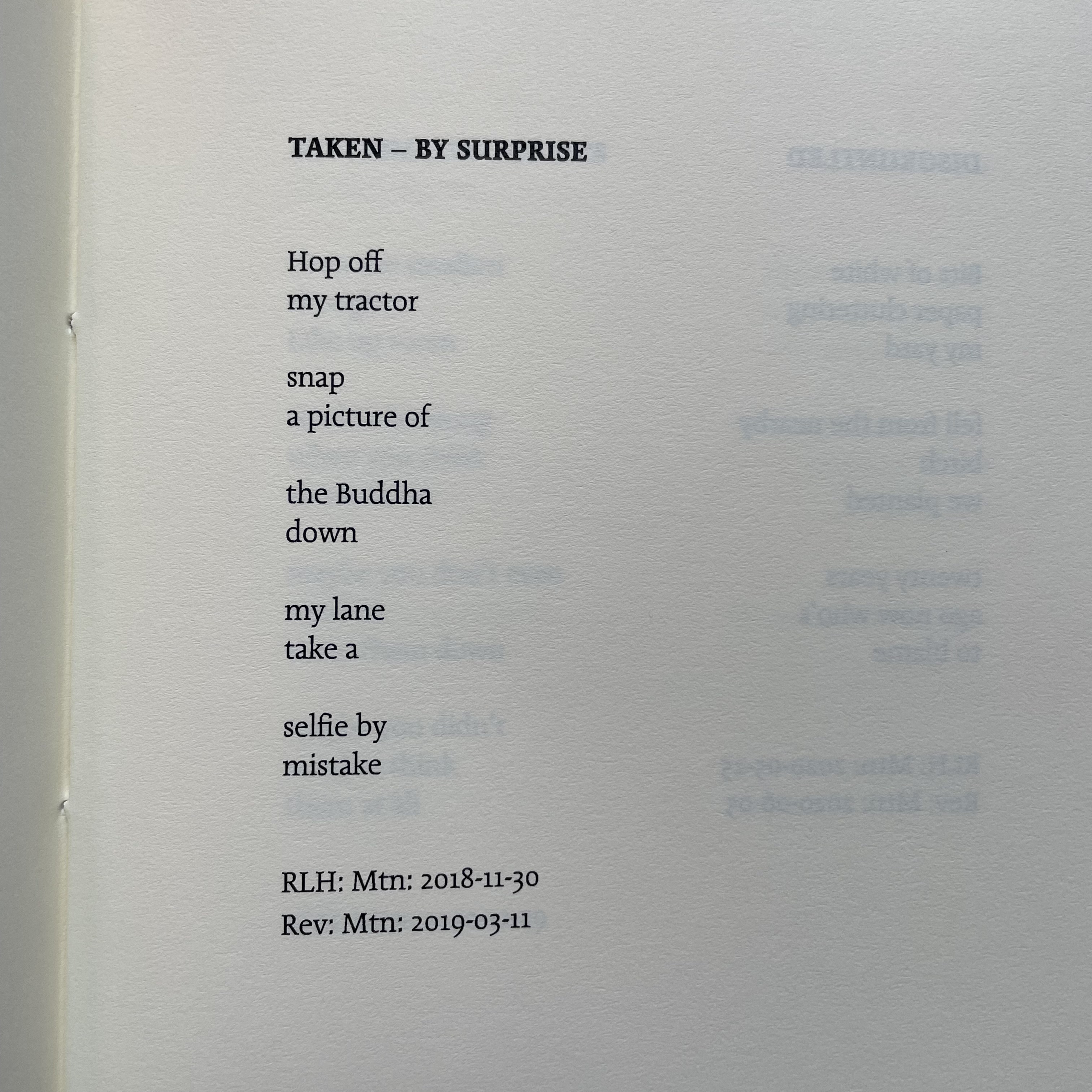
I’ll end here, with some of my favourites of Bob’s shorter poems:
Thank you, Bob, for all of it, for your writing and for your many kindnesses. I love your books and your poems. I will return to them again and again for the rest of my life, and will tell others to do so as well.
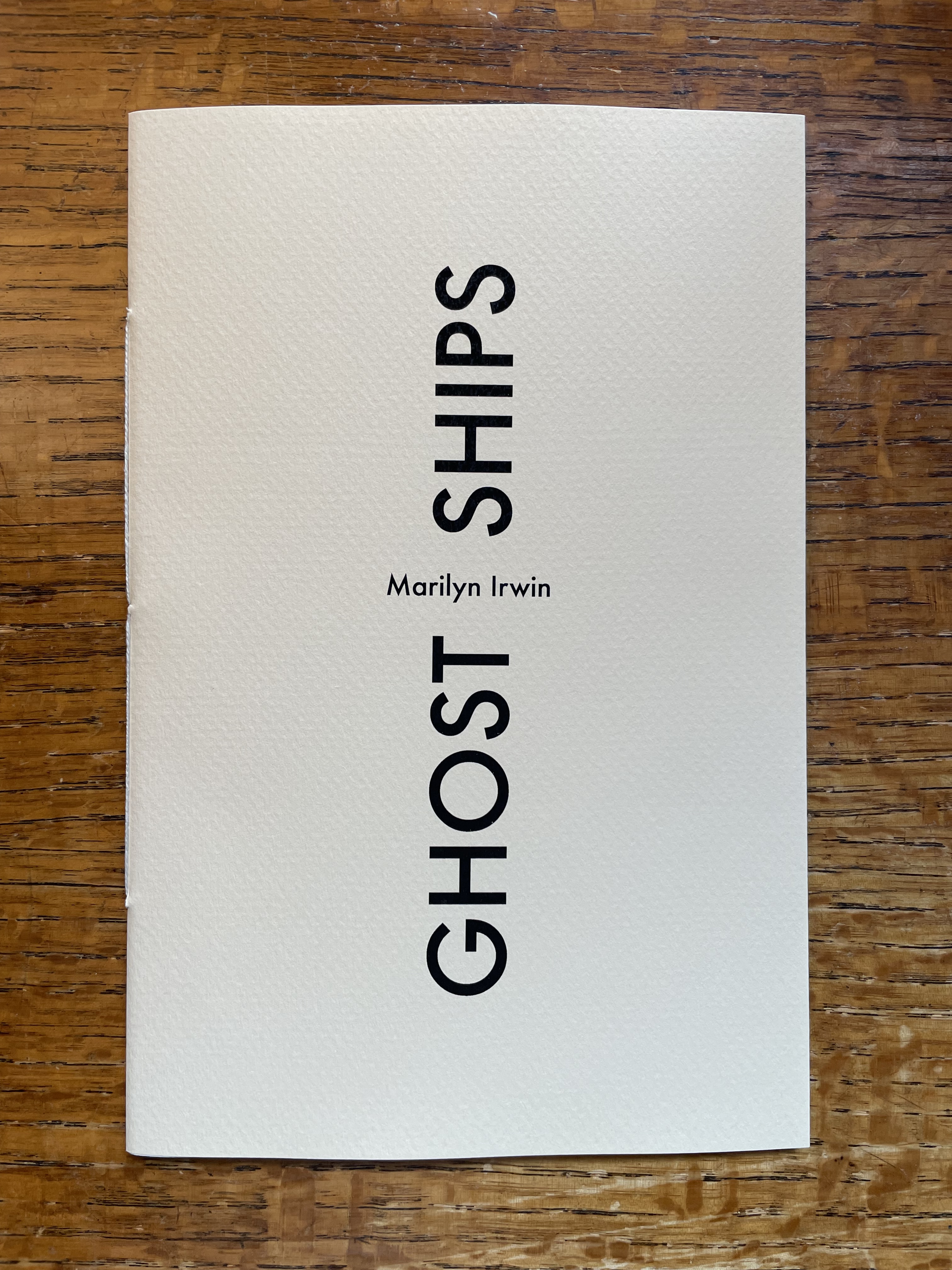
Apt. 9 had the great pleasure and privilege of publishing two new chapbooks this fall–ghost ships by Marilyn Irwin and inside inside inside by Jo Ianni. Marilyn’s is available to purchase (and she’ll be reading from it at my Ottawa Sheets launch next week), while Jo’s book sold out faster than any previous Apt. 9 title. Between the Toronto launch and the website, the book is now gone! Apologies to anyone who missed it.
In other Apt. 9 news, I am delighted to say that Pearl Pirie’s Rain’s Small Gestures was longlisted for the Nelson Ball Prize (along with my own chapbook Lines). Very excited to see the shortlist and eventual winner!
Susan Johnston was kind enough to interview me about Sheets for her long-running show Friday Special Blend at the mighty CKCU. We talked typewriters and poetry, and she played a pile of William Hawkins’ songs. Thanks, Susan!
And finally, for anyone interested, I started a new instagram page where I post photos and comments about (mostly) small press books in my collection. If that sounds interesting to you, here you go: @smallpress_bookshelf. Jeff Blackman was also kind enough to ask me a few questions about it for his zine These Days. Thanks, Jeff!
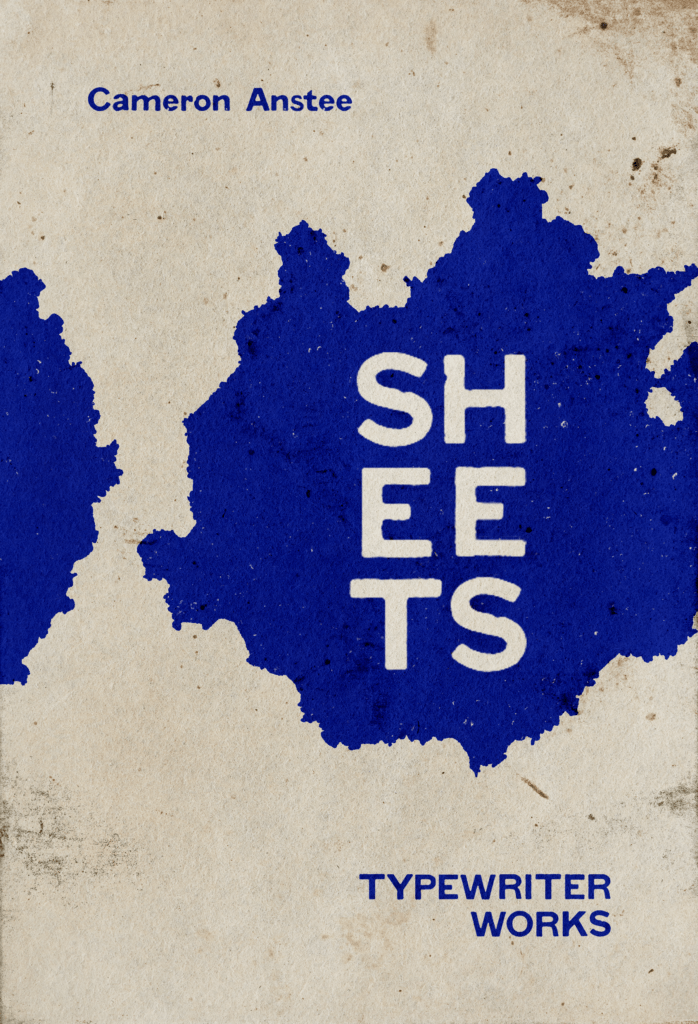
My new book, Sheets: Typewriter Works, is officially in the world. Get it from your fine local independent bookstore, directly from the press, from me, or at an upcoming event! (Or from the bigger, less local options if those are the only ones available to you!).
I read recently in Montreal at the excellent Argo Bookshop with Bardia Sinaee and William Vallières. Other readings and launches are upcoming in Ottawa and Toronto:
Thursday November 10: Ottawa, Carleton University Department of English, Gordon Wood Lounge (1811 Dunton Tower), 4pm, with Manahil Bandukwala and Chris Johnson
I answered a few questions about the new book at Open Book earlier this month, and the book even received its first review courtesy of rob mclennan: “[…] Sheets: Typewriter Works furthers Anstee’s poetic explorations into and through the minimal, but through gestures that extend both the act and result of writing—both composition and erasure—into the deeply physical. The effect is striking and immediate […]”
An overdue roundup of some updates from my writing life.
The big news is that my second book of poetry, Sheets: Typewriter Works, is forthcoming from the mighty Invisible Publishing in October 2022. As per the official description:
“Sheets: Typewriter Works extends the minimalist explorations of Cameron Anstee’s first collection, Book of Annotations. Prompted by receiving the Olivetti Lettera 30 typewriter that belonged to poet William Hawkins after his death in 2016, the works in this book explore how small poems operate through the freedoms and constraints of the typewriter as both a decaying machine and a mode of composition. Through engagement with writers and artists like Jiri Valoch, Barbara Caruso, Leroy Gorman, Cia Rinne, William Hawkins, Dani Spinosa, Kate Siklosi, and Norman McLaren, Sheets: Typewriter Works re-embeds the minimalist poem in the typewritten page.”
The entire book was typed on Bill’s typewriter, and an erasure of his 1966 book Ottawa Poems is the centrepiece of the collection. Writing it pushed my meager typewriter skills to their limits and ultimately moved my writing further into a visual/concrete realm than it had been before. It is very much still a book of minimalist works, but ones that are perhaps expansive in ways that are new for my work. It includes an afterword and extensive notes, and I had the great pleasure of working with derek beaulieu as my editor. I also could not be happier with the cover design by Megan Fildes, which adapts a piece from the book, and am thrilled to be working with Invisible once again. Pearl Pirie asked me a couple questions about the book as part of a series of mini interviews she has been doing for forthcoming books, and the interview includes two pieces from the book if you’re interested in a preview (thanks Pearl!).
Launch plans and all the rest are still to be figured out, and I will share all of those details once they’re set, but in the meantime it is available now for pre-order from Invisible or from your local independent bookstore.
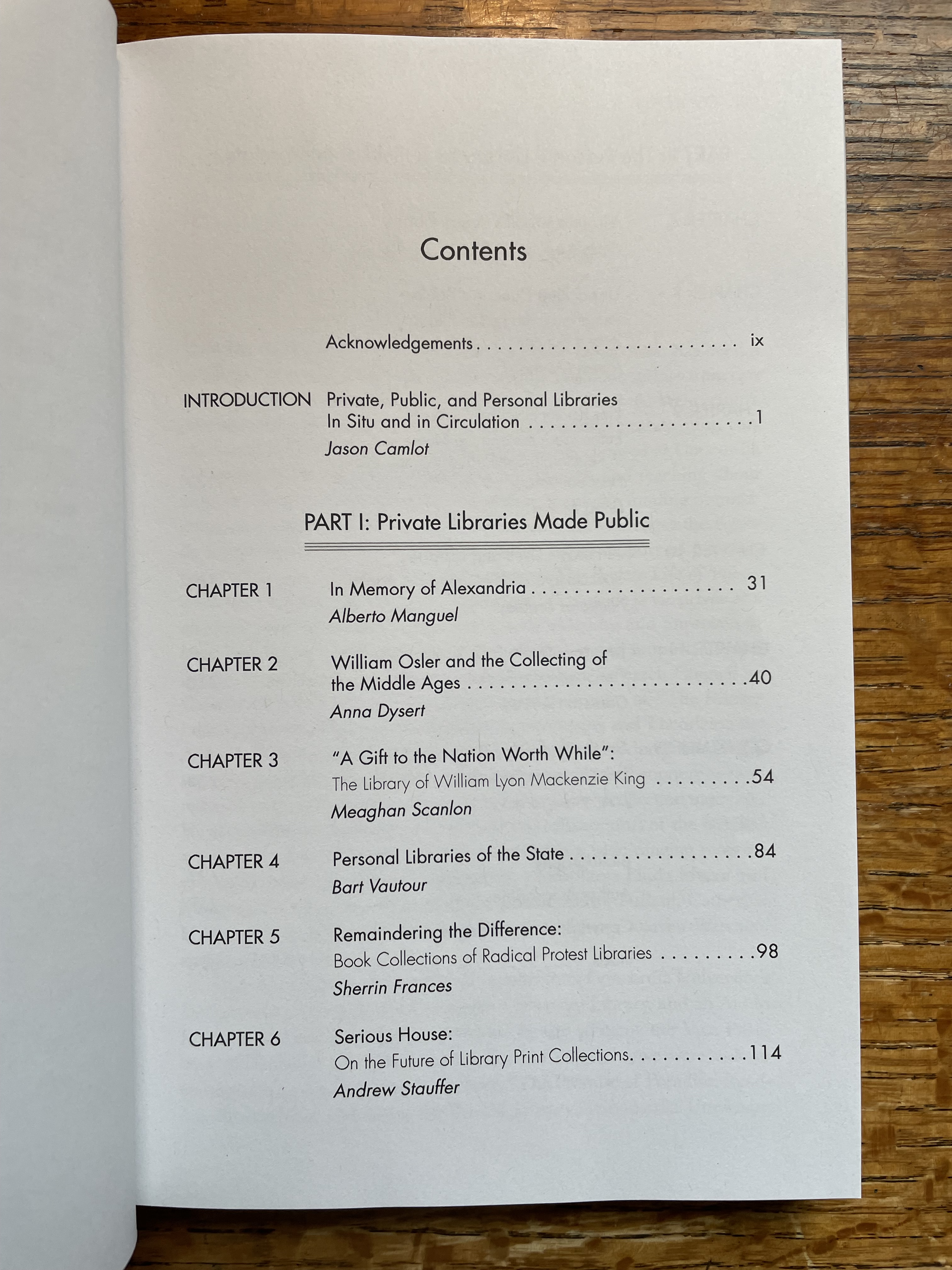
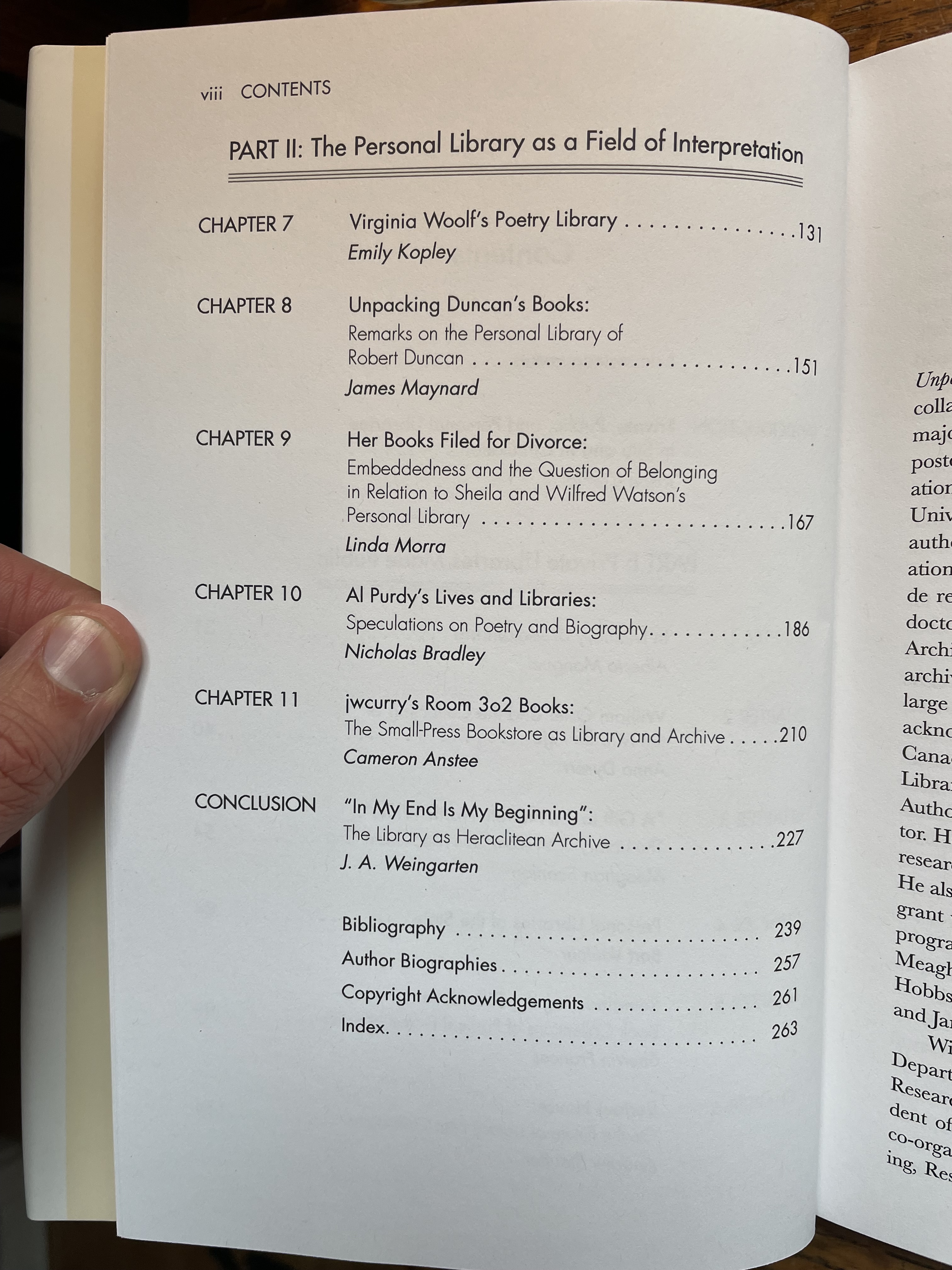
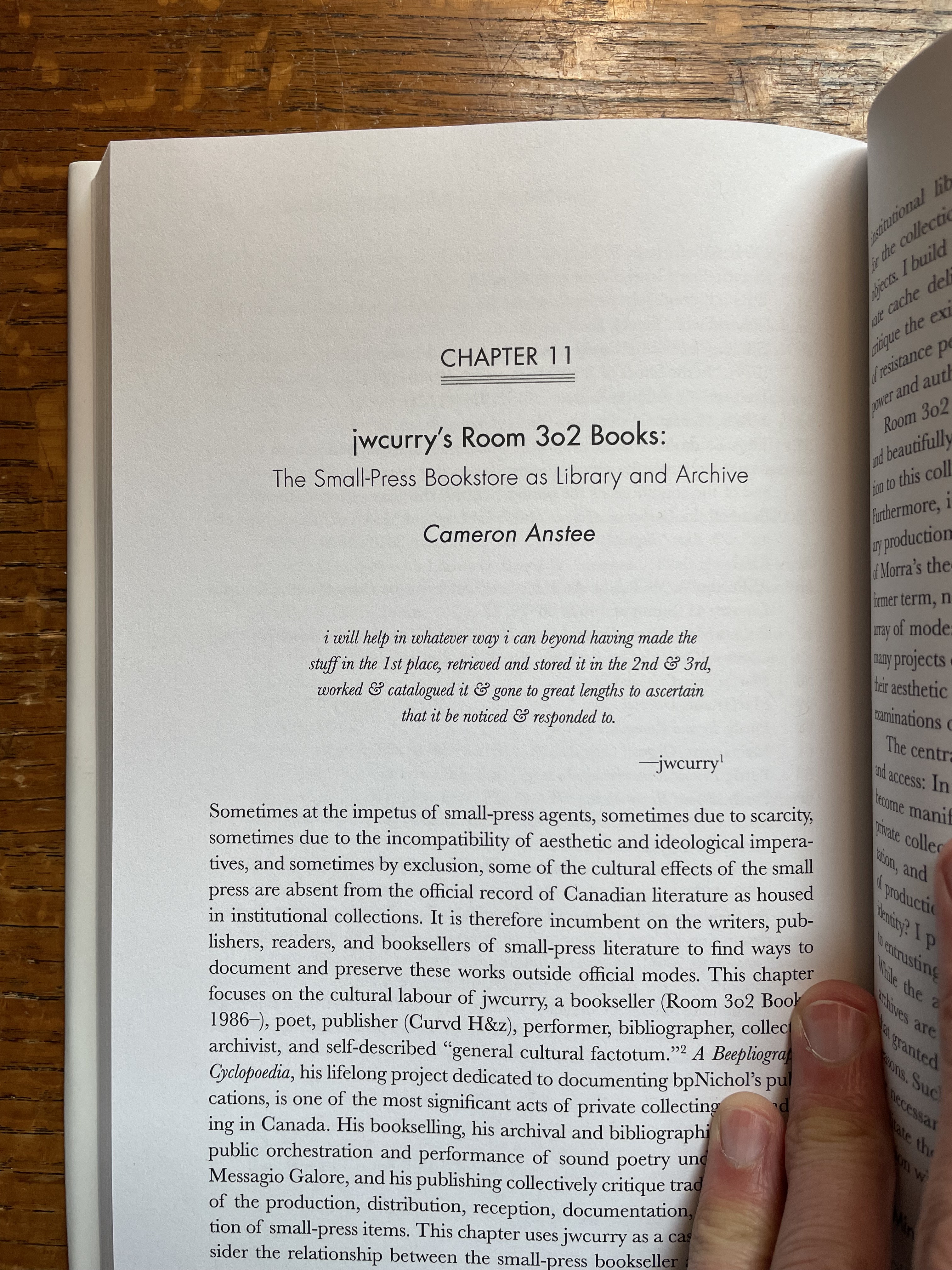
I am also delighted to say that some of the work in my dissertation has finally been published in print (reminder that you can read the whole thing for free here if you like). I contributed a chapter to Unpacking the Personal Library: The Public and Private Life of Books, edited by Jason Camlot and J.A. Weingarten. I am excited not only to see my research on jwcurry published, but also to be in such fine company (Alberto Manguel! Sherrin Frances! Linda Morra!). Thanks Jason and Jeff!
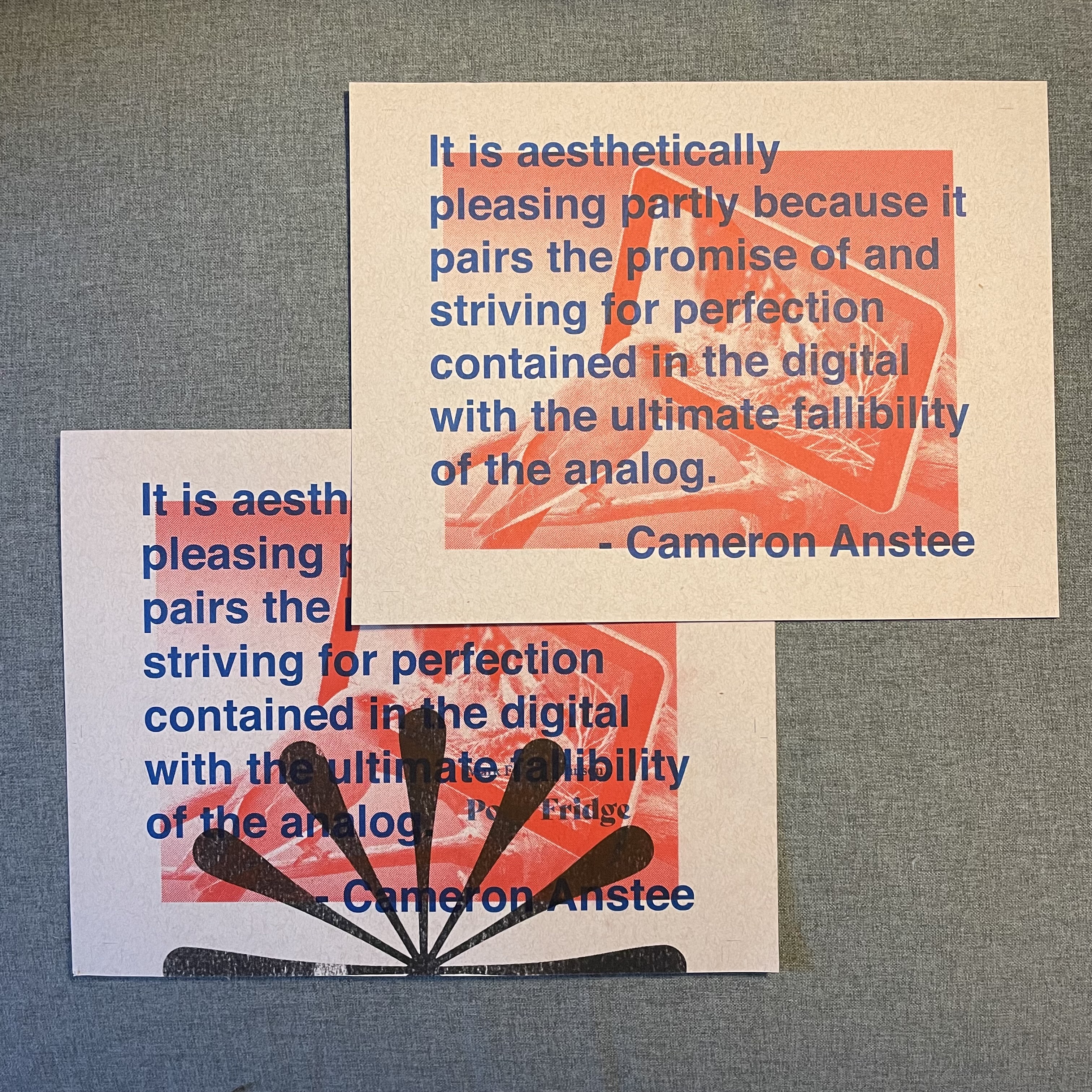
And last but not least, I recently finished writing an essay (or at least finished writing a draft of an essay…) about Jessica Bebenek‘s amazing k2tog project, an essay that touched on risograph printing among many other things. Jessica then pulled a line from the essay and used it as demo text in a risograph workshop she was running, meaning that I now have a stack of very cool broadsides printed on a mix of off cuts at the riso studio of Concordia’s Centre for Expanded Poetics:
I’ve got a few of these, so if you’re interested in one send me a message.
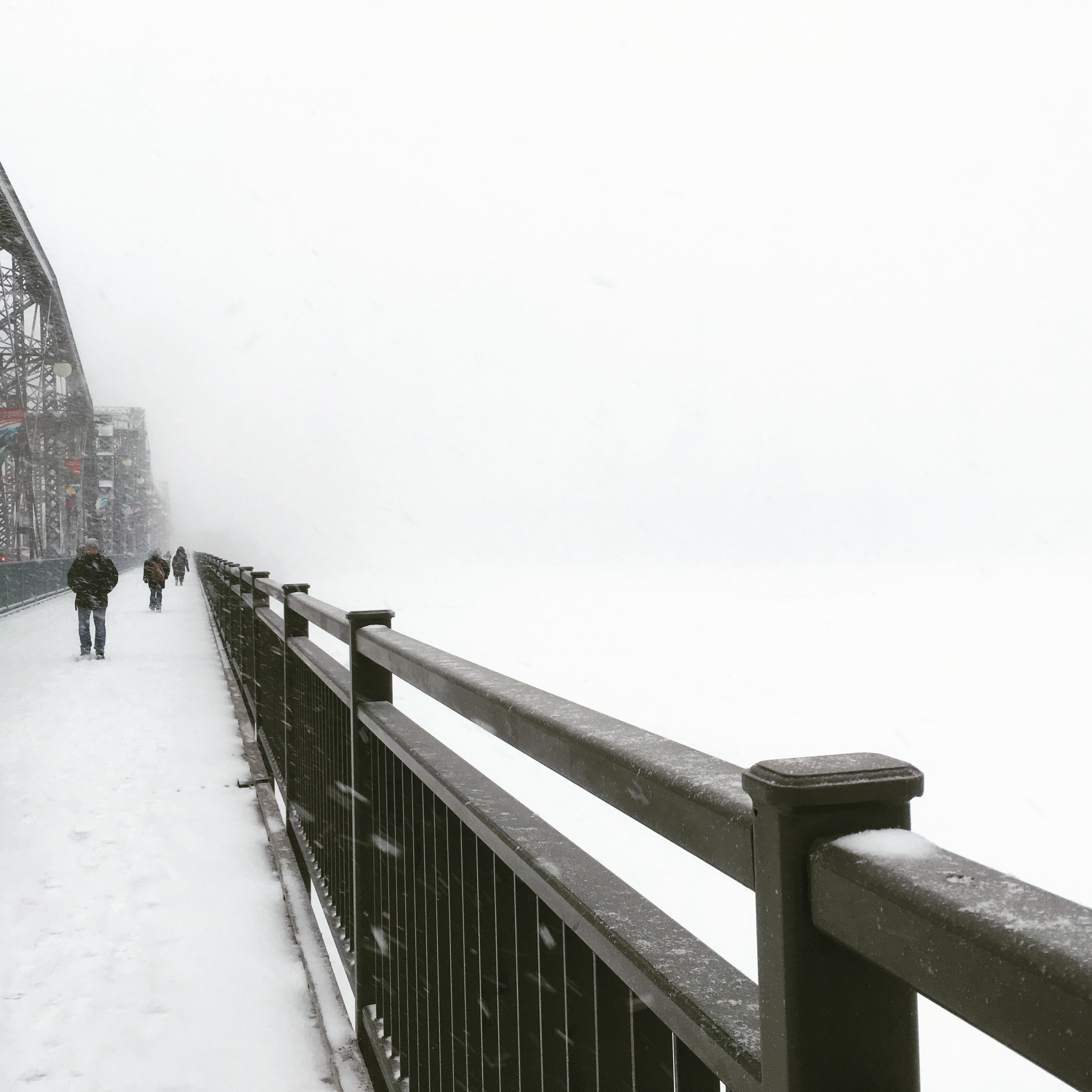
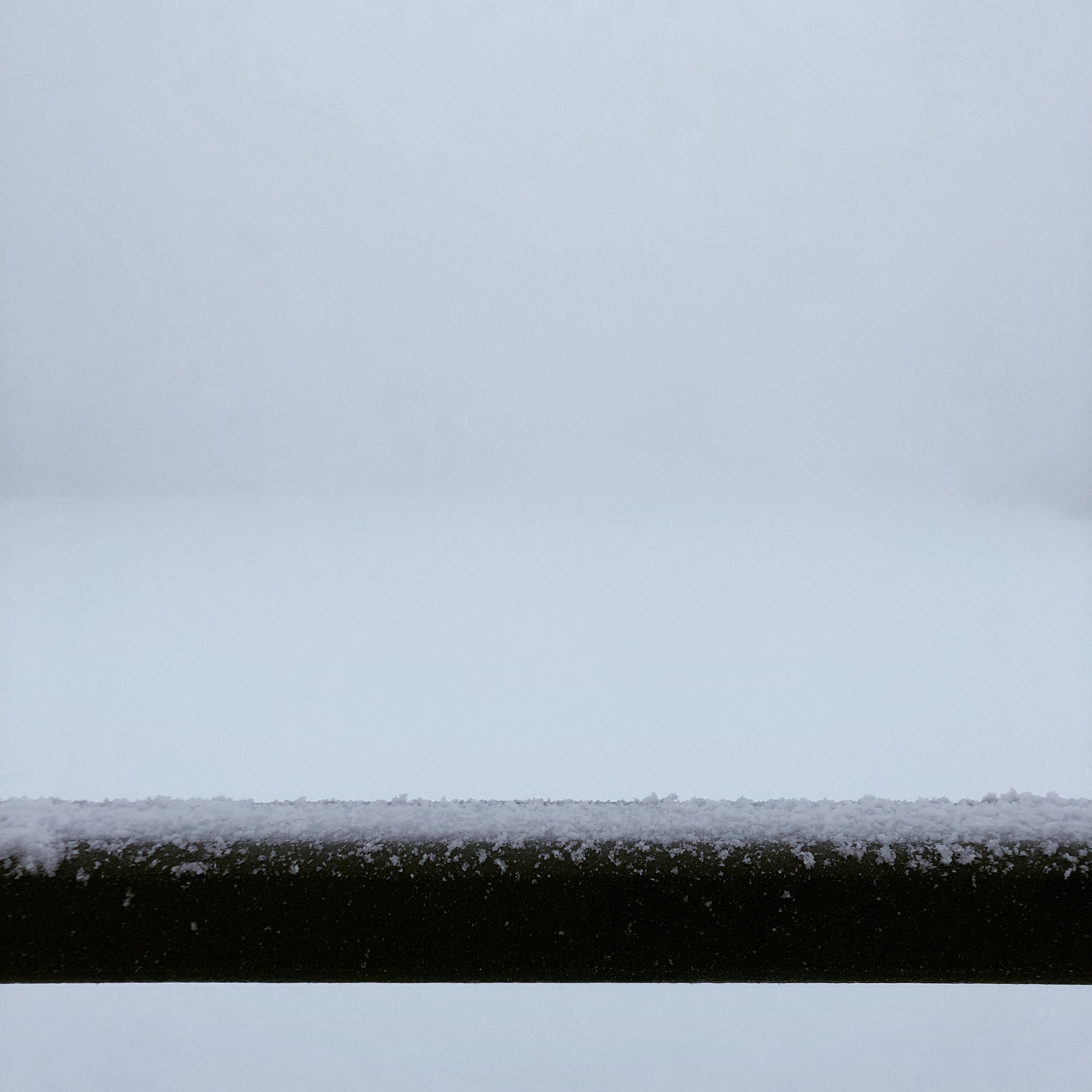
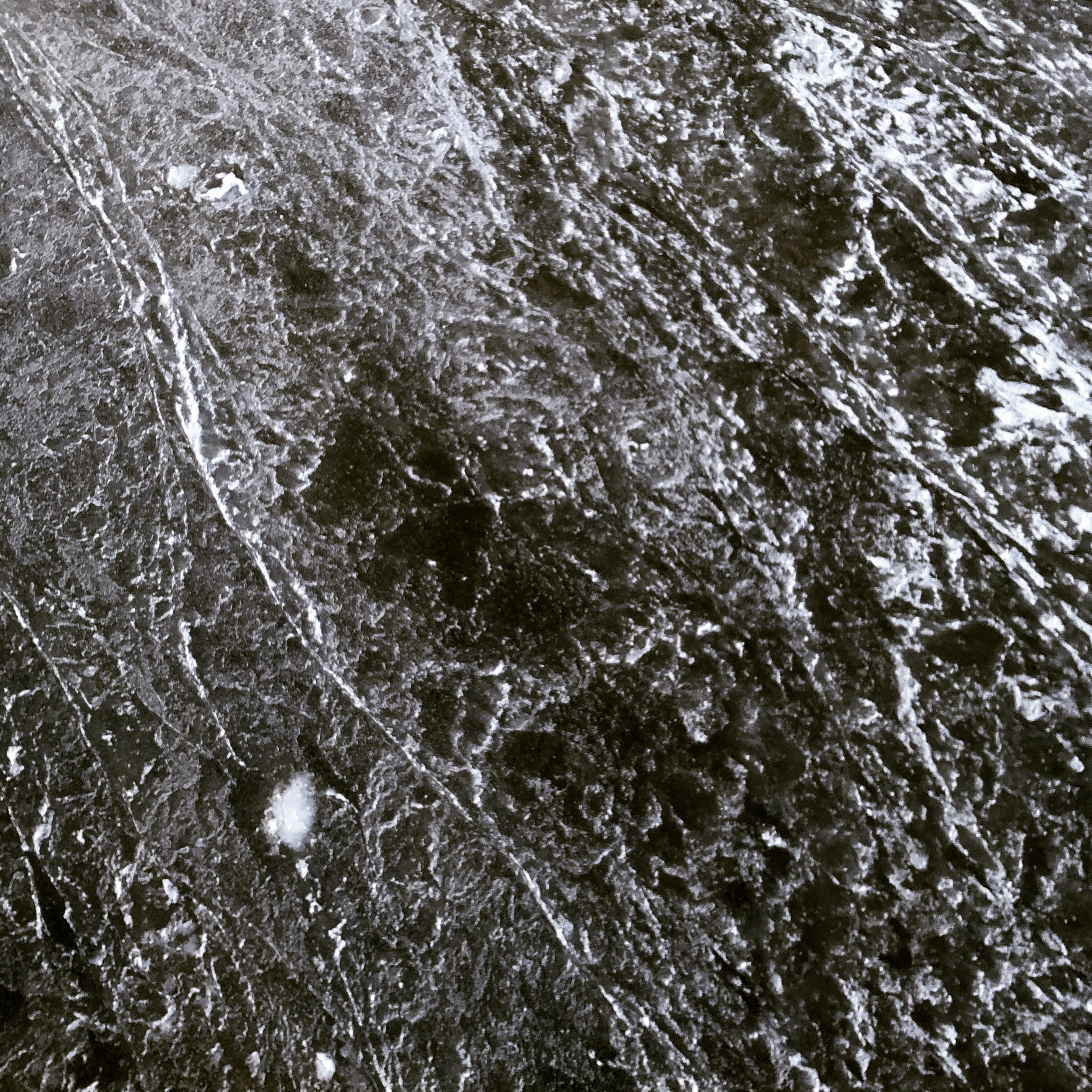
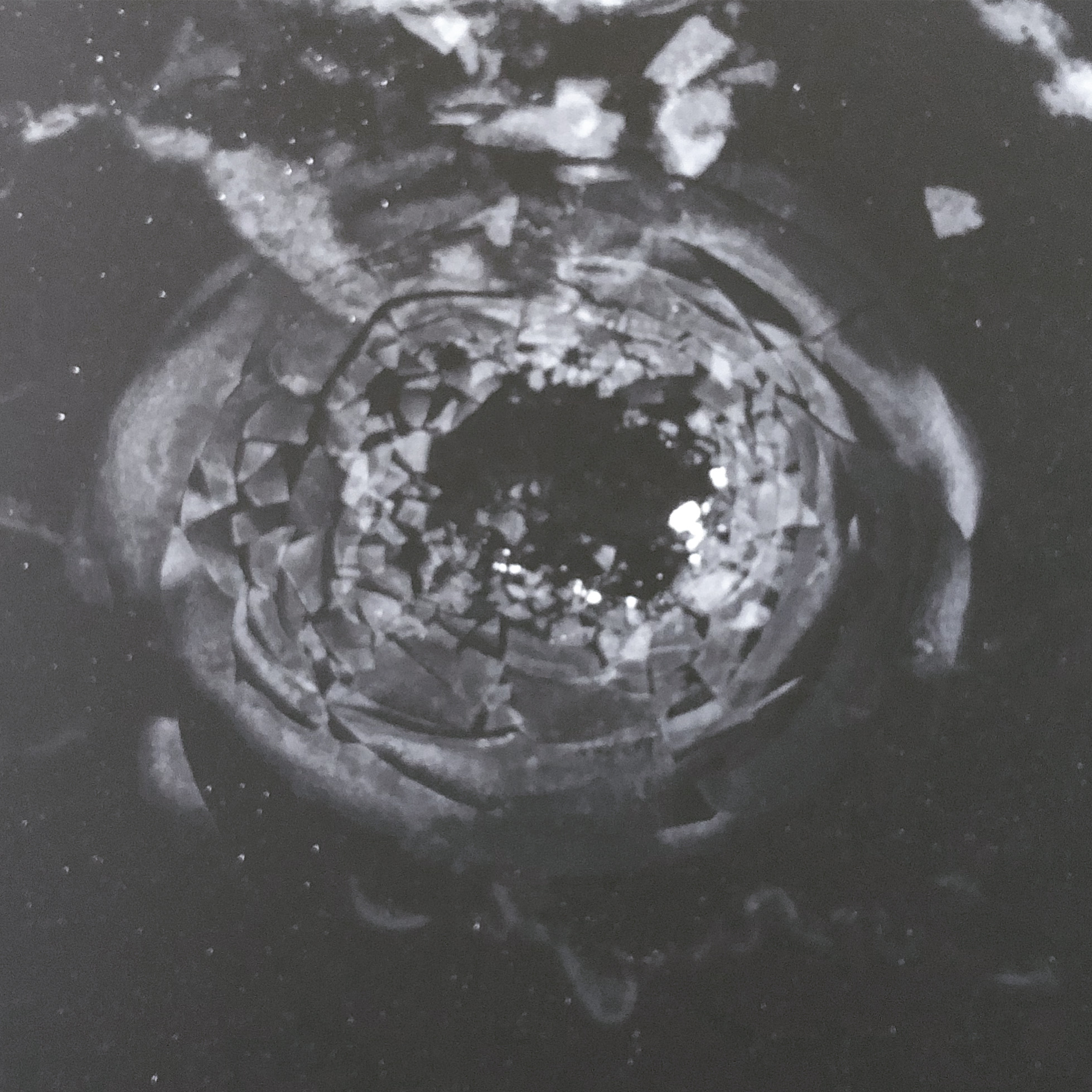
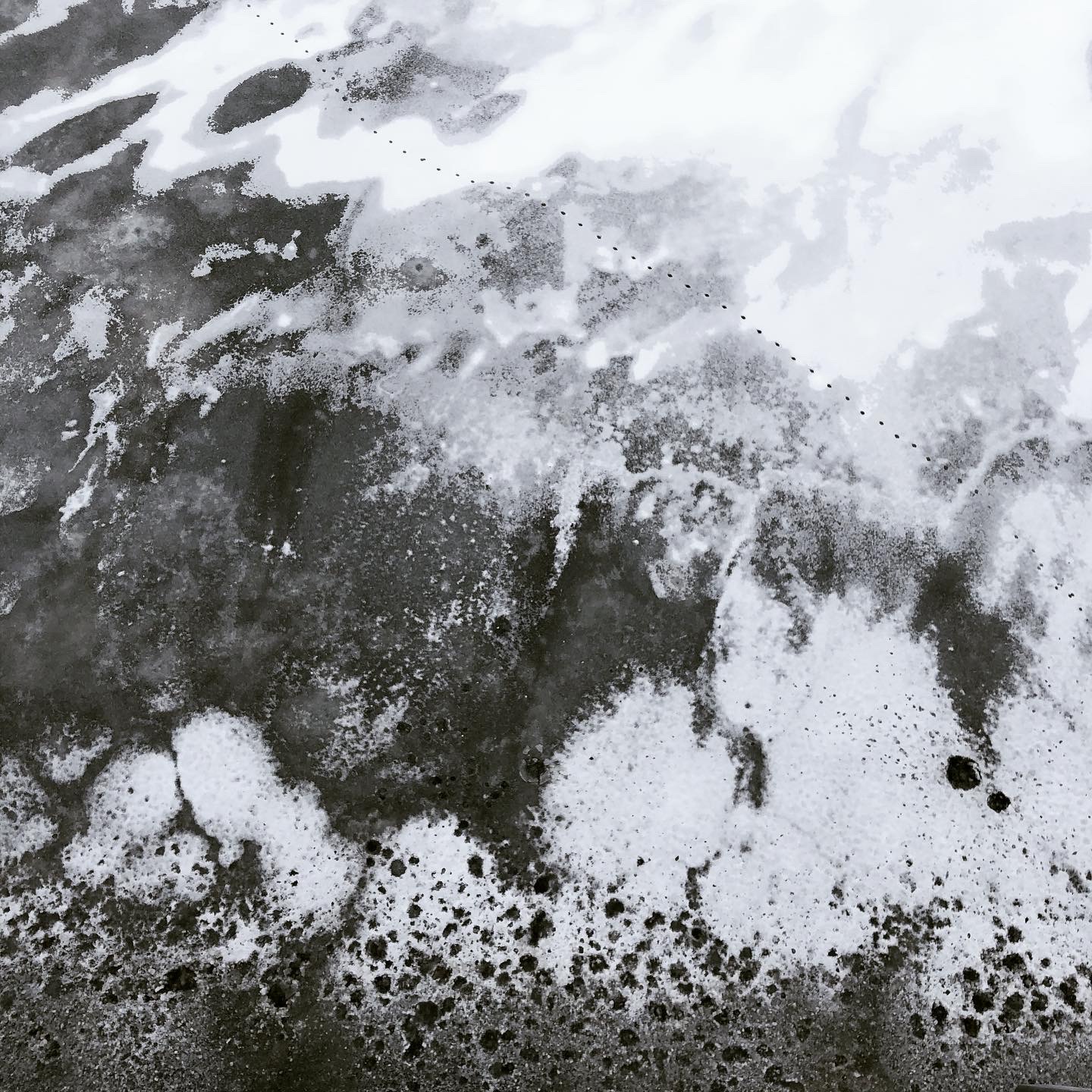
Before the pandemic, I had a lovely 30-minute commute on foot. For two-and-a-half years, I walked across the Alexandra Bridge from Ottawa to Gatineau twice a day, five days a week. It was a great way to start and end each workday, and I began to really look at the Ottawa River for the first time in my life. I watched it change states through the seasons, and began a nearly daily habit of taking a picture (or pictures) of it in its various states, mostly looking directly down at the river from the pedestrian walkway on the bridge.
The pandemic interrupted this, as it has interrupted so many things. Today, my partner and I take walks in our neighbourhood before and/or after work, as life and the weather allow, and I have again begun to take photos of the rivers close to us (the Ottawa River and the Rideau River), albeit much more occasionally.
I post these on Instagram (@caoanstee if you’re interested), usually under the title “River update.” Here is a small selection of some of my favourites from the last four or so years:
And here is a poem titled “River Suite (Alexandra Bridge)” that came from the same habit (and that was published by above/ground press back in 2018). I’ve got some copies of this broadside kicking around, if anyone is interested.
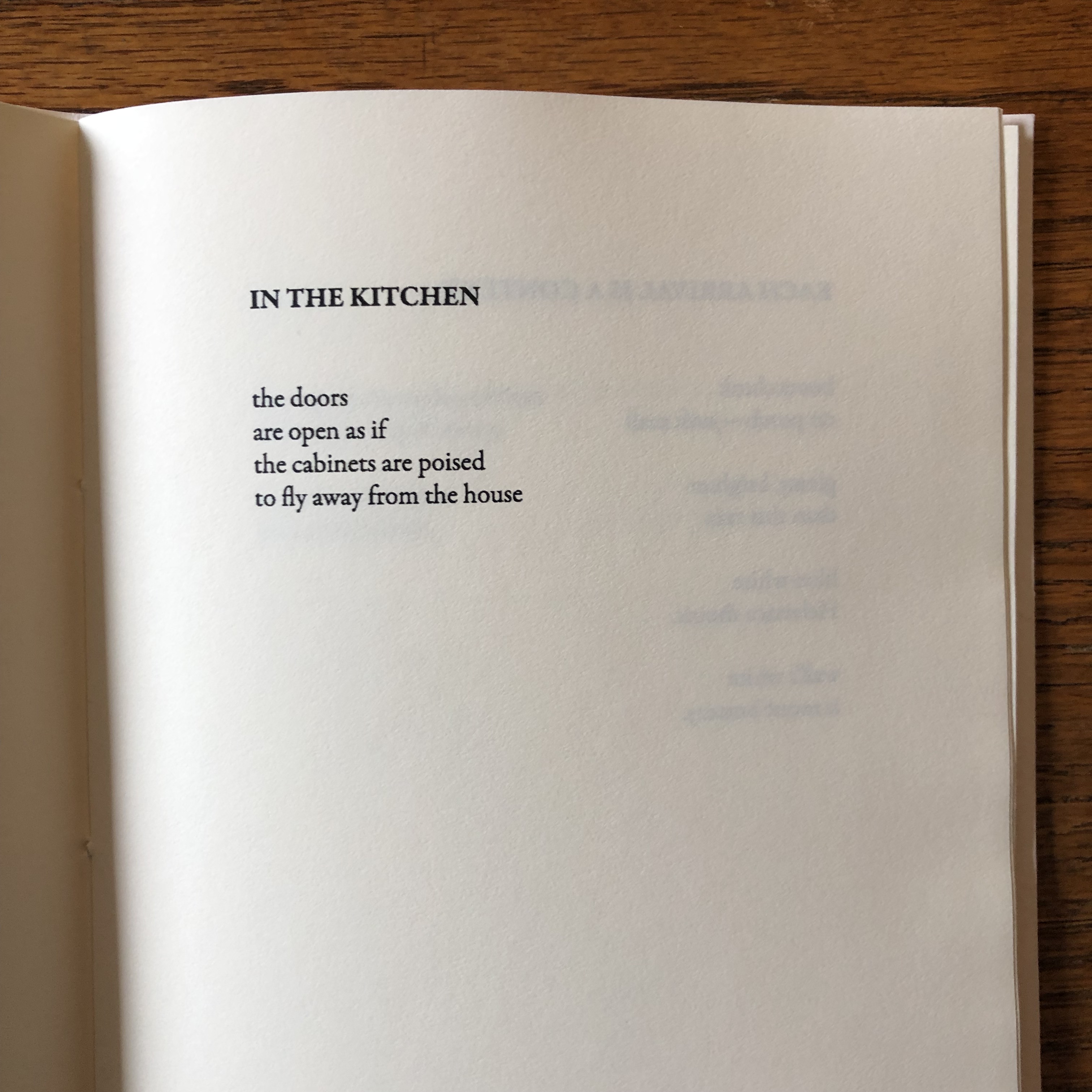
I have slowly been getting Apt. 9 back underway in the past few months. After publishing my own chapbook Lines in June (under Apt. 9-adjacent imprint St. Andrew Books), two new books have appeared:
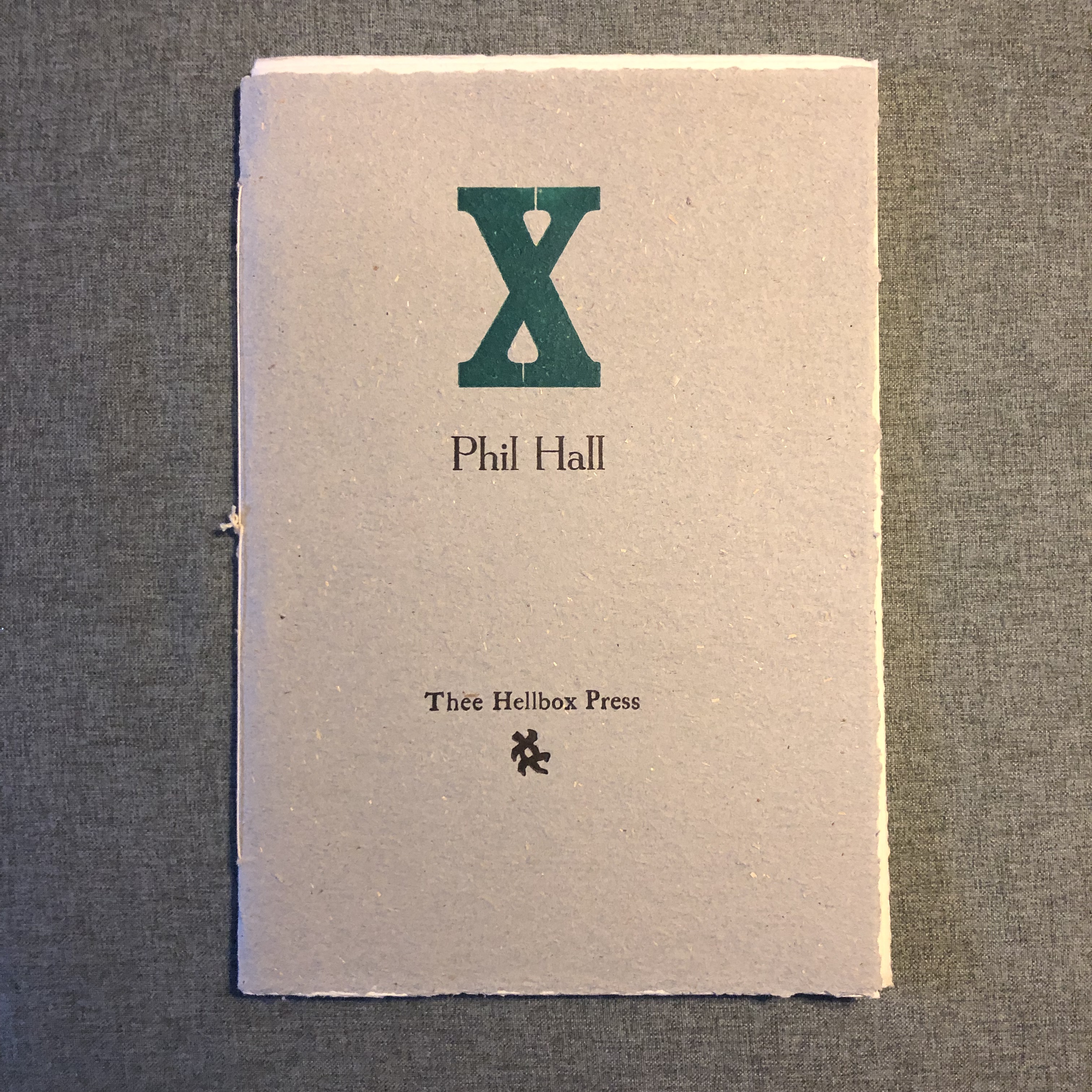
I had the great pleasure of interacting with Hugh at small press book fairs in Ottawa and Toronto, where he was a regular exhibitor, and it was an unfailing joy to speak to him and look at the beautiful books he made. I treasure my small trove of Thee Hellbox publications.
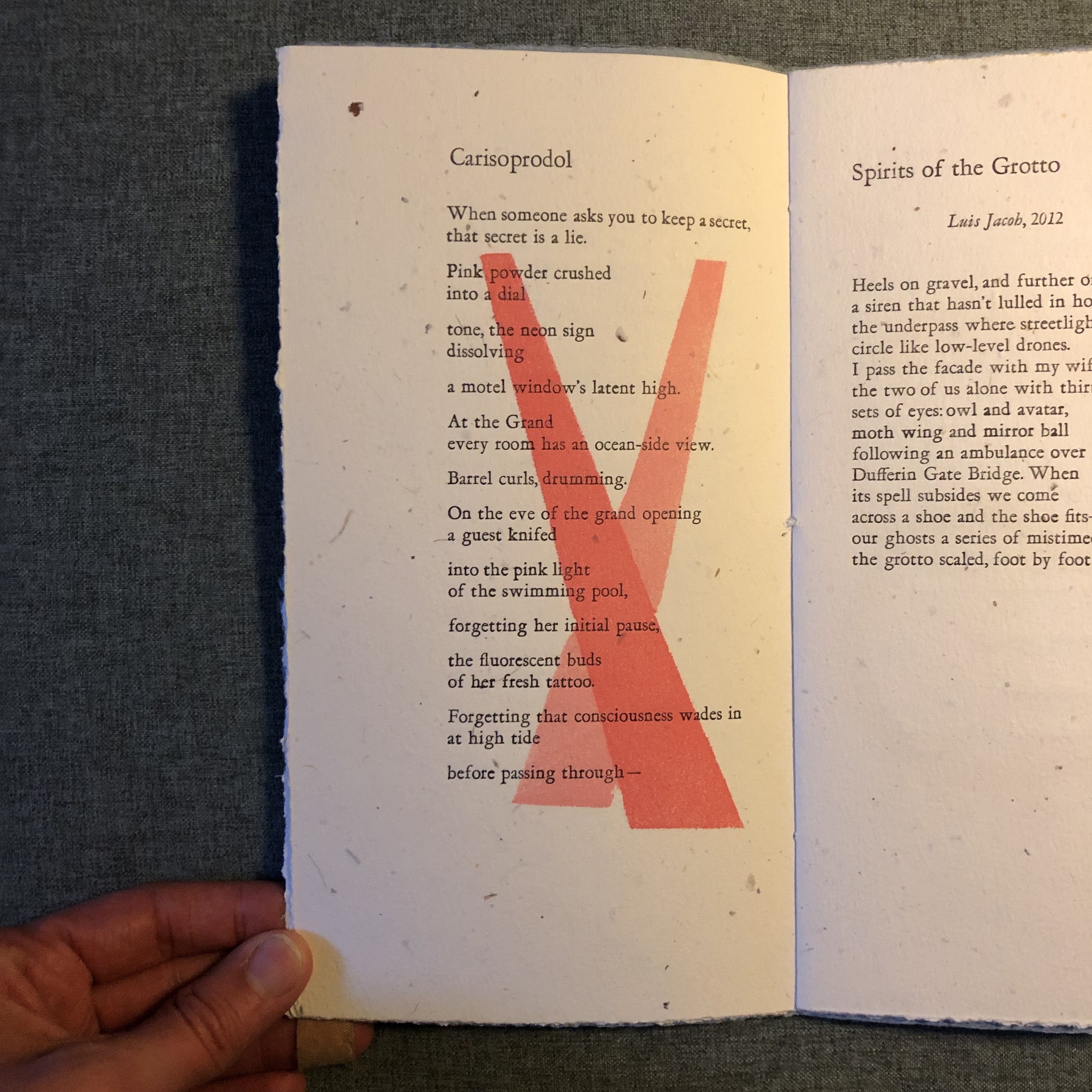
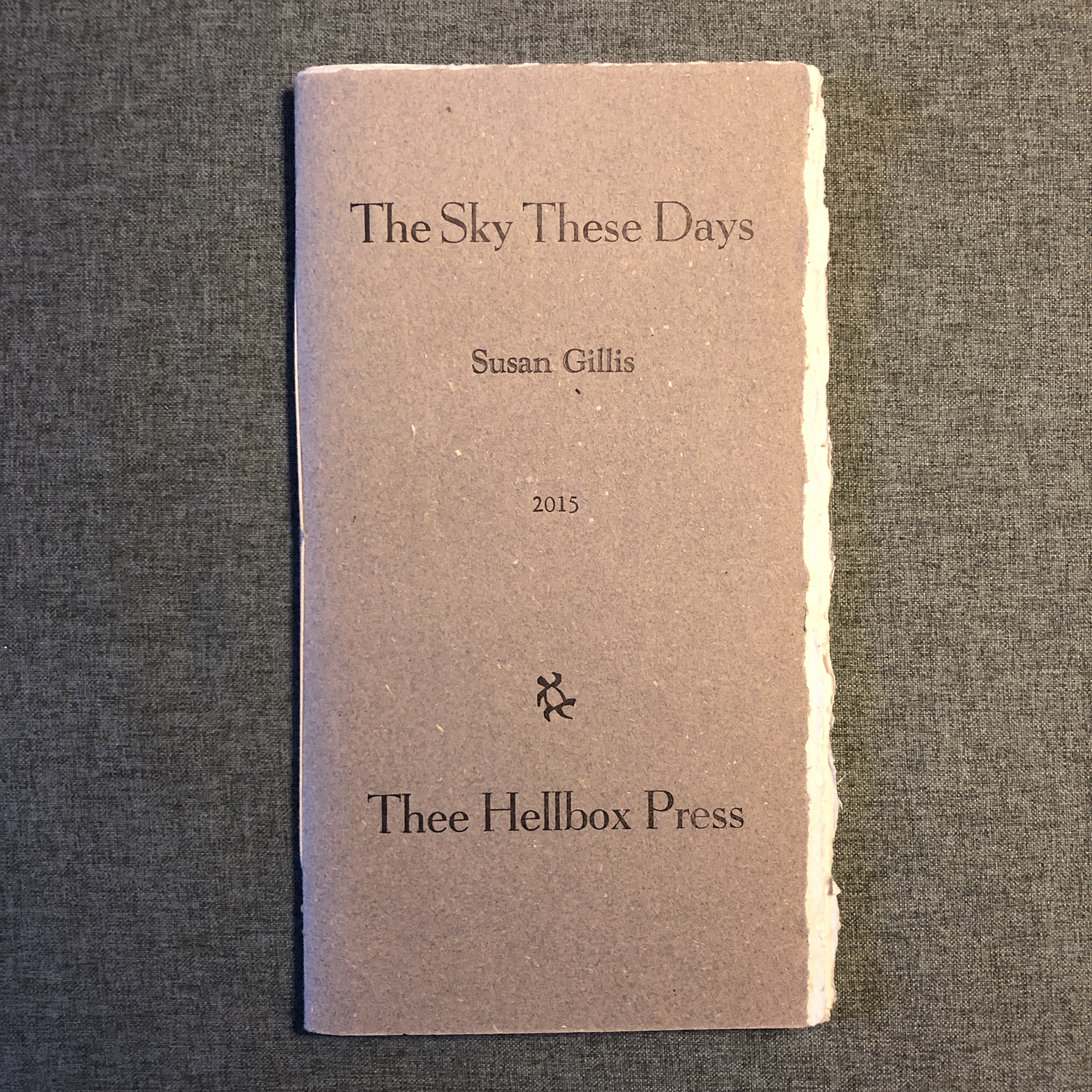
In his work, I especially love how he often printed text over top of exuberantly coloured abstract art. Here are a few examples of what I mean, including prints by Michele LaRose in Phil Hall’s X, wood-type ligatures printed under Susan Gillis’ poems in The Sky These Days, and an abstract image by Hugh himself (I believe) from Jim Johnstone’s Microaggressions.
Of this choice, Hugh said, “I like to think that if the artwork is entirely illustrative, it is like saying to the reader, ‘I know you are a bit dull so I thought I would draw a picture so you could understand what the author is saying.’ Whereas if I use colour with some abstract art, it speaks in several tongues and may well speak differently to different readers […] Hopefully I will make them ask questions and interpret the artwork any way they like, as there are no right or wrong answers. If it makes them reread the text, it has done its job.” (Devil’s Artisan 78, p. 71).
He also emphasized the value of collaboration in printing and in art generally, and the openness of that approach is a defining characteristic of his printing: “I have realized for a long time the importance of collaboration. We do ourselves a disservice by establishing boundaries. Our job is one of publishing a book. This objective is held by me, the artists and the writer. In the end, it becomes impossible to credit anyone specifically and this is what I call collaboration” (Devil’s Artisan 78, p.73).
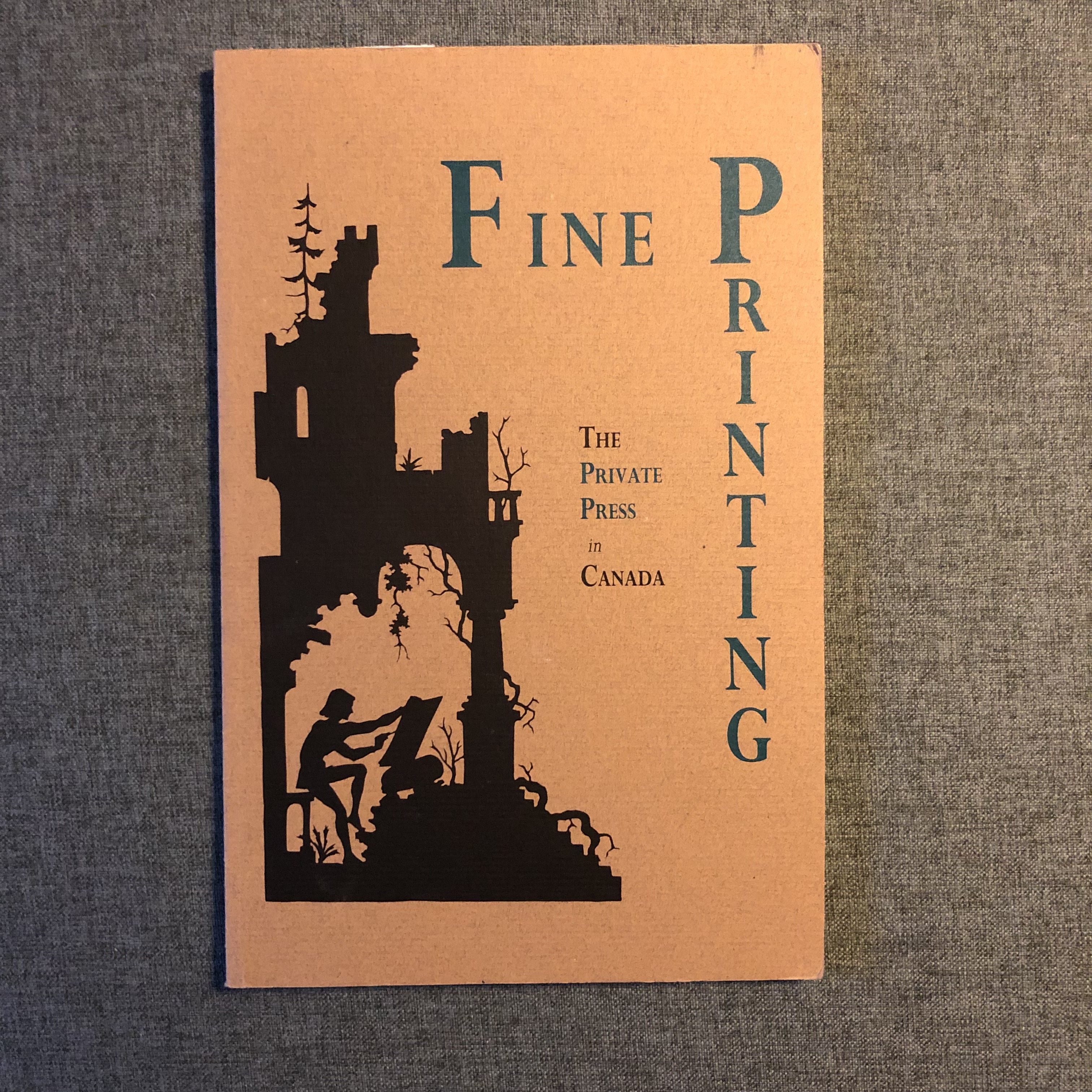
Hugh’s work shows up in places in the written history of the small and fine press in Canada. Here is a brief paragraph about Thee Hellbox from Fine Printing: The Private Press in Canada (1995):
There is also a lovely and long interview with Hugh by Shane Neilson in issue 78 of The Devil’s Artisan, from which the long quotations above come.
Hugh’s work was consistently beautiful, unique, collaborative, and full of joy, and that is the overriding memory I will have of Hugh from our few conversations. I will miss seeing him at the next Ottawa Small Press Book Fair, and each one after that, and I am grateful to have a few examples of his fine work on my shelves to which I can return.
I’m giving this site a bit of a refresh, and wanted to take the opportunity to round up a handful of links from the past year:
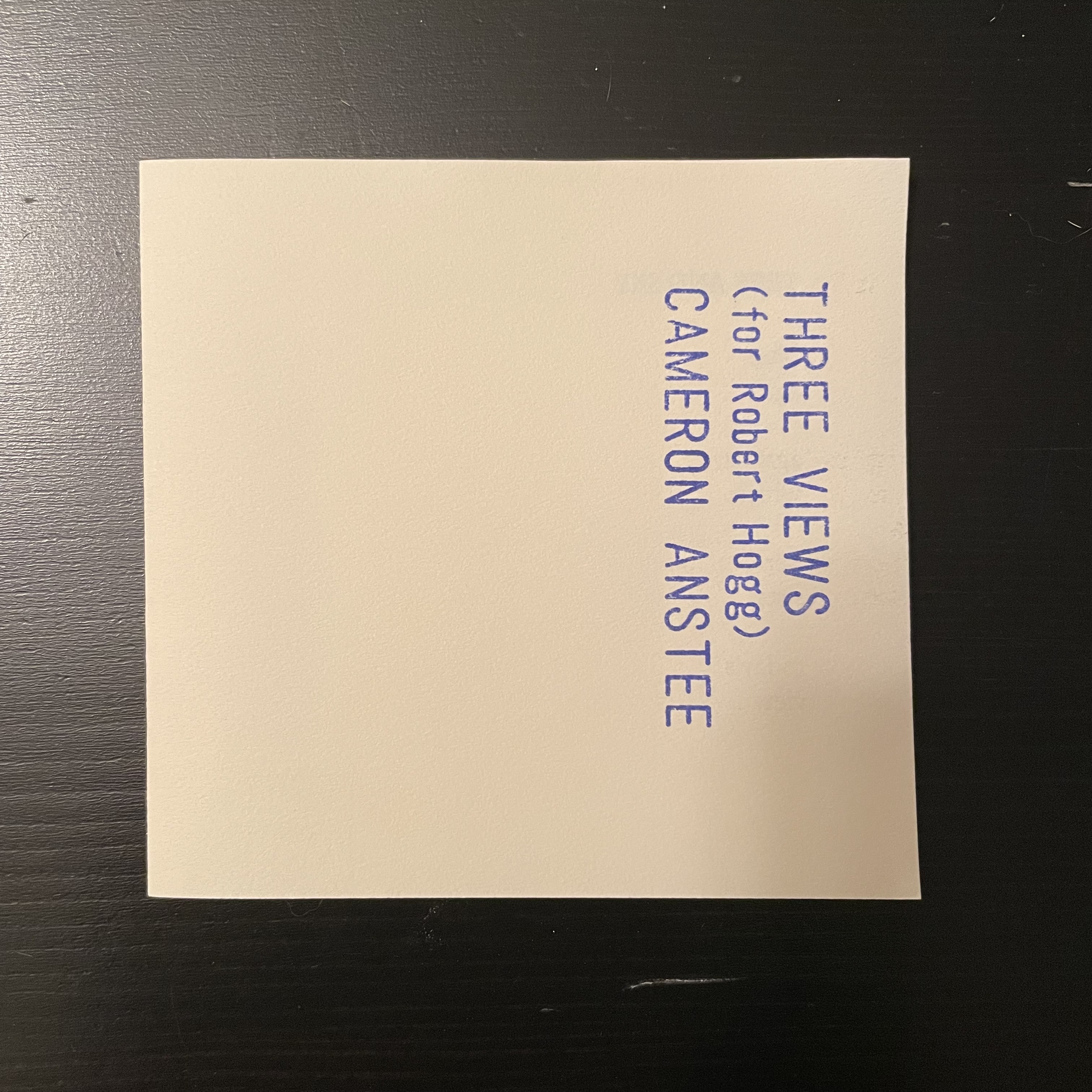
I’ve published two chapbooks recently: Words in Place, through Michael Casteels’ always-wonderful Puddles of Sky Press, and Lines, through my own St. Andrew Books (review by rob mclennan). Words in Place is a single tiny poem rubber-stamped in micro-chapbook form using paper stock from Barbara Caruso’s presspresspress supplies. Lines is a collection of minimalist poems, printed using mixed cover stock that I had left over from previous Apt. 9 projects, and comes with a bonus typewriter poem leaflet (“Baseline Variations”). Lines is also currently available as part of the “Fertile” Subscription Series at Knife | Fork | Book, where I am delighted to see it in such fine company.
I also answered “Six Questions” at the Chaudiere Books blog as part of a series that I always enjoy reading. Thanks to rob mclennan for asking me these questions.
On the Apt. 9 front, Justin Million’s EJECTA remains available for purchase, and I’m slowly gearing up for at least one Fall project with more to come. When it is safe to do, I look forward to finally celebrating EJECTA with in-person readings.

















































 Cameron Anstee