The sad news that Michael Gnarowski died came through last week.

I’d like to share some of my memories of Michael, of the encounters I was lucky enough to have. In reflecting on those over the past few days, I began to reflect increasingly on the specific and at-times indirect ways that he has influenced me. I am going to try to articulate some of those here.
I hope someone will write a proper biographical overview of Michael’s life (I haven’t seen an obituary yet, but please send it my way if you do and I’ll update here. Update: Obituary). I am simply not equipped to do it, but I can offer a few small press details. He was born in 1934 in Shanghai. He studied at McGill in the 1950s, where he met Louis Dudek during the earliest years of Contact Press (here is his discussing Contact Press on The Biblio File). He was a poet. I have two of his books, both from Delta Canada: Postscript for St. James Street (1965) and The Gentlemen Are Also Lexicographers (1969).


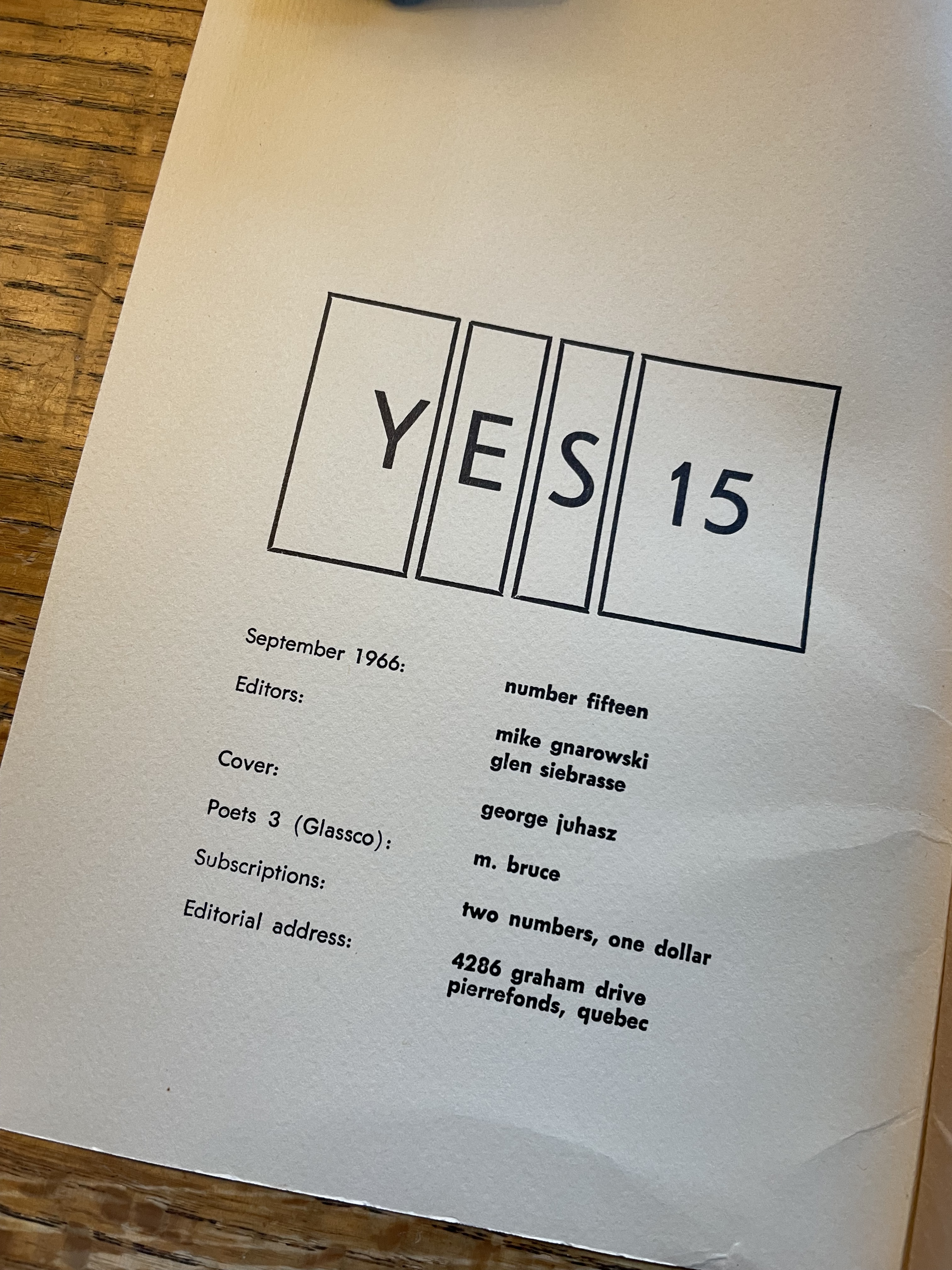
He co-founded and co-edited a number of magazines. Yes was the earliest, starting around 1956, with Glen Siebrasse and John Lachs). Arc has been the most enduring, founded in 1978 with Christopher Levenson and Tom Henighan, a magazine that lives on today and recently celebrated it’s 100th issue. There was Delta Canada and Golden Dog Press and Canadian Poetry: Studies, Documents, Review and The Carleton Library Series and Carleton University Press and others and still more. And there was his formal academic life, teaching at Carleton University for decades.


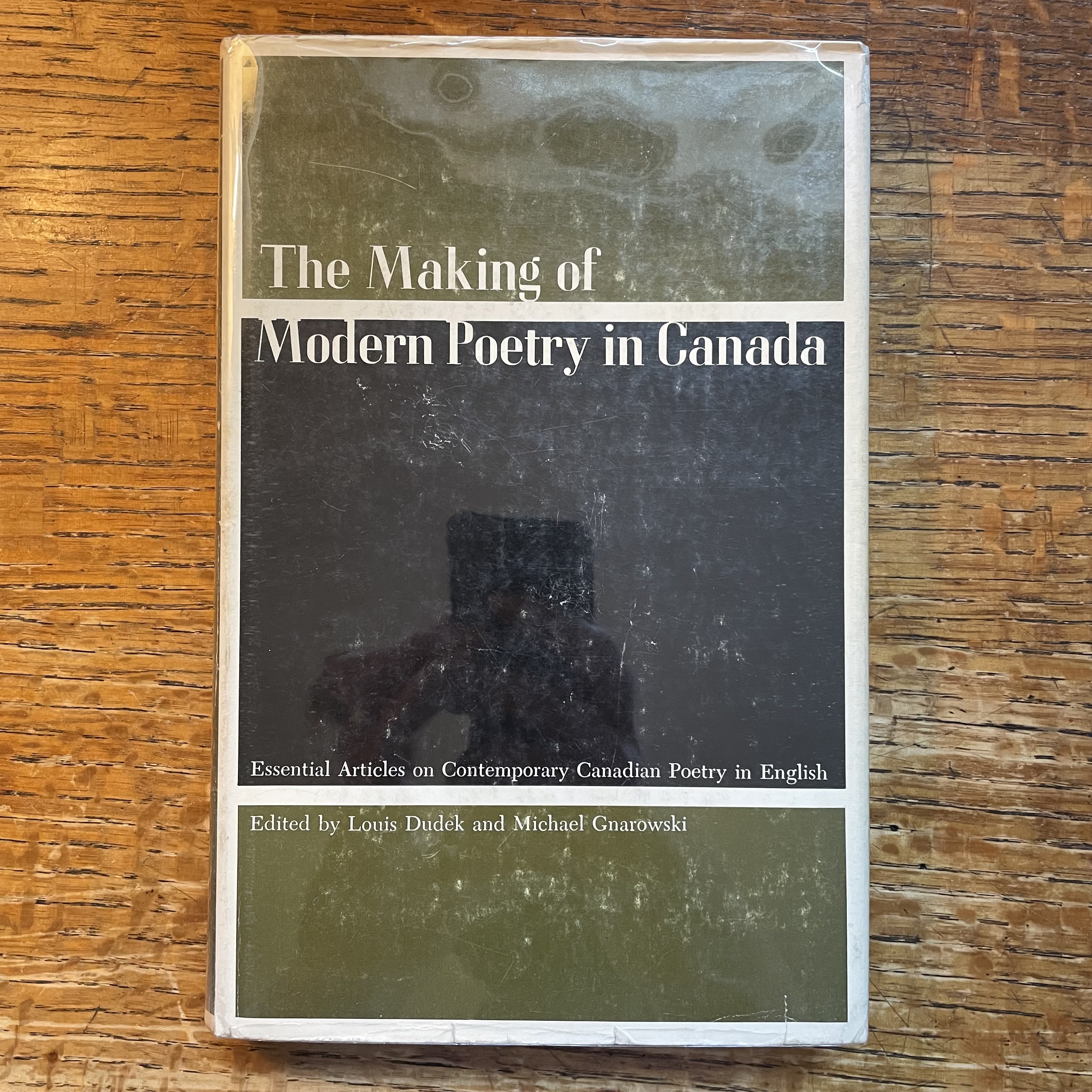
Michael is someone who, for a couple decades, had an enormous direct influence on the shape of Canadian Literature as a field of study. For many—well, for many of those who might read this blogpost—he will be known as co-editor, with Louis Dudek, of The Making of Modern Poetry in Canada: Essential Articles on Contemporary Canadian Poetry in English (1967, and recently reprinted), a book that in the 21st century is perhaps most often encountered on comps reading lists, or as a book that more contemporary scholarship reacts against.
The Making of Modern Poetry in Canada did just what it’s long but precise suggested, it gathered primary documents from formative moments in the history of modern Canadian poetry. Like all of us, he had his favourites—poets, editors, presses, magazines—and so those biases shaped where his and Dudek’s scholarship focused. It was a book that staked out a space that he and Dudek felt was important. In making those claims, the space became visible and this created a frame within which one could work, or against which one could react from the outside. It was a book that sparked more work.
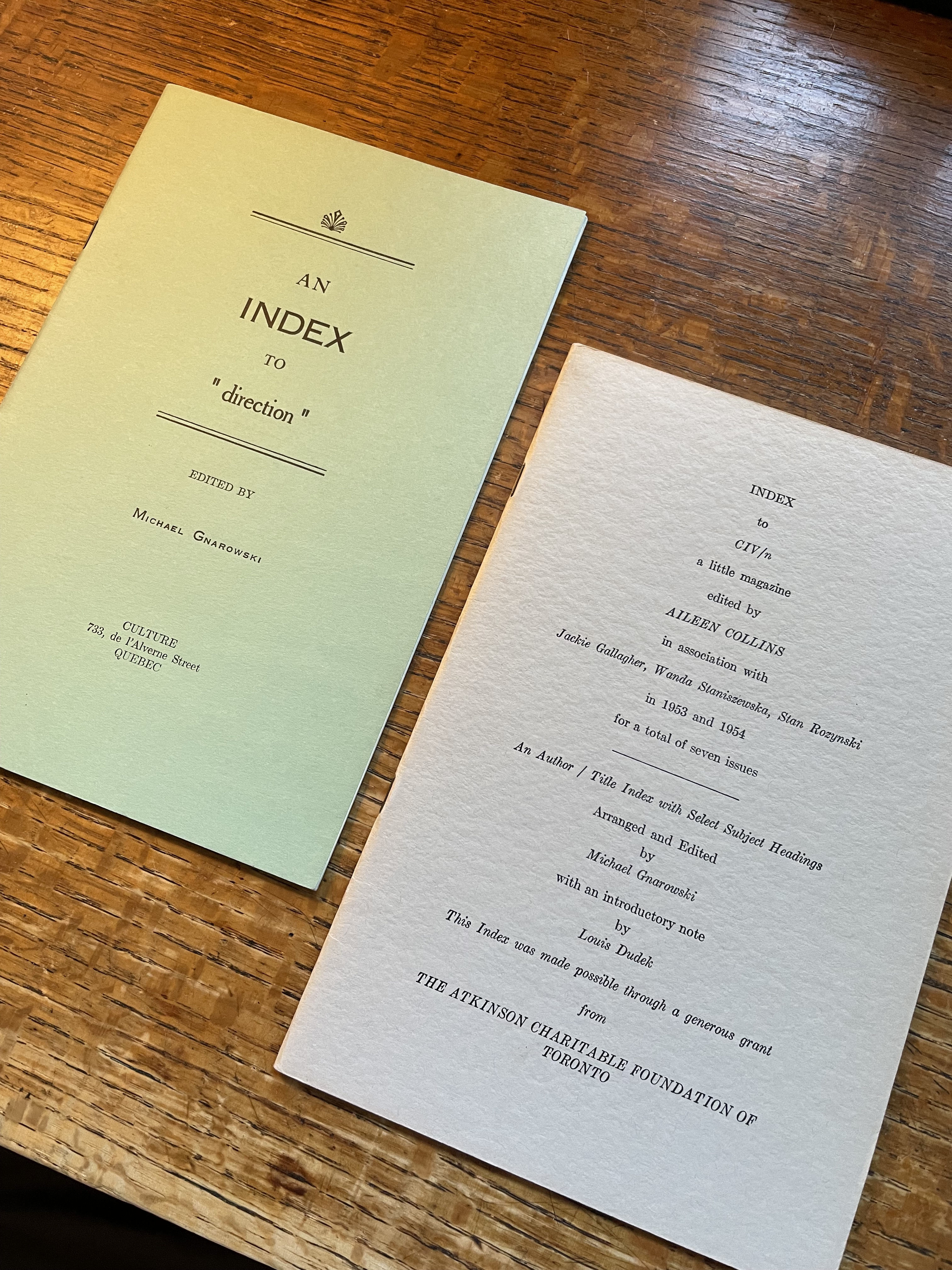
Looking back on the book fifty years after its publication, despite whatever blind spots there may have been, the impulse was so clearly the correct one—to do the painstaking labour of writing indexes and bibliographies, of finding and remembering the primary documents and the precedents, of trying to chart influence across generations. That impulse drove so much of his work—the serious and unglamorous but utterly necessary work of documenting a field that was largely undocumented, work that was certainly more difficult and time consuming in the pre-internet era in ways it is hard to understand today, work that was and is vital to building a foundation for research and for culture.
Yes Michael was a poet and editor, but when I turn to my shelves today I find that his indexes and bibliographies occupy the most space—indexes of magazines like CIV/n, and Direction, and Contact, and of Contact Press, and of English Canadian literature broadly. I have a little hardcover reference book he published with M&S in 1973, A Concise Bibliography of English-Canadian Literature, which was adapted from his doctoral dissertation.

I was going through his indexes and bibliographies looking for a quote to use that would express something of his character, that would offer some sense of his appraisal of the state of Canadian Literature and the small press at one point or another in time. What I found instead were modest offerings, always in service to readers and to history, such as this from the preface to The Making of Modern Poetry in Canada: “The main purpose, as history, is to present to the reader original texts which are not otherwise easy of access and to make it possible for him to arrive at his own interpretations and to form his own conclusions.” Or this note “by way of explanation” from his check list of Contact Press: “The intention of this small work was to provide an account of the earliest days of Contact Press, and to make available a list of the titles which were published under its imprint.”
I think that impulse to document and preserve has proven enduring in Canadian Literature scholarship, and in the small press. It certainly informs a great deal of what I try to do.
I met Michael through Dr. Collett Tracey. Collett was responsible for my own introduction to Canadian small press—that is, my introduction to what has become a central point of focus in my life going on two decades now. Collett referred to Michael as her “intellectual, academic father” after he died. As students, she spoke of him regularly to us, and after I became involved as a student editor at her little magazine (In/Words, Carleton University), I met Michael for the first time when Collett brought him to campus.
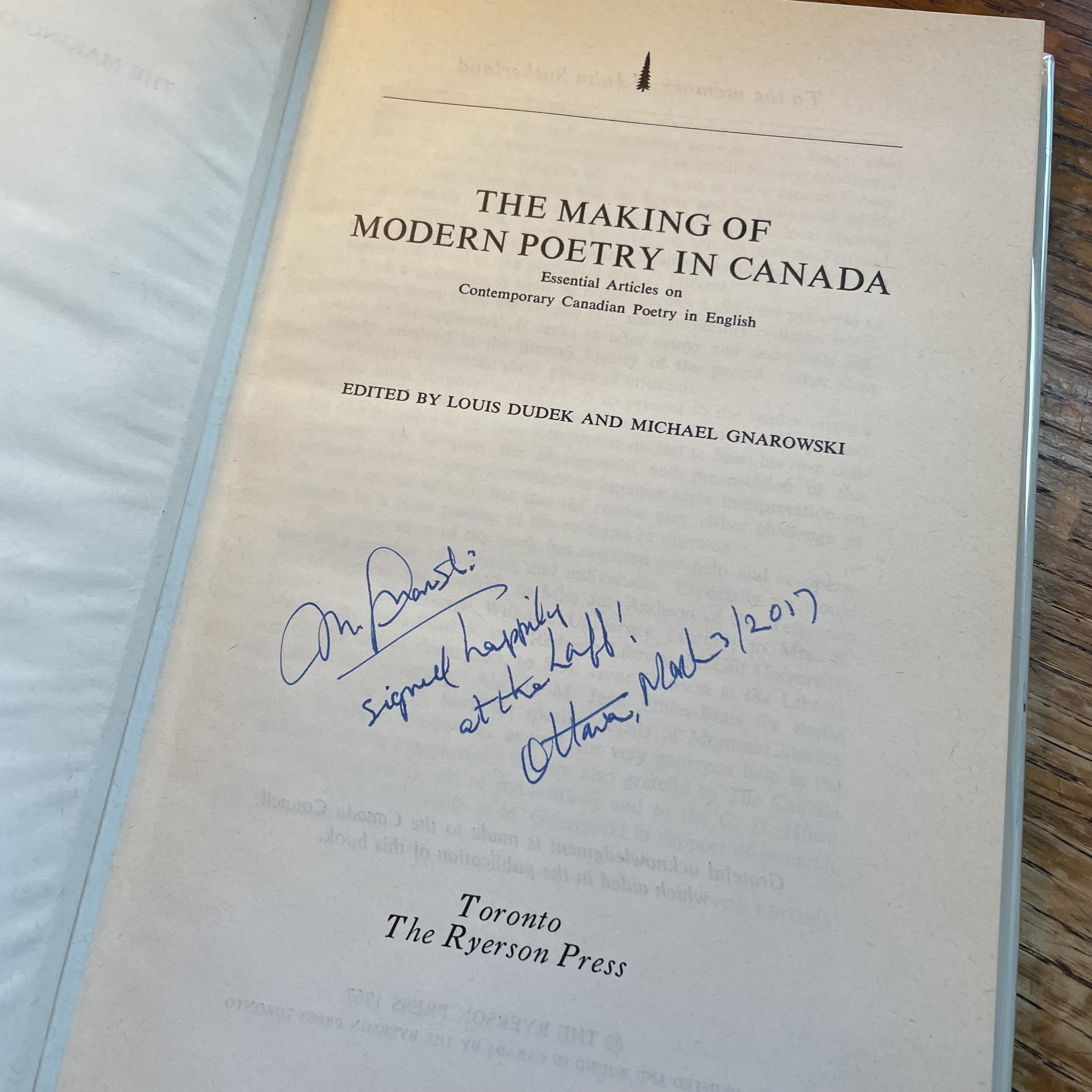
We met—Collett, Michael, the editors at In/Words—in a small food court beneath residence commons, and we just listened to him. He told us stories of his life in poetry, his friends, what he thought of it all. (We had no smartphones in 2007 so I have no photo.) A few years later, he was a reader on my M.A. Research Project and I remember my nerves before sitting in that small room in Dunton Tower across from him. I saw him occasionally after, always through Collett. The most recent meeting was March 2017—still no photo, but I can date this one thanks to a kind inscription on a book—at the Lafayette in Ottawa’s Byward Market. It was Collett and Michael, again, as always, with a table or two of current students and former students. Ostensibly we were there to discuss future plans—some scheme to publish or republish a book, or to track someone or something down—but the more important work was putting Michael in a room with some kids just coming up. I remember it, and hope they will too.
In the way of writers—of poets, of scholars—his influence is felt in a cascading way. Michael had a profound influence on someone—Collett—who in turn had a profound influence on me and on so many others, so many of those who are my earliest and most important friends in poetry and the small press. I think that sometimes after years or decades in a field, you may think that the fact of you’re having arrived there was inevitable, that one way or another you would have found a door in. That may be true, but it is also speculation. In my case, I can trace one of a few formative moments to a lecture Collett delivered on Contact Press that definitively opened a door for me, and I know that that moment traces itself back to Michael’s influence on Collett.
It is the lot of those with in the small press—of all of us of course—to slip into obscurity. We fight against it in the name of the writers and editors and presses we love—we find and remember books, we write essays, we share work—before we confront it ourselves. But I think when you go about it in the right way, if you’re lucky, your work keeps the lights on long enough for the next generation to show up. And after another generation or two there can be something durable where before there was not. I think Michael went about it that way, and I am grateful to be in a room he helped to establish.
 Cameron Anstee